Renting a Truck or Van to Move One Big Item
You don't need a 26-footer to move a single couch, mattress, or fridge. Here's how to pick the smallest vehicle that fits, measure so it actually goes through the door, and get it home in one piece, often in a couple of hours.
You found the perfect sofa on Facebook Marketplace, or you're finally hauling that hand-me-down dresser across town, or a new fridge is waiting at the store and delivery costs more than you'd like. You've got exactly one big thing to move. And you don't want to rent a giant truck, wrangle a crew, or spend a whole Saturday doing it.
Good news: a single large item is one of the easiest moves there is, as long as you don't over-rent, and as long as you measure before you commit. This guide covers how to pick the right vehicle, make sure the item actually fits through every door in its path, and get it home without a scratch. Usually in an hour or two.
The short version
If you only read one section, read this:
- Rent small. A cargo van or the smallest box truck handles almost any single item. Don't rent a moving truck sized for a whole apartment.
- Measure everything. Measure the item, then measure every doorway, hallway, stairwell, and elevator it has to pass through at both ends of the trip.
- Book a short local round-trip. One item is a few hours of work, not a full day. A round-trip rental with a modest mileage allowance is the usual fit.
- Bring the right gear. A furniture or appliance dolly, two or three straps, and a moving blanket turn a struggle into a ten-minute job.
- Get one helper. Almost every big item is a two-person lift. One extra set of hands beats any clever technique.
- Secure it so it can't move. A lone item in an empty cargo area will slide and tip. Strap it to the wall rails and wedge it in place.
Everything below is just these six points in detail.
Step 1: Rent the smallest thing that fits
The single most common mistake here is renting too much truck. For one item, you almost never need the kind of truck people picture when they hear "moving truck."
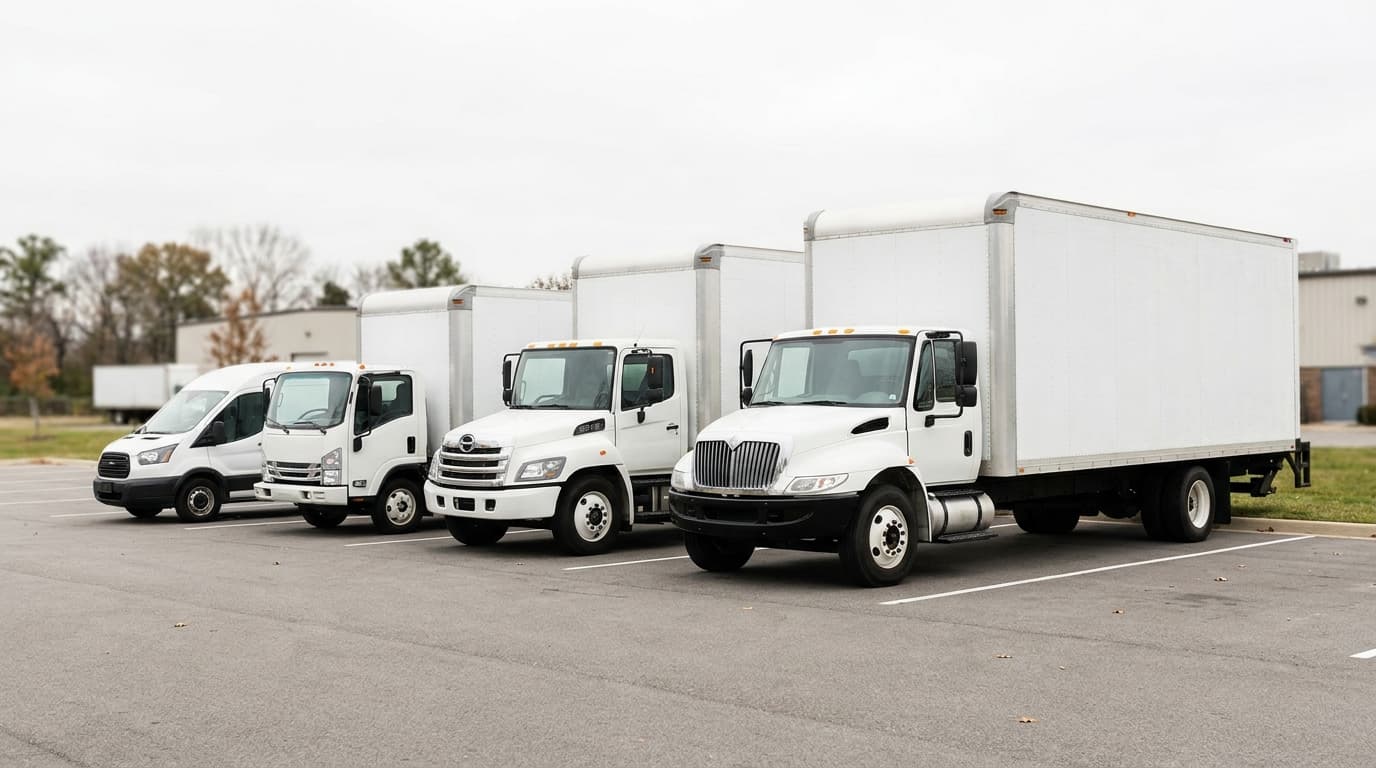
- A cargo van is the right answer for most single items: a couch, a mattress and box spring, a dresser, a table, a washer or dryer, most marketplace and furniture-store pickups. It drives like a big van, parks in normal spots, has no loading ramp to deal with, and rents by the hour or day at a modest rate. Vans are widely available from U-Haul, Home Depot, Lowe's, and many local outfits.
- The smallest box truck (a 10-to-12-footer) is worth stepping up to only when the item is genuinely large or tall (a full-size refrigerator, a big sectional, an armoire, a treadmill), or when a loading ramp will make life much easier than lifting up into a van's rear door.
That's it. There is almost no reason to rent a 15-, 20-, or 26-foot truck for a single piece of furniture. You'll pay more, burn more gas, and find it harder to park. All to move one thing. If you're weighing the two smallest options, our guide on cargo van vs. moving truck breaks down exactly when the ramp and extra height are worth it. And if you're unsure whether your item really is "van-sized," the truck size guide puts the dimensions in context.
Step 2: Measure the item and everything it must pass through
This is the step people skip, and it's the one that ruins the day. A vehicle that's big enough means nothing if the item can't get out of one building and into the other.
Measure the item in all three dimensions: height, width, and depth. For a sofa, also note the diagonal depth (corner to corner). That's the number that matters when you're pivoting it through a doorway.
Then measure every choke point on both ends of the trip:
- Doorways: width and height, and remember you lose an inch or two to the door itself and the frame.
- Hallways and turns: a long item has to pivot around corners; a narrow hall or an L-shaped turn is often tighter than the door.
- Stairwells: width, headroom, and especially any landing where you have to change direction. Tight landings defeat more couches than doorways do.
- Elevators: the door opening and the interior depth and height. Many items only fit an elevator on the diagonal or stood on end.
Write the numbers down and compare them to the item before you rent anything. If it's close, the classic tricks are to remove the door from its hinges (a few extra inches), take the legs or feet off the furniture, or stand the piece on end. If nothing works on paper, it won't work in person. Better to know now than with the van's meter running.
Step 3: Book a short, local round-trip
One item is a small job, and you should rent like it. You're picking the vehicle up and bringing it back to the same place, so this is a local round-trip rental, priced as a low daily (or hourly) rate plus a per-mile charge, not a one-way rental.
You're only making a single loop: pick up the van, drive to the item, drive it home, return the van. The whole thing usually takes an hour or two. Estimate your round-trip mileage honestly so the per-mile charge doesn't surprise you, and pick up close to home to keep those miles down. Some vendors offer hourly or half-day van rates that fit a job like this perfectly.
Our local moving truck rental guide walks through how round-trip pricing works and how to keep a short local rental cheap.
Step 4: Bring the gear that does the work
The difference between an easy single-item move and a miserable one is almost entirely about gear. It's cheap to rent or buy, and it saves your back and your walls.
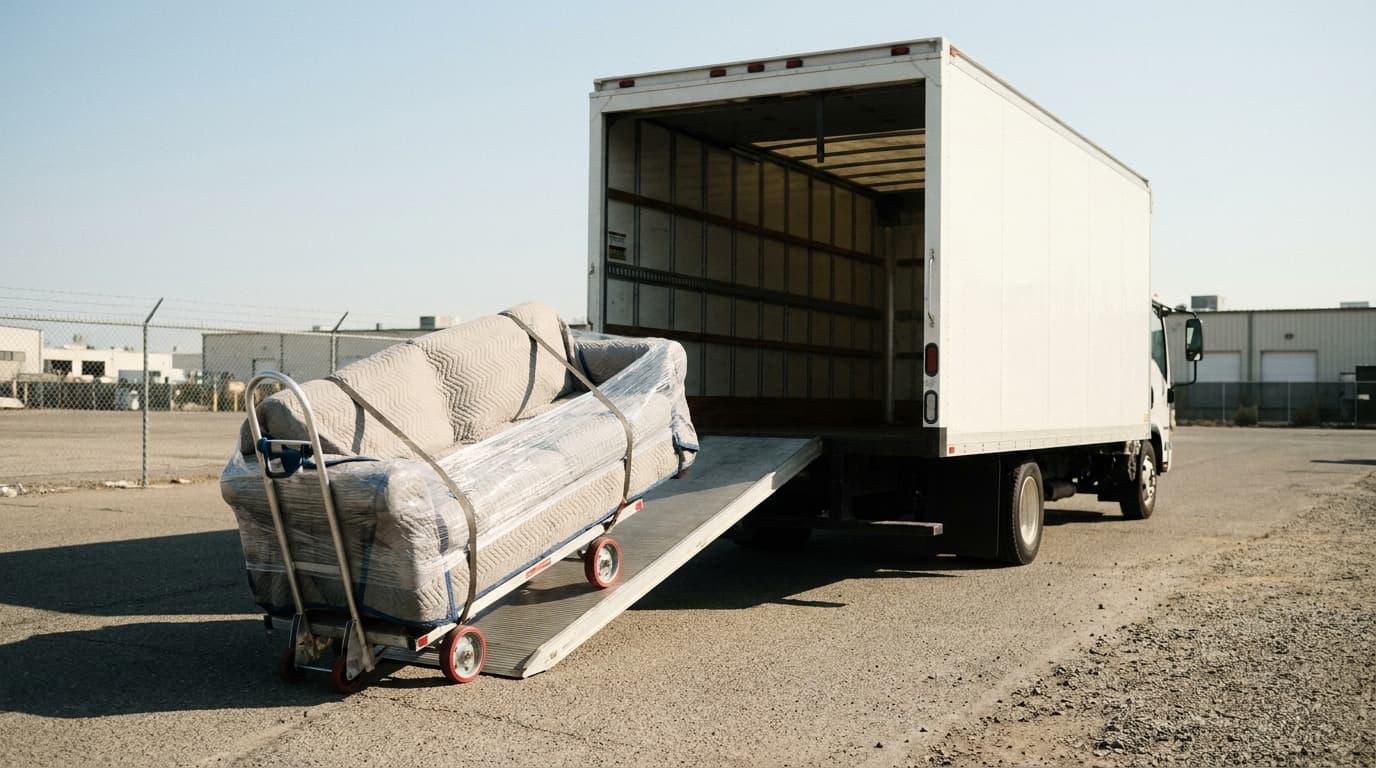
- A dolly. A four-wheel furniture dolly slides under a couch or dresser and lets one person roll what two people would strain to carry. For a fridge, washer, or dryer, use a two-wheel appliance dolly. It has a strap to secure the appliance and is built to take it down stairs. Most rental counters rent dollies by the day.
- Moving straps or ratchet straps. Two or three are enough to secure the item inside the vehicle. Long lifting straps also make carrying an awkward piece up stairs dramatically easier.
- A moving blanket or two. Wrap the item to protect its finish and to keep straps from biting into the surface. A blanket also protects the vehicle's interior.
- Tape and a marker if you're removing legs or hardware. Bag the screws and tape them to the underside so nothing gets lost.
For the full rundown on wrapping and padding, see our guide on how to protect furniture when moving.
Step 5: Get one helper
Nearly every large item is a two-person job. A couch, a mattress, a loaded dresser, an appliance: all of them are safer, faster, and far less likely to gouge a wall with two people than with one and a lot of determination.
You have options:
- Bring a friend. The simplest and cheapest. One favor, maybe lunch afterward.
- Hire labor-only help. Services that connect you with movers by the hour (loading and unloading only, no truck) are ideal here. Two people for an hour is a small bill, and they bring the muscle and the know-how while you keep the cheap rental van.
For a heavy appliance in particular, don't try to be a hero solo. See moving large appliances for the technique and the safety cautions that matter with weight and stairs.
Step 6: Secure a lone item so it can't slide or tip
Here's the counterintuitive part: a single item in a mostly-empty cargo area is more dangerous in transit than a fully packed truck. In a packed truck, everything braces everything else. Your lone couch has an entire empty floor to slide, tip, and topple across every time you brake or turn.
So secure it deliberately:
- Push it against the front wall, right behind the cab, and stand it in its most stable orientation (a mattress flat or strapped upright against the wall, a dresser upright, a fridge upright and strapped).
- Strap it to the wall rails or anchor points. Vans and box trucks have tie-down points along the walls. Run your straps from the item to those points and snug them down so it can't shift.
- Wedge it in. Fill the gap beside it with blankets, boxes, or anything soft so it can't rock sideways.
- Wrap first, strap second. Pad the item before the straps go on so the tie-downs don't crush or scuff it.
Then drive gently. A tall item like a fridge or armoire is top-heavy; take turns slow and leave extra stopping distance. A well-strapped item that can't move is a non-event; a loose one is a broken heirloom and a dented door.
The alternatives worth weighing
Renting isn't always the answer for one item. Run the quick comparison first:
- Store or marketplace delivery. Many furniture stores and appliance retailers deliver, sometimes free over a spending threshold, and some marketplace sellers will drop off for a small fee. If delivery is cheap or included, it can beat a rental, especially for a heavy appliance you'd rather not carry.
- Labor-only help with your own vehicle. If the item fits in a friend's pickup or SUV, hiring two movers for an hour to load and unload may be all you need.
- Borrowing a friend's truck. Free is hard to beat. Just insure the favor with gas money and a careful, well-strapped load so you don't return it with a scratched bed.
When does renting still win? When there's no free delivery, no truck-owning friend, and the item won't fit anything you can borrow. A short local van rental is predictable, available on your schedule, and cheap for a couple of hours. For a lot of single-item moves, that's exactly the right tool.
The bottom line
Moving one big item is the rare move that's genuinely easy: rent the smallest vehicle that fits, measure the item and every door, hall, and stair it has to clear, book a short local round-trip, bring a dolly and a couple of straps, grab one helper, and strap the thing down so it can't wander. Do that and you'll have your couch, dresser, or fridge home and in place before the afternoon's over.
Not sure whether a van or the smallest truck is right for your item? Start with our cargo van vs. moving truck guide, then check the local rental guide to keep the trip cheap.
Not sure which truck to book?
Answer two quick questions and get a size recommendation, plus a side-by-side of how U-Haul, Penske, and Budget stack up.