Local Moving Truck Rental: The In-Town Move Playbook
Moving across town instead of across the country? Local rentals work and cost completely differently. Here's how the base-rate-plus-per-mile pricing works, how to size your truck, and how to keep the total from creeping up on you.
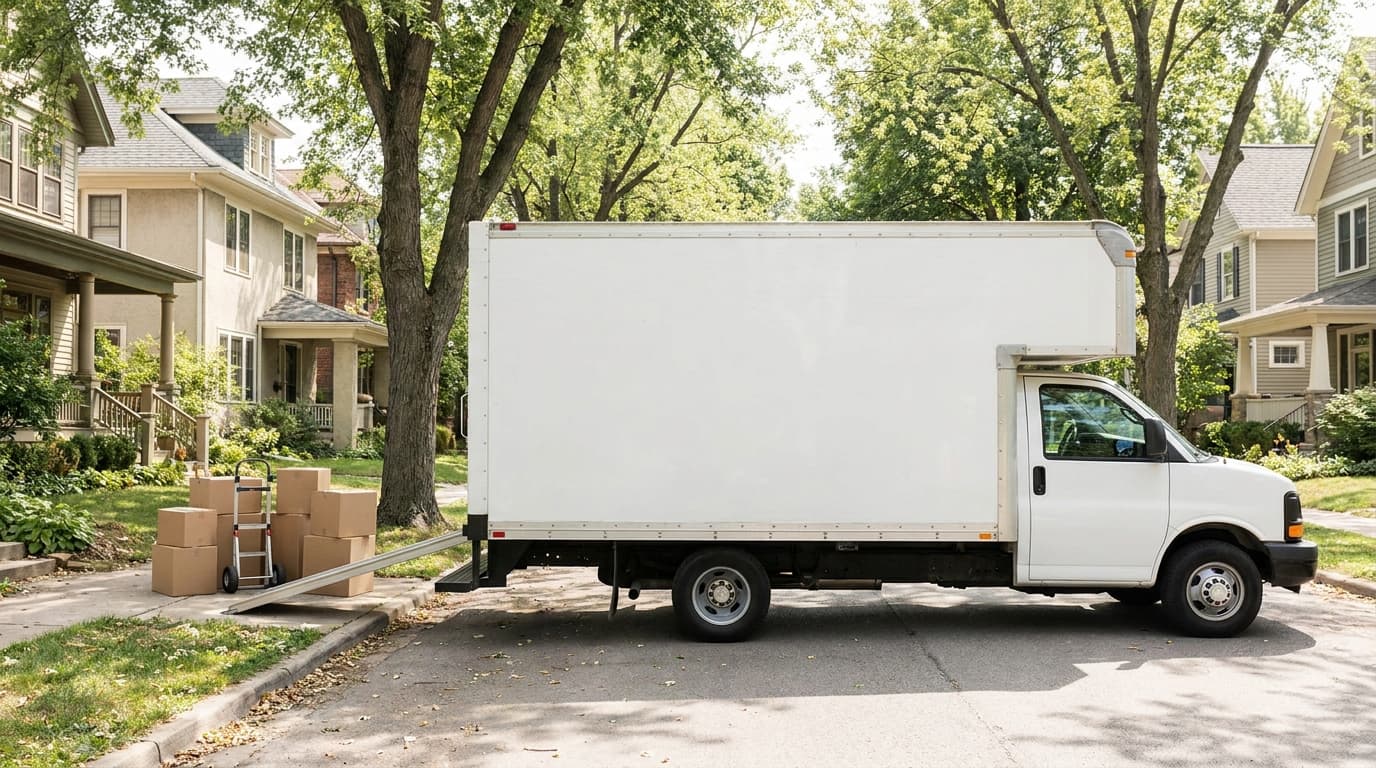
Most truck rental advice is written for the big cross-country haul, the one with a flat one-way rate, a multi-day drive, and a drop-off in a new state. But most moves aren't like that. They're across town: a new apartment ten minutes away, a first house two neighborhoods over. Those moves want a completely different kind of rental, priced a completely different way. Knowing how it works is the difference between a cheap afternoon and a bill that quietly doubled.
This is the playbook for the local, in-town move: how the pricing works, how to size the truck, and how to keep the total honest.
The short version
If you only read one section, read this:
- A local (round-trip) rental means you pick the truck up and return it to the same location. That's the kind you want for an in-town move.
- It's priced as a low daily or base rate PLUS a per-mile charge, not a single flat fee. Some vendors also offer hourly options for very short jobs.
- The per-mile charge is where the total moves. A plan that needs several round trips can quietly cost more than a bigger truck used once.
- When in doubt, rent a size up and do it in one trip. One loaded run usually beats two half-loaded ones once you count fuel, mileage, and your afternoon.
- Return on time. A late drop-off can trigger a whole extra day, wiping out any savings.
- Even local trucks are worth booking a few days ahead on busy weekends and around month-end.
Everything below is the detail behind those points.
How a local rental actually works
A local rental (companies also call it "round-trip" or "in-town") is the simplest arrangement there is: you pick the truck up, load it, drive it to your new place, unload, and bring the same truck back where it came from. You're borrowing it for the day, not relocating it.
That "same location" part is the whole distinction. Because the truck ends up right back where it started, the company isn't paying to reposition it across the country. So instead of a big flat rate, they charge two smaller things stacked together:
- A base or daily rate. A modest flat fee just to have the truck for the day, often surprisingly low for the smaller trucks.
- A per-mile charge. A set amount for every mile you actually drive, typically under a dollar or so per mile depending on the truck and market.
Some vendors also offer hourly options for very short jobs, though most local rentals are written as a single day. Fuel is on top of all of it: you refill what you use, at the pump, not the counter.
That low advertised base rate is what pulls people in. But it's only half the price. The other half is the mileage, and that's the half you control.
Why the per-mile charge is the number that matters
Here's the trap. You see a small truck at a low daily rate, think "great, this move is cheap," and don't think hard about the miles. Then they add up. On a local move they add up fast, because you rarely drive just one leg.
Picture underestimating the truck and making three round trips between the old place and the new one. If each is 12 miles, that's 36 miles of loaded and empty driving. At a per-mile rate, that charge can rival or exceed the base rate itself. And that's before you've bought a single gallon of gas.
The lesson isn't "local rentals are expensive." It's estimate your total mileage honestly before you book. Map the real distance between the two homes, multiply by the round trips you realistically expect (and be honest, because "I'll do it in one trip" is famously optimistic), then add the drive to and from the rental location. That total, times the per-mile rate, is the part of your bill that's easy to ignore and easy to blow.
If you want to see how the base rate, mileage, and fuel stack up for your specific move, our moving cost estimator does the arithmetic for you, and our full moving truck rental cost guide breaks down every line item you'll see.
The real trade-off: one big trip vs. several small ones
This is the decision that defines a local move, and it's a simple tension:
- A bigger truck, one trip: higher base rate, but you drive the route once. Fewer miles, less fuel, and a fraction of the time and effort.
- A smaller, cheaper truck, several trips: lower base rate, but you drive the route two, three, or four times, which means more miles, more fuel, and loading and unloading on repeat.
People instinctively reach for the cheaper, smaller truck to save on the base rate. It backfires more often than you'd think, because the base rate is the one cost that doesn't grow with trips. The mileage, the fuel, and your hours all do.
Run the honest comparison and count everything:
- Mileage: two round trips is double the per-mile charge of one.
- Fuel: driving the route twice in a small truck rarely beats one run in a bigger one.
- Your time: each extra trip is another round of drive, park, load, drive, unload. An afternoon becomes a full day.
- Wear on you: the third trip is where furniture gets dropped, because everyone's exhausted.
For most in-town moves, sizing up and doing it once wins. The exception is a genuinely small move, like a studio, a dorm, or a single room, where a cargo van or a small truck in one or two quick trips really is the cheaper, easier call. Our what size moving truck do I need guide matches the truck to your home room by room.
Sizing for a local move
Sizing works the same as any move: match the truck to your home, and when you're on the fence, go up. But the stakes differ in town. On a one-way move a too-small truck means leaving things behind; on a local move it means the thing this whole guide warns about, a second or third round trip, each adding mileage, fuel, and hours. So the "size up" instinct is even more valuable here.
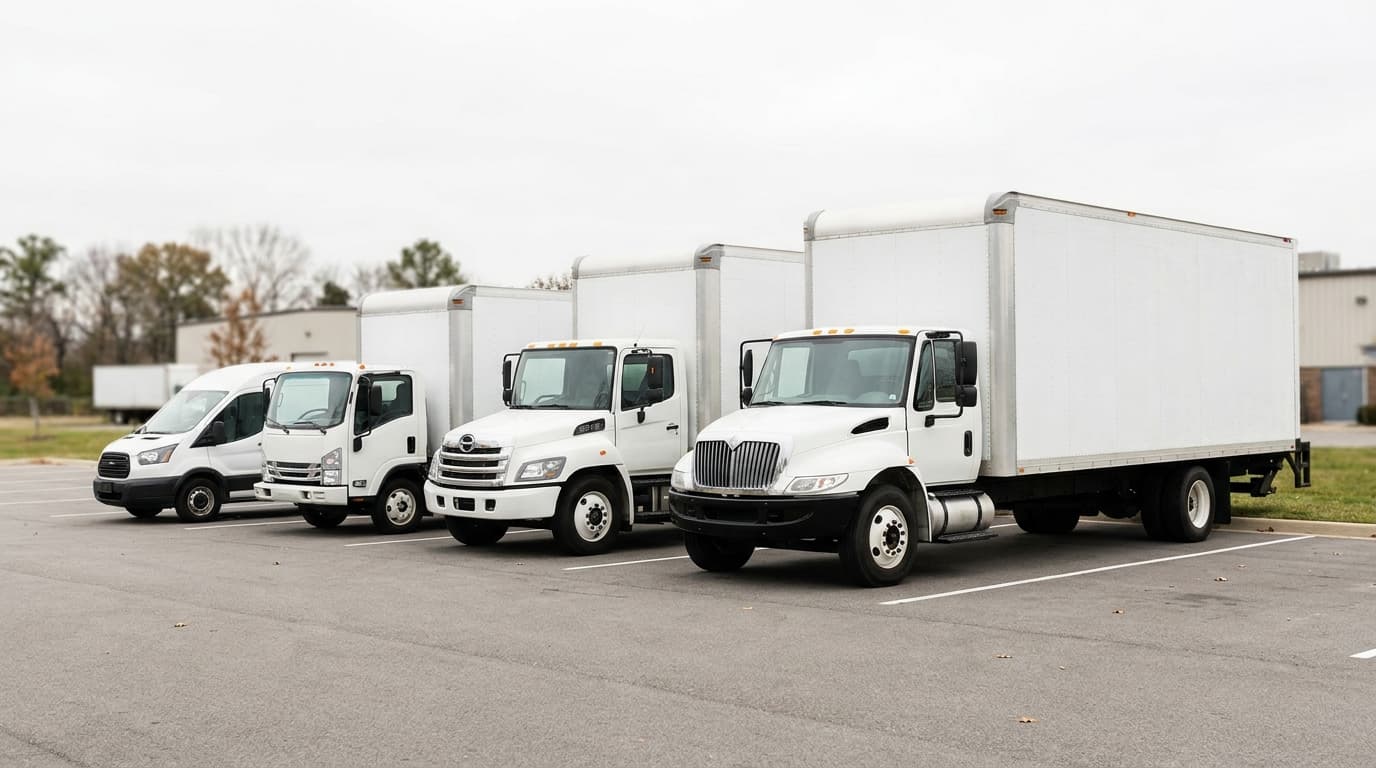
The usual buckets apply: a cargo van or 10–12' truck for a studio or one-bedroom; a 15–16' truck for a two-bedroom apartment or small house; a 20–22' truck for a three-bedroom; and the 26' truck for a full four- or five-bedroom house in one go. If a van is in the running, weigh it deliberately. For a truly light load it can be cheaper and easier to park on a residential street.
Same-day, short rentals, and getting the truck back on time
Local rentals are the flexible ones. Because the truck never leaves town, same-day and short in-town rentals are common. You can often grab a truck for a single day, or part of one where hourly options exist, and have it back by evening. That's exactly what an in-town move needs.
But that short window has a sharp edge: the return time. A local rental is priced around getting the truck back the same day. Roll past the window and you can trigger an extra full day of the base rate, sometimes more, which erases whatever you saved by picking the cheaper truck.
So build the day with margin: give yourself more time than you think loading will take, mind the return location's hours, and if you're cutting it close, call the vendor before the clock runs out, not after. Refuel to where you started, too. The company's own fuel charge is one of the worst per-gallon deals around, and an easy fee to dodge.
Book a little ahead, even for local
It's tempting to treat a local truck as something you grab on a whim, and usually you can. But the two times that backfire are the two times most people move: busy weekends and the end of the month, when leases turn over and everyone wants a truck at once. You don't need to book weeks out the way you might for a one-way truck, but reserving a few days ahead for those dates makes sure the size you want is sitting at the location you want, at the price you saw. Most reservations cancel free, so there's little downside.
Local vs. one-way: pick the right one
The single most expensive mistake here is choosing the wrong kind of rental. Keep the contrast clean:
- Local / round-trip. You're staying in the same area. Pick up and return to the same location. Priced as base rate + per mile. This is your in-town move.
- One-way. You're moving to a different city or state. Pick up in your old town, drop off near your new home, never drive the truck back. Priced as a single flat rate that already bundles a set number of days and the miles for your route.
The trap runs both directions. Take a local truck on a long-distance move and you'll pay per mile for a huge distance and drive the empty truck all the way home. A disaster. Take a one-way rental across town and you'll overpay for a flat rate built for a road trip you're not taking. For an in-town move, local is almost always the answer; our one-way vs. round-trip truck rental guide covers the edge cases.
The bottom line
A local move is its own thing: same-location pickup and return, a low base rate, and a per-mile charge that quietly does most of the damage if you're not watching it. Estimate your mileage honestly, lean toward a bigger truck and one clean trip, get it back on time, and book a few days ahead for a weekend or month-end move. Do that and an in-town move stays what it should be: a cheap afternoon, not a surprise.
Ready to price it out? Run your numbers through the moving cost estimator, then double-check you're picking the right kind of rental with our one-way vs. round-trip guide.
Not sure which truck to book?
Answer two quick questions and get a size recommendation, plus a side-by-side of how U-Haul, Penske, and Budget stack up.