What Size Moving Truck Do I Need? A Room-by-Room Guide
The most important rental decision, and the most commonly botched. Here's how to match your home to the right truck size, why the same size has different names at each company, and why sizing up is almost always the cheaper mistake.
Pick the right size moving truck and everything else about your move gets easier. Pick wrong, and you're looking at a second trip across town, an extra rental day, or a sofa that stays behind. By "wrong," people almost always mean too small. This guide helps you get it right the first time.
Want the answer in ten seconds instead of eight minutes? Our truck size calculator turns your home size into a recommendation. Otherwise, read on.
The five sizes, at a glance
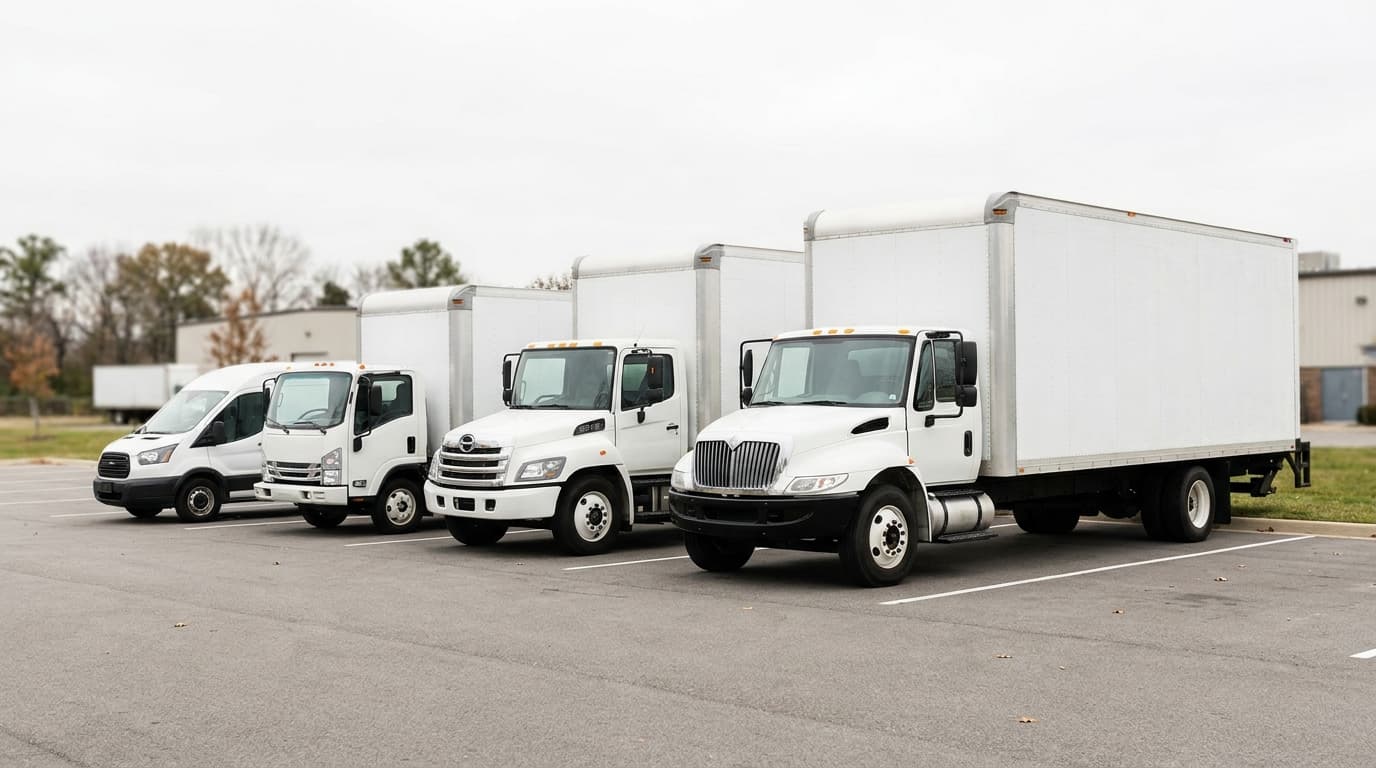
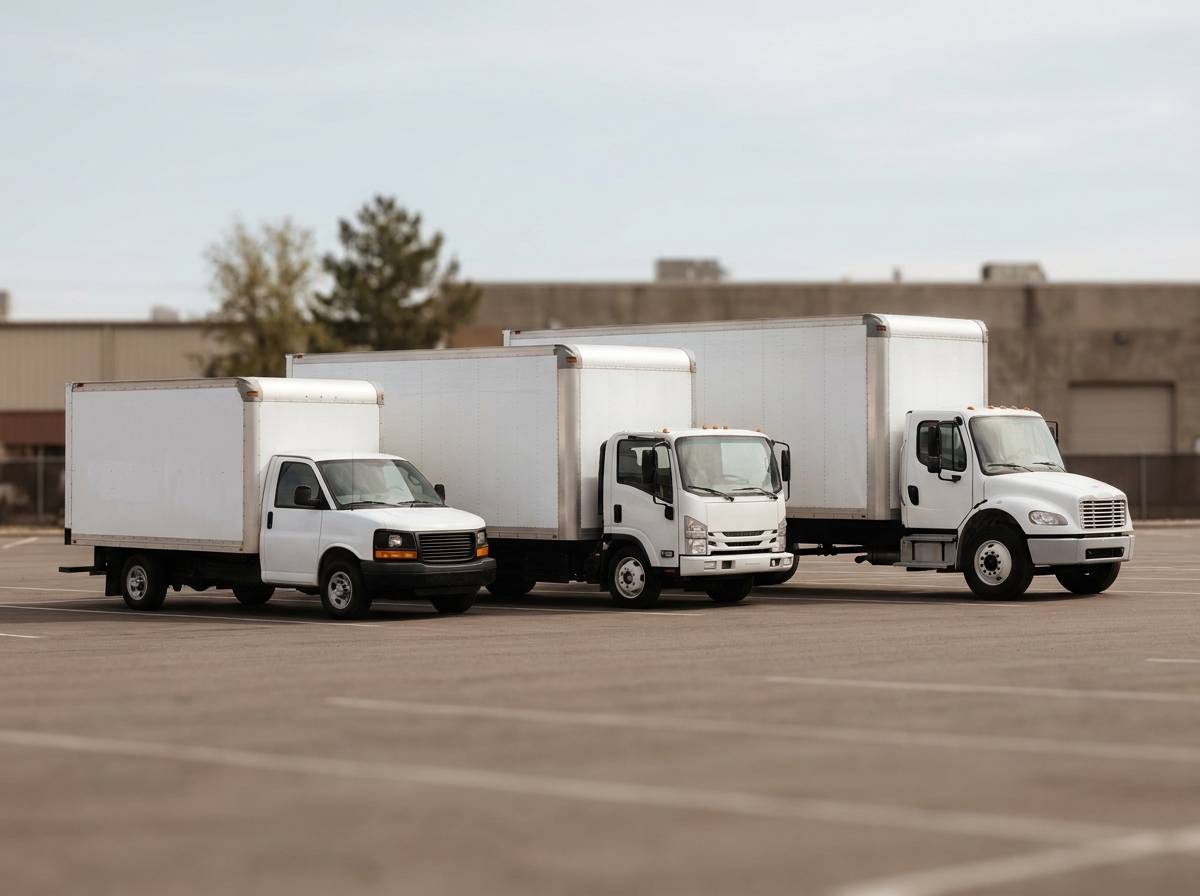
Every rental company sells roughly the same five buckets, from a cargo van up to a 26-foot truck. Here's how they map to homes:
| Size | Length | Holds | Cargo volume |
|---|---|---|---|
| Cargo van | 9–11 ft | Studio / a few rooms of items | ~245–300 cu ft |
| Small truck | 10–12 ft | 1 bedroom | ~380–450 cu ft |
| Medium truck | 15–16 ft | 2 bedrooms | ~660–770 cu ft |
| Large truck | 20–22 ft | 3 bedrooms | ~1,000–1,200 cu ft |
| Extra-large truck | 26 ft | 4–5+ bedrooms | ~1,600–1,700 cu ft |
Those room counts assume a normally furnished home. If your closets, garage, and basement are packed, bump up a size. Each size links to its own page with interior dimensions, payload, and mileage. Or browse all five truck sizes together.
Room by room
Studio or dorm: cargo van or 10–12' truck. A cargo van handles a studio you can move in a trip or two. If you own a real bed, a couch, and a dresser, step up to the small truck so it all goes at once.
One bedroom: small (10–12') truck. The sweet spot for a typical one-bedroom apartment: a queen bed, a couch, a table, a dresser, and a stack of boxes. If your one-bedroom is unusually full, the medium truck buys breathing room.
Two bedrooms: medium (15–16') truck. The most-rented size, and for good reason: it fits a two-bedroom apartment or a small house without much fuss. This is a U-Haul 15', a Penske 16', or a Budget 16'.
Three bedrooms: large (20–22') truck. A three-bedroom home with full living and dining rooms wants the large truck. One note: Budget doesn't offer a 20–22' size. Its lineup jumps from 16' straight to 26'. If you're renting Budget for a three-bedroom, you'll likely be choosing between a tight 16' (maybe two trips) or a roomy 26'.
Four or five bedrooms: extra-large (26') truck. The 26-footer is the biggest truck you can drive on a regular license, and it swallows a large four- or five-bedroom house in a single load. It holds around 1,650 cubic feet and up to 10,000 pounds. Respect that weight when you load and drive it.
Why the same truck has different names
Here's the detail that trips people up: truck sizes don't line up between companies, and a bigger number doesn't always mean a bigger truck.
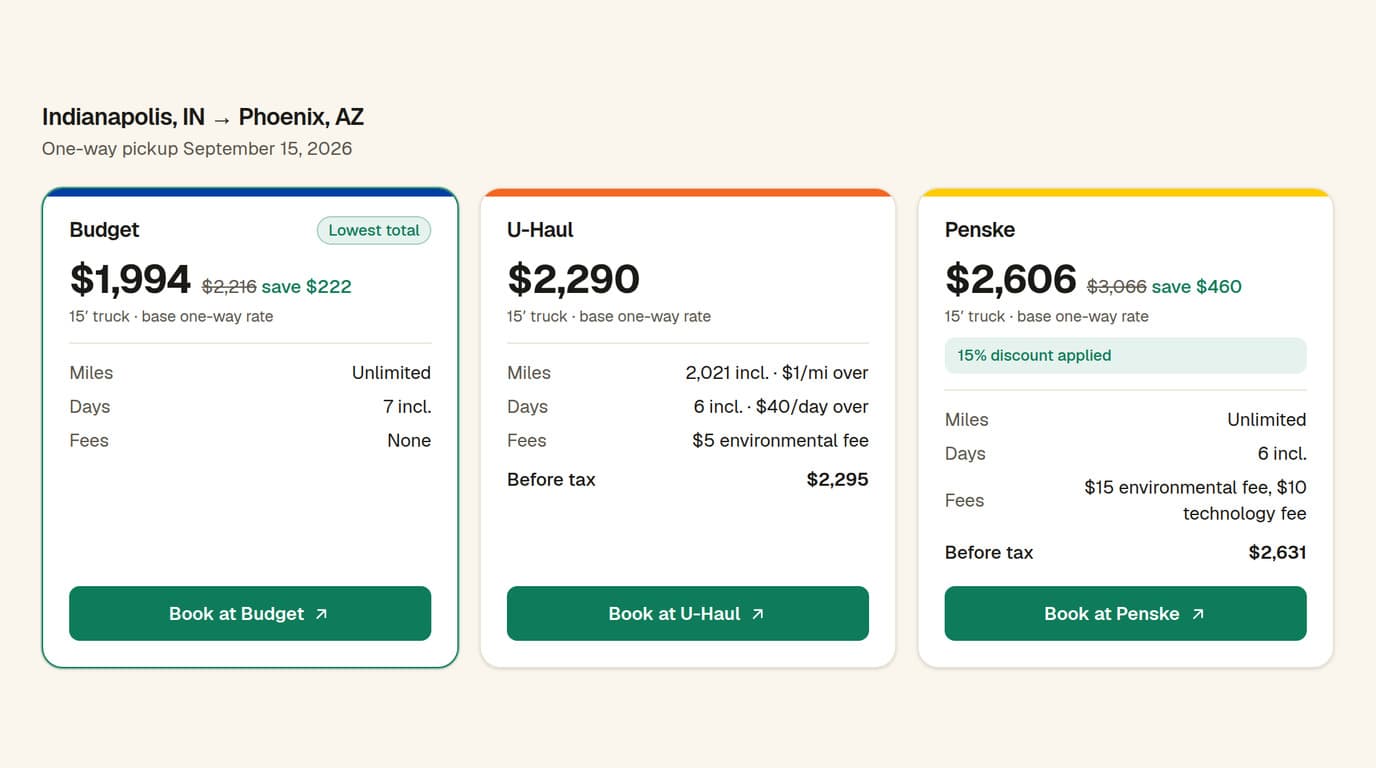
The roughly-two-bedroom size is a 15-footer at U-Haul but a 16-footer at Penske and Budget. U-Haul offers a 10' truck that Penske and Budget don't; Penske's smallest is a 12'. U-Haul's three-bedroom option is a 20', while Penske's is a 22'.
So when you compare prices across companies, don't compare by the number on the side of the truck. Compare by what fits your home. Our comparison page lines up the equivalent sizes at each company, and the size calculator tells you exactly what to ask for at U-Haul versus Penske versus Budget.
Why "size up" is the cheaper mistake
Renters instinctively try to save money by choosing the smaller truck. It backfires more often than not. Consider the two ways it can go wrong:
- Too big: you pay a modestly higher daily or one-way rate, and part of the cargo area rides empty. Mildly wasteful.
- Too small: on a local move, you make a second round trip (more miles, more fuel, more hours, possibly a second rental day). On a one-way move, there is no second trip; you either leave things behind or pay to ship them separately.
The downside of too-small is dramatically worse than the downside of too-big. When you're genuinely between sizes, go up. The extra capacity is cheap insurance against a very bad moving day.
There's a loading benefit too: a little extra room makes it far easier to stack a stable, well-secured load instead of jamming everything in like a puzzle. See our loading guide for how to use that space well.
A quick gut-check before you book
Before you lock in a size, do this two-minute sanity check:
- Count your "big five" items: bed(s), couch, dresser, dining table, and the largest appliance you're taking. If there are more than a handful of large pieces, lean toward the larger size.
- Look at your closets, garage, and storage. Boxes add up faster than furniture. A "two-bedroom" that's been lived in for eight years often loads like a three-bedroom.
- Factor in the drive. For a long one-way move, a single trip in a slightly larger truck beats the impossibility of a second trip.
The bottom line
Match the truck to your home, not to the number on the door. And when you're on the fence, size up. The medium (15–16') truck covers most apartments and small houses; the 26' handles a full house in one go; and the cross-brand size names are close enough to ignore once you know what actually fits.
Get a personalized recommendation from the truck size calculator, then compare prices for that size across U-Haul, Penske, and Budget.
Not sure which truck to book?
Answer two quick questions and get a size recommendation, plus a side-by-side of how U-Haul, Penske, and Budget stack up.