How to Protect Your Furniture, Walls, and Floors When Moving
Most moving-day damage isn't bad luck. It's a scratched dresser, a gouged doorframe, or a dented wall that a few dollars of blankets and ten minutes of prep would have prevented. Here's how to wrap your stuff and shield your home so nothing gets hurt on the way out or in.
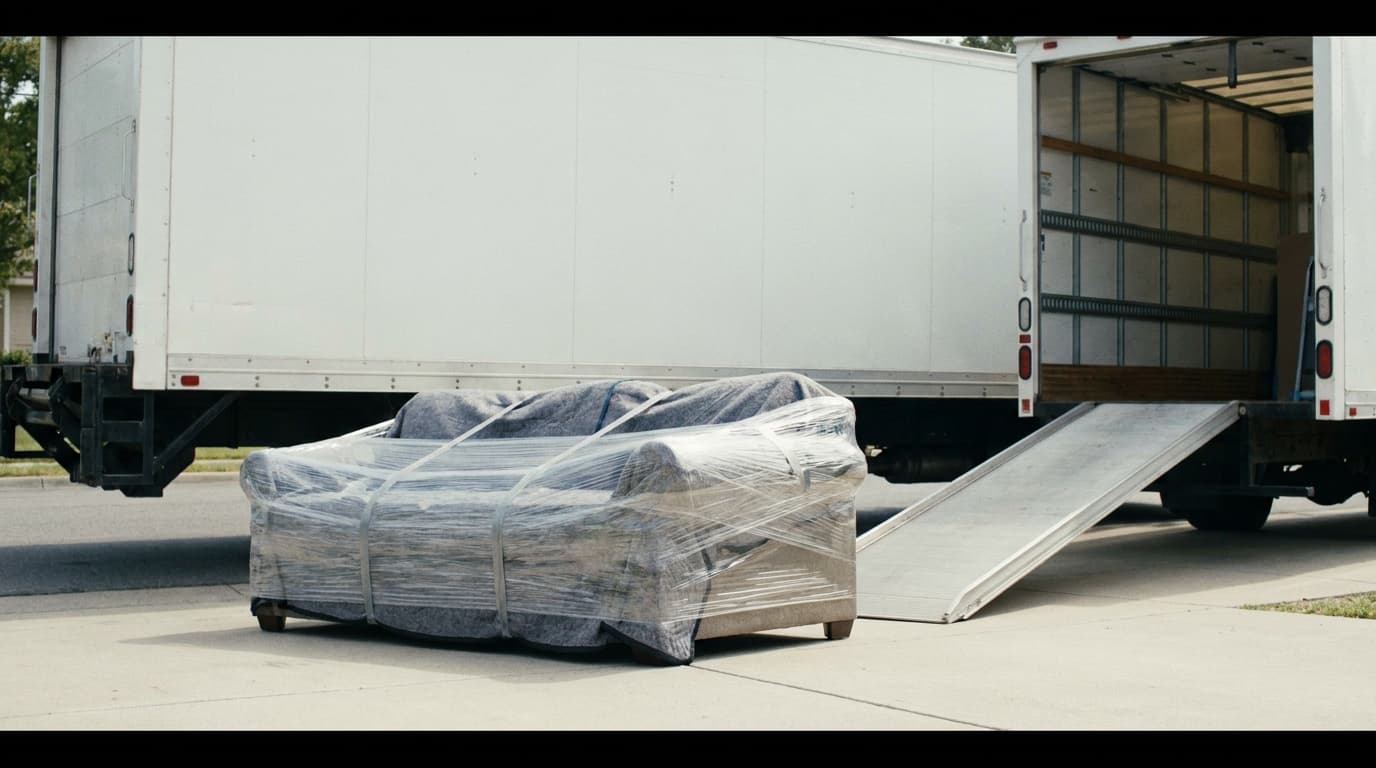
The damage that ruins a move is rarely dramatic. It's a corner of the dresser catching the doorframe, a couch leg dragging a gray streak across the hardwood, a TV riding loose against a headboard, a scuff on the wall at the bottom of the stairs. None of it is bad luck. All of it is preventable with a few dollars of materials and ten minutes of prep per piece.
This guide covers both halves of the job that most people only do half of: protecting your furniture so it arrives unscratched, and protecting your home (the walls, floors, and doorways) on the way out of the old place and into the new one.
The short version
If you only read one section, read this:
- Wrap every big piece in moving blankets, held on with stretch wrap. Blankets stop scratches and dents; stretch film holds the blankets on without sticking to the furniture.
- Disassemble what you can, bag the hardware, and tape the bag to the piece so it can't get lost.
- Protect the vulnerable surfaces: corner protectors on wood edges, glass removed and packed flat and separately, TVs boxed or heavily blanketed.
- Shield the house before you carry anything: floor runners or flattened cardboard down, door-jamb and corner protectors up, and doors popped off their hinges where a piece is tight.
- Measure your doorways and stairwells first so you know what fits before you're wedged in one.
- Lift, don't drag. Dragging is what wrecks both floors and furniture legs.
- Load the protected pieces upright and strapped so nothing rubs or shifts on the road.
Everything below is the detail behind those points.
Part 1: Protecting the furniture
Moving blankets are the foundation
The single most useful thing you can do for a piece of furniture is wrap it in a moving blanket (also called a furniture pad). These thick quilted pads absorb the bumps, scrapes, and pressure that happen every time something is carried, set down, or shifts in the truck.
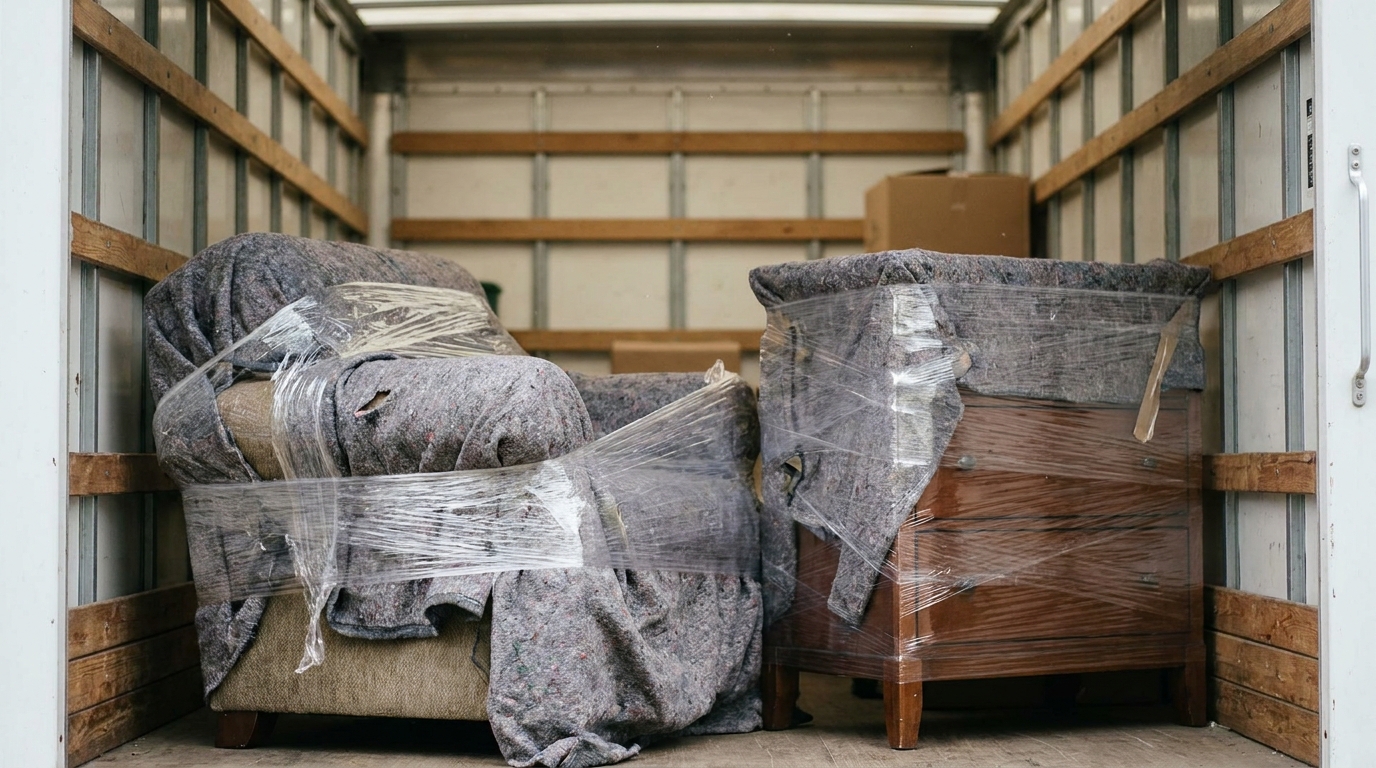
The trick is holding them on. Don't put tape on the furniture. It pulls off finish and leaves residue. Instead, wrap the blanket around the piece and secure it with a few turns of stretch wrap (plastic stretch film), which clings to itself and to the blanket without ever touching the surface underneath. A dresser or armchair needs only a blanket and a few passes of film to be fully protected.
If you're short on blankets, most rental counters and moving-supply stores rent or sell them, and it's worth having more than you think you need. Our moving supplies checklist covers how many blankets, rolls of stretch wrap, and other protective materials a typical move actually uses.
Disassemble what you can, and don't lose the hardware
Anything that comes apart should come apart. Remove table legs, take bed frames down to their rails, pull out drawers or empty them, and detach cushions and headboards. Smaller pieces are easier to carry, wrap flat, and stack. They're also far less likely to snap at a weak joint when the truck hits a bump.
The part people regret skipping: bag the hardware immediately. Drop every bolt, screw, and Allen key into a zip-top bag, label it, and tape the bag directly to the piece it came from (to a rail or the underside, never a finished face). A reassembled bed with the right bolts is a five-minute job; hunting for a lost bolt on your first night in a new home is not.
Protect wood, glass, and upholstery
Different materials fail in different ways, so protect them accordingly:
- Wood surfaces and edges. Corners are where wood furniture chips and dents. Slip cardboard or foam corner protectors onto exposed edges before you blanket-wrap. For fine or antique pieces, a blanket alone under stretch film is gentler than any tape-based method.
- Glass. Glass is the thing most likely to break, so take it out of the equation. Remove glass shelves, tabletops, and cabinet panes and pack them separately, standing on edge (never flat, where they crack under weight), with padding or cardboard on both sides and the box clearly marked. Mirrors get the same treatment.
- Upholstery. Couches, armchairs, and headboards need protection from dirt as much as from impact. A single rained-on ramp or dusty truck floor can stain fabric permanently. Wrap upholstered pieces fully so nothing porous is exposed. Stretch wrap over a blanket keeps out both grime and moisture.
- Mattresses. Slide each mattress into a mattress bag, an inexpensive plastic sleeve that keeps it clean, dry, and free of the scuffs and tears mattresses pick up sliding around a truck. A mattress with no cover is a mattress you may not want to sleep on when you arrive.
- TVs and electronics. A flat-screen is fragile in exactly the direction it gets loaded: flat. If you kept the original box, use it; otherwise use a purpose-made TV box or wrap the screen in a blanket, then load it standing on edge, never lying flat, snug between two soft, immovable items.
Dishes, lamps, and books ride alongside all this, and packing them well matters just as much. Our guide on how to pack boxes for moving walks through wrapping fragile items and building boxes that stack without crushing.
Part 2: Protecting your home
Half the damage on moving day never touches your furniture. It happens to the house. And you may be paying to fix two houses: the deposit on the place you're leaving and the fresh paint on the place you're arriving. Both are avoidable.
Lay down floor protection before anything moves
Before the first box crosses the threshold, cover the path. Floor runners protect your walkways from grit, scuffs, and the wet shoes that come with a rainy move. Use self-adhesive plastic film for carpet, or reusable rubber-backed runners for hard floors. No runners? Flattened cardboard boxes taped down along the main route work in a pinch, especially on hardwood and tile where a dropped item or dragged leg does lasting harm.
Anything you have to set down mid-carry, like a table or a cabinet, should get felt pads or a blanket under it before it touches the floor, so a hard foot doesn't leave a dent or gouge while you re-grip.
Guard doorways, corners, and jambs
Doorframes and wall corners are the choke points where furniture and drywall collide. Protect them:
- Door-jamb protectors (padded covers that slip over the frame) shield the exact spot a wide piece scrapes as it turns through.
- Corner guards on wall corners along the route stop the classic dented-drywall-at-the-turn.
- When a piece is genuinely tight, take the door off its hinges. Removing an interior door is a two-minute job with a screwdriver and often buys the inch or two that turns "won't fit" into "fits with room to spare", with far less risk to the piece and the frame.
Measure first, then move
The most avoidable damage comes from discovering a piece doesn't fit while you're carrying it. Head that off:
- Measure your biggest pieces (the couch, the dresser, the fridge) for height, width, and depth.
- Measure the doorways, hallways, and stairwell turns they have to pass through, at both homes.
- If a piece is close, plan the route in advance: which way it pivots, whether a door comes off, whether it goes on its side or end. Deciding this calmly beforehand beats improvising under a heavy load.
Lift, don't drag
This is the habit that protects furniture and floors at the same time. Dragging is what puts streaks across hardwood, tears carpet, and snaps furniture legs sideways. Lift each piece clear of the floor, carry it, and set it down deliberately. Use a furniture dolly for anything heavy so you're rolling weight, not sliding it. That's easier on your back and gentler on everything it touches. Big appliances have their own technique; our guide on moving large appliances covers walking a fridge or washer safely.
Part 3: Load it so it stays protected
All that wrapping is wasted if pieces rub or topple in transit. Once everything is protected, load it to stay protected:
- Stand large pieces upright. Sofas on end, mattresses and tabletops on edge, dressers squared against a wall. Upright pieces take up less floor and are far less likely to shift.
- Strap the load to the truck's anchor points so nothing slides or leans as you drive. A blanket-wrapped dresser that's free to rock will still work its way loose and rub through the padding over a few hundred miles.
- Pad the gaps. Tuck blankets, cushions, or soft-sided boxes between hard pieces so there's no surface-to-surface contact when the truck sways or brakes.
Doing this well is a skill of its own: how to sequence heavy-to-light, balance the weight, and build a wall that doesn't fall over. Our loading guide is the full playbook.
The bottom line
Protecting a move is two jobs, and most people do one and forget the other. For your furniture: blanket-wrap every big piece and hold it with stretch film, take apart what you can and tape the hardware to it, remove and separately pack the glass, bag the mattresses, and box or heavily pad the TV. For your home: put runners or cardboard down, guard the jambs and corners, pop tight doors off their hinges, measure before you carry, and lift instead of drag. Then load the protected pieces upright and strapped so they arrive exactly as they left.
It's a small amount of prep against a large amount of regret. Gather what you'll need with our moving supplies checklist, then load it right with our loading guide.
Not sure which truck to book?
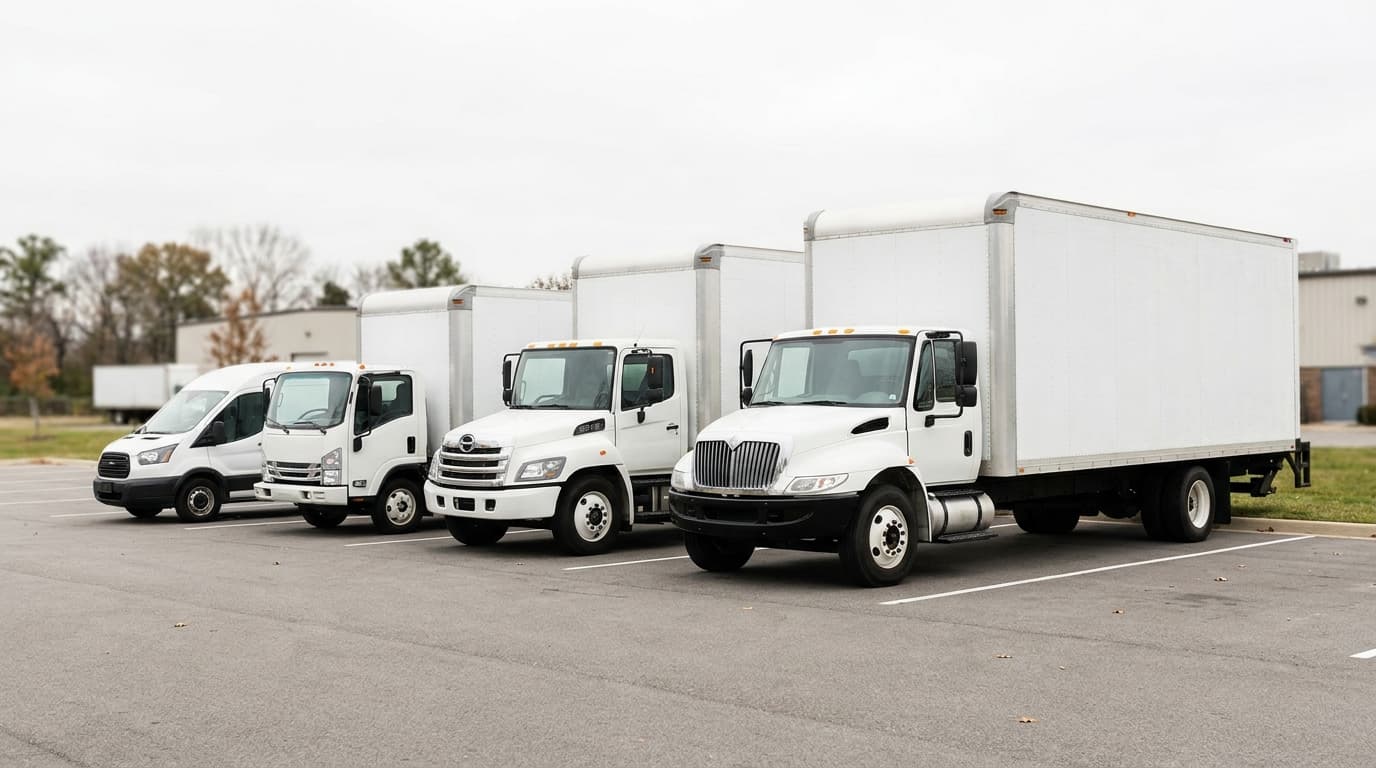
Answer two quick questions and get a size recommendation, plus a side-by-side of how U-Haul, Penske, and Budget stack up.