How to Rent a Moving Truck: A Step-by-Step Guide for First-Timers
Never rented a moving truck before? This is the plain-English walkthrough of the whole process, from picking a size to dropping the keys in the box, so you book the right truck at the right price and skip the expensive rookie mistakes.
Renting a moving truck sounds simple: pick a truck, drive it, bring it back. But the first time you actually do it, the questions pile up fast. What size? One-way or round-trip? Do I need the insurance? Why is the price different every time I check? And what happens if I return it late or bring it back with less gas?
This guide walks through the entire process the way we wish someone had explained it to us the first time: no jargon, no upsells, just the steps in order and the traps to avoid.
The short version
If you only read one section, read this. Renting a moving truck comes down to six steps:
- Figure out your size. Match your home to a truck bucket: cargo van, small (10–12'), medium (15–16'), large (20–22'), or extra-large (26'). When in doubt, size up.
- Decide one-way or round-trip. Moving to a new city? You want a one-way rental so you don't have to drive the empty truck back.
- Get prices from more than one company. U-Haul, Penske, and Budget are the three that do one-way moves, and their prices for the same route can differ by hundreds of dollars.
- Book early. One-way trucks in particular sell out, and booking ahead usually costs less.
- Decide on protection. Your personal auto insurance and credit card usually do not cover a rental truck. Know your options before the counter.
- Do the pickup walkthrough. Photograph the truck, note the fuel level, test the ramp and lights. Then load smart and return it on time, refueled.
Everything below is just these six steps in detail.
Step 1: Choose the right size
This is the decision that matters most, and the one people most often get wrong, almost always by going too small. A truck that's slightly too big costs a little more per day; a truck that's too small costs you a second trip, a second day of rental, or furniture left behind.
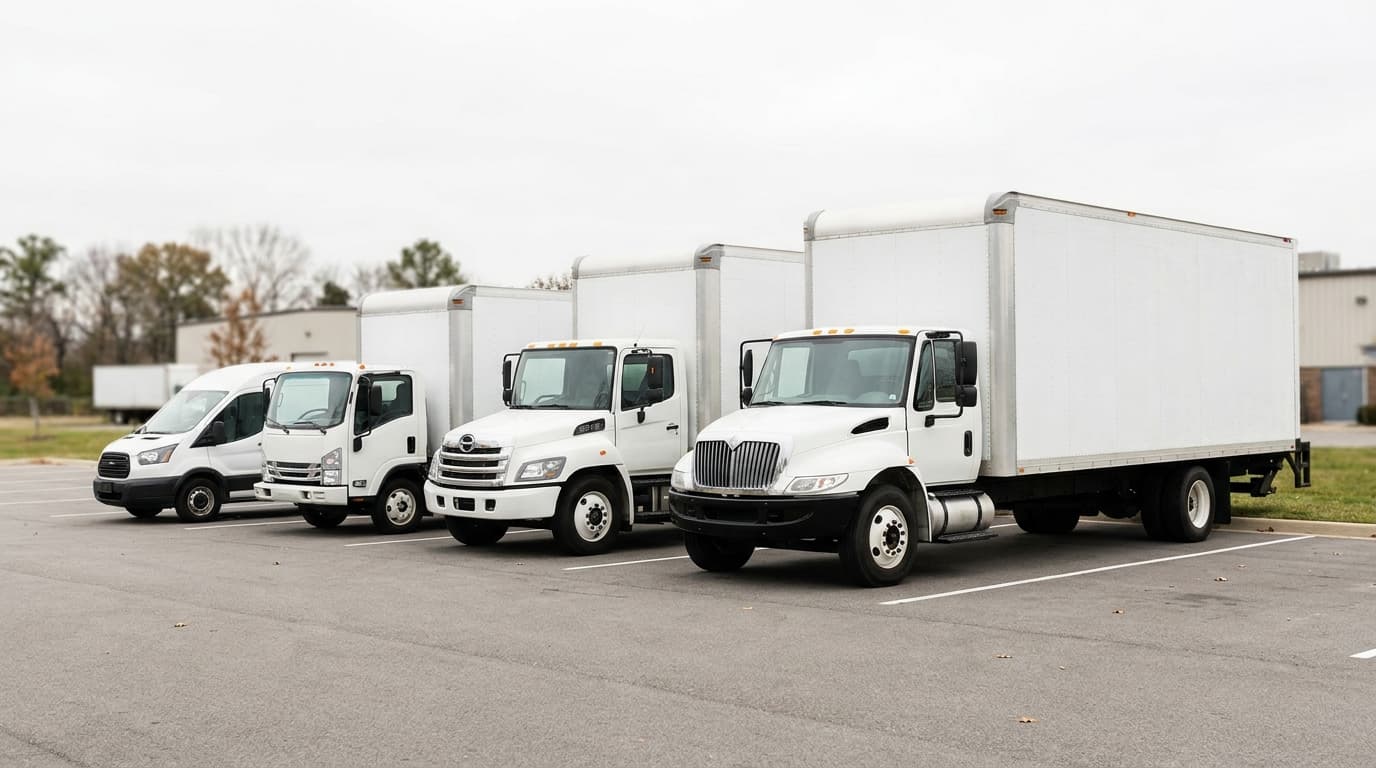
The industry sells five rough sizes. A cargo van or 10–12' truck suits a studio or one-bedroom. A 15–16' truck handles a two-bedroom apartment or small house. A 20–22' truck fits a three-bedroom home. The 26' truck (the biggest you can rent without a commercial license) is for large four- and five-bedroom houses.
If you're between sizes, go up. Our truck size calculator will give you a recommendation in about ten seconds, and our full size guide breaks down each option room by room.
One catch worth knowing now: the sizes don't line up perfectly between companies. A U-Haul "15-footer," a Penske "16-footer," and a Budget "16-footer" are all the two-bedroom size. Don't assume a bigger number means a bigger truck across brands.
Step 2: One-way or round-trip?
There are two fundamentally different kinds of rental, and picking the wrong one is expensive.
A round-trip (local) rental is for when you're moving across town: you pick the truck up and return it to the same location. These are priced with a low daily rate plus a per-mile charge.
A one-way rental is for when you're moving to a different city or state: you pick up in your old town and drop off near your new home, and you never drive the truck back. These are priced as a single flat rate that already includes a set number of days and (usually) the miles for your route.
If you're leaving town, you want one-way. Full stop. Trying to save money with a round-trip rental on a long-distance move means driving the empty truck all the way back, which almost never pencils out. Our guide on one-way vs. round-trip rentals covers the trade-offs in depth.
Step 3: Compare prices across companies
Only three national companies actually rent one-way moving trucks to consumers: U-Haul, Penske, and Budget Truck. (Enterprise and Hertz rent box trucks, but they generally require you to return them to the same branch, so they're not options for a move to a new city.)
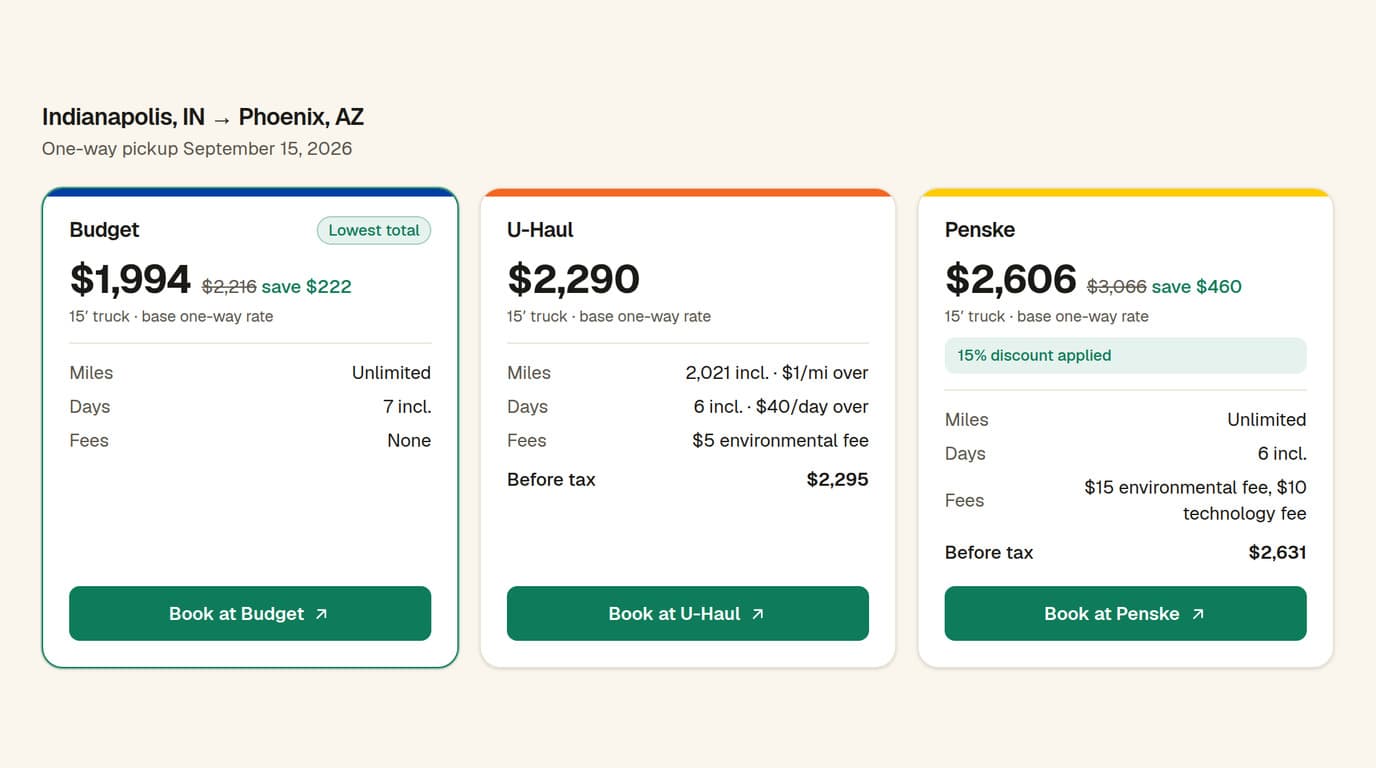
Here's the thing nobody tells first-timers: for the exact same route and date, these three can quote wildly different prices. One-way rates are driven by how many trucks each company needs moved in your direction. If lots of people are moving out of your city, prices there are high; if the company is short on trucks in your destination, they'll discount to get one there. This imbalance shifts week to week.
The practical takeaway: always check all three. In our own price research, Budget is frequently the lowest and Penske the highest, with U-Haul in the middle. But "frequently" is not "always," and the gap can be hundreds of dollars. Our side-by-side comparison shows how the three stack up on fleet, mileage, and pricing.
Step 4: Book early
Two reasons to reserve as far ahead as you can.
First, availability. One-way trucks are a finite pool moving around the country. The specific size you want, leaving the day you want, from a location near you, can genuinely sell out, especially around the end of the month, weekends, and the summer moving season.
First-of-the-month and last-of-the-month dates are the busiest because leases turn over then. If your dates are flexible, midweek and mid-month are both cheaper and easier to book. Our guide on the best time to rent digs into the seasonal swings.
Second, price. Booking ahead typically locks in a better rate than a last-minute scramble. And because most reservations can be cancelled free, there's little downside to locking one in early and re-checking prices as your date approaches.
Step 5: Understand the protection options
At the rental counter you'll be asked whether you want to add coverage, and this is where a lot of people freeze. Here's the key fact: your personal car insurance and your credit card's rental coverage usually do NOT extend to a moving truck. Both are typically written for passenger cars, and box trucks are commonly excluded.
That means the rental company's own protection products are often your only real coverage. The main one, a damage waiver, means you won't be on the hook if the truck is damaged. There are also options that cover the contents, cover you personally, and so on.
Don't decide this cold at the counter under pressure. Read our truck rental insurance guide first, then call your own insurer and card issuer to confirm what they do and don't cover. Walk in already knowing your answer.
Step 6: Pickup, loading, and return
The last mile is where avoidable fees hide.
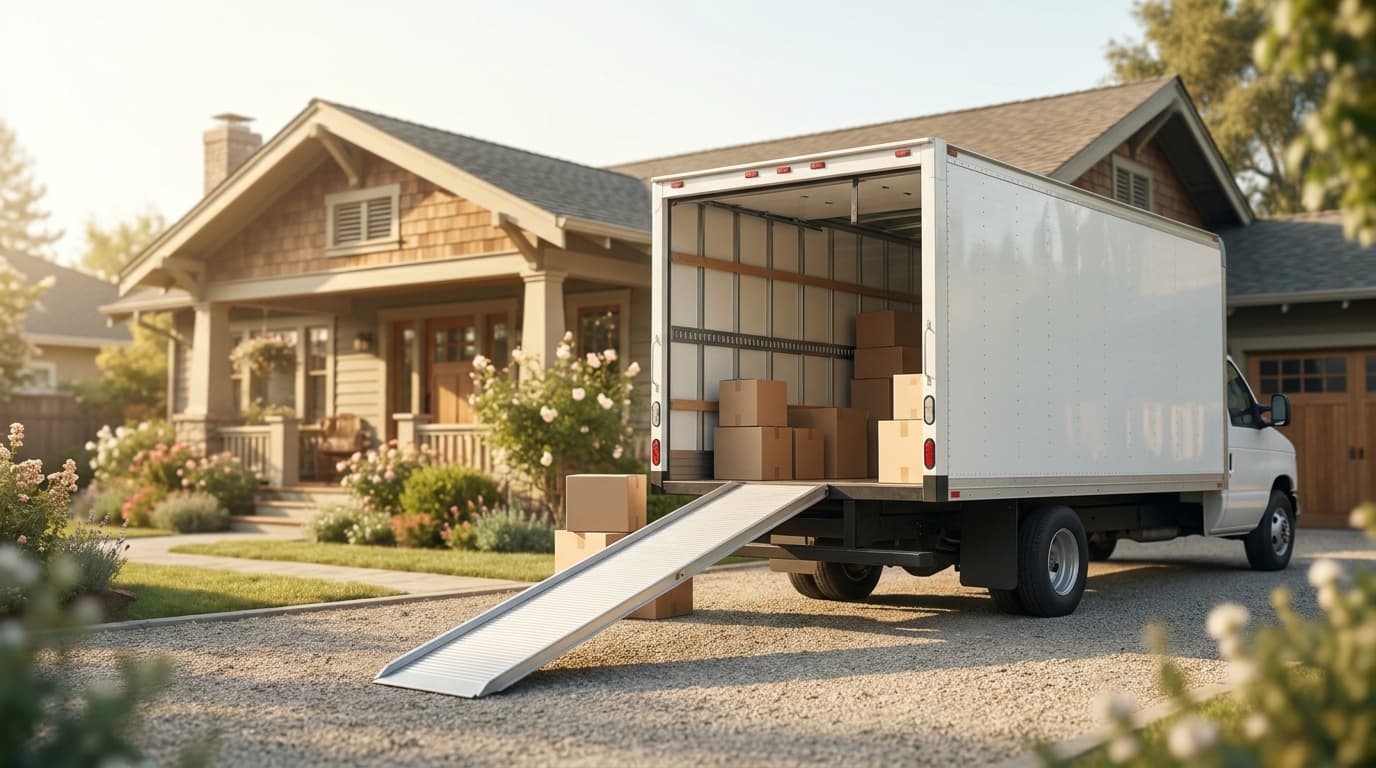
At pickup, bring your driver's license and the credit card on the reservation. Before you drive off: walk around the truck and photograph any existing dents or scratches, note the exact fuel level, and test the roll-up door, the loading ramp, and all the lights. This five-minute habit protects you from being charged for damage you didn't cause.
Loading is a skill. Heaviest items go in first, against the wall behind the cab, with the weight balanced side to side. Use straps to tie loads to the anchor points so nothing shifts on the highway. Our loading guide has the full playbook.
Driving a big truck is different: it's taller, wider, heavier, and stops slower than your car. Take turns wide, leave extra following distance, and mind your height near overpasses and drive-throughs. If you've never driven one, skim our driving guide before you set off.
At return, the two big fees to dodge are the fuel charge and the late charge. Refuel to the level you started at (rental company fuel is priced painfully), return on time (a late drop can trigger a whole extra day), and photograph the clean, empty truck and the fuel gauge as proof.
Red flags worth memorizing
- A price that seems too good to be true on one-way. Confirm it includes enough miles and days for your route before you celebrate.
- Assuming your car insurance covers the truck. It usually doesn't. Verify, don't assume.
- Booking the smallest truck to save money. The second trip or second day costs far more than the next size up would have.
- Skipping the pickup walkthrough. No photos means no defense against a surprise damage charge.
- Returning it low on gas. The refueling fee is one of the most expensive per-gallon deals in America.
The bottom line
Renting a moving truck isn't hard once you see the whole path: size it right, pick one-way or round-trip, compare all three companies, book early, sort out protection before the counter, and treat pickup and return with a little care. Do those things and you'll get the right truck at a fair price, without the rookie fees.
Ready to start? Find your truck size, then compare U-Haul, Penske, and Budget for your route.
Not sure which truck to book?
Answer two quick questions and get a size recommendation, plus a side-by-side of how U-Haul, Penske, and Budget stack up.