How to Move a Refrigerator, Washer, and Other Big Appliances
Big appliances are the heaviest, most awkward, and most damage-prone things you'll load. Here's how to prep a fridge, washer, dryer, dishwasher, and range the right way: safely, without wrecking the appliance or your back.
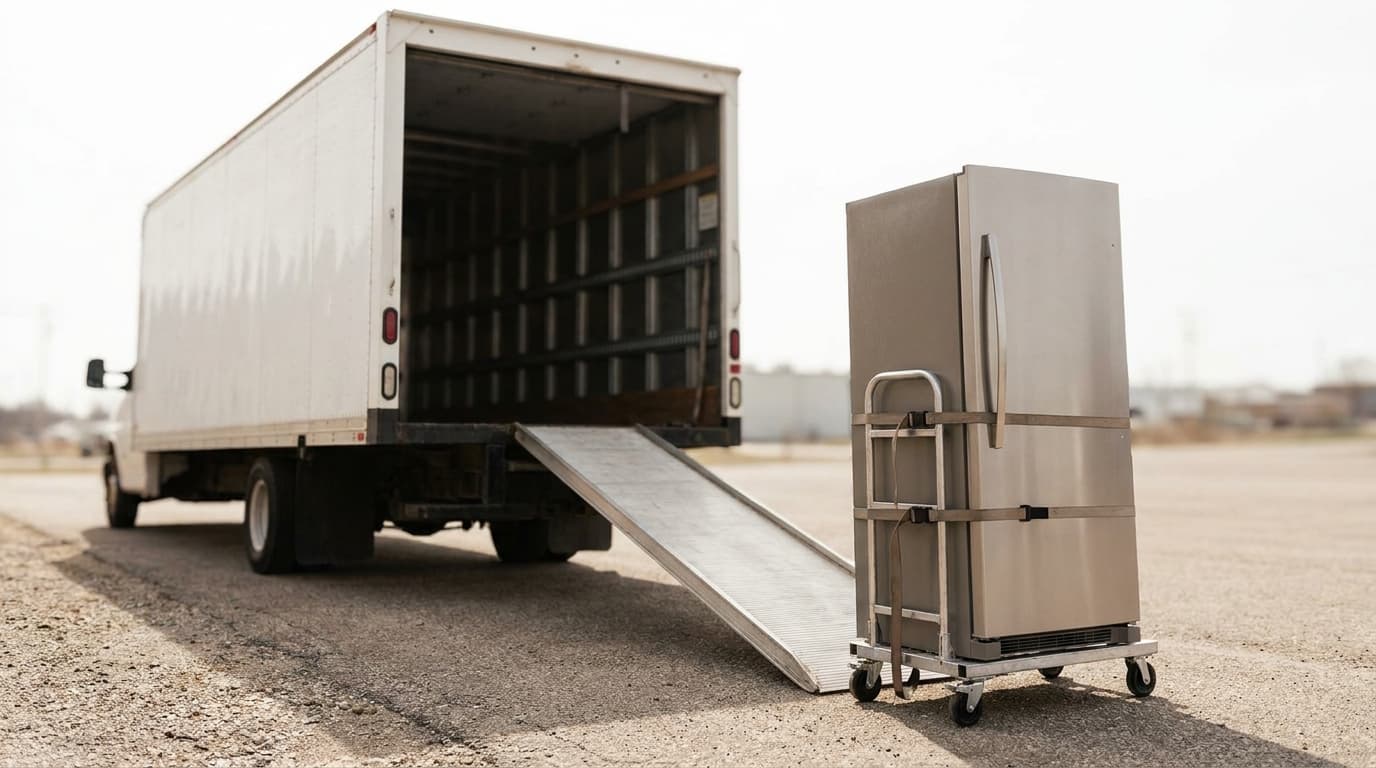
Large appliances are the boss level of any move. A refrigerator can weigh 250–350 pounds, a washer 150–200, and every one is tall, top-heavy, and easy to dent or break if you tip it the wrong way. Get the prep right, though, and each becomes a manageable job for two people with the right tools.
This guide covers the technique that applies to every big appliance, then the specific prep each one needs for the fridge, washer, dryer, dishwasher, and stove. The recurring theme: respect the weight, keep things upright, and never do gas work you're not comfortable with.
The short version
If you only read one section, read this:
- Use a proper appliance dolly with a strap, not a regular box hand truck. The strap holds the appliance to the dolly so it can't slide off.
- Get at least one helper. These items are too heavy and too awkward to move alone, full stop.
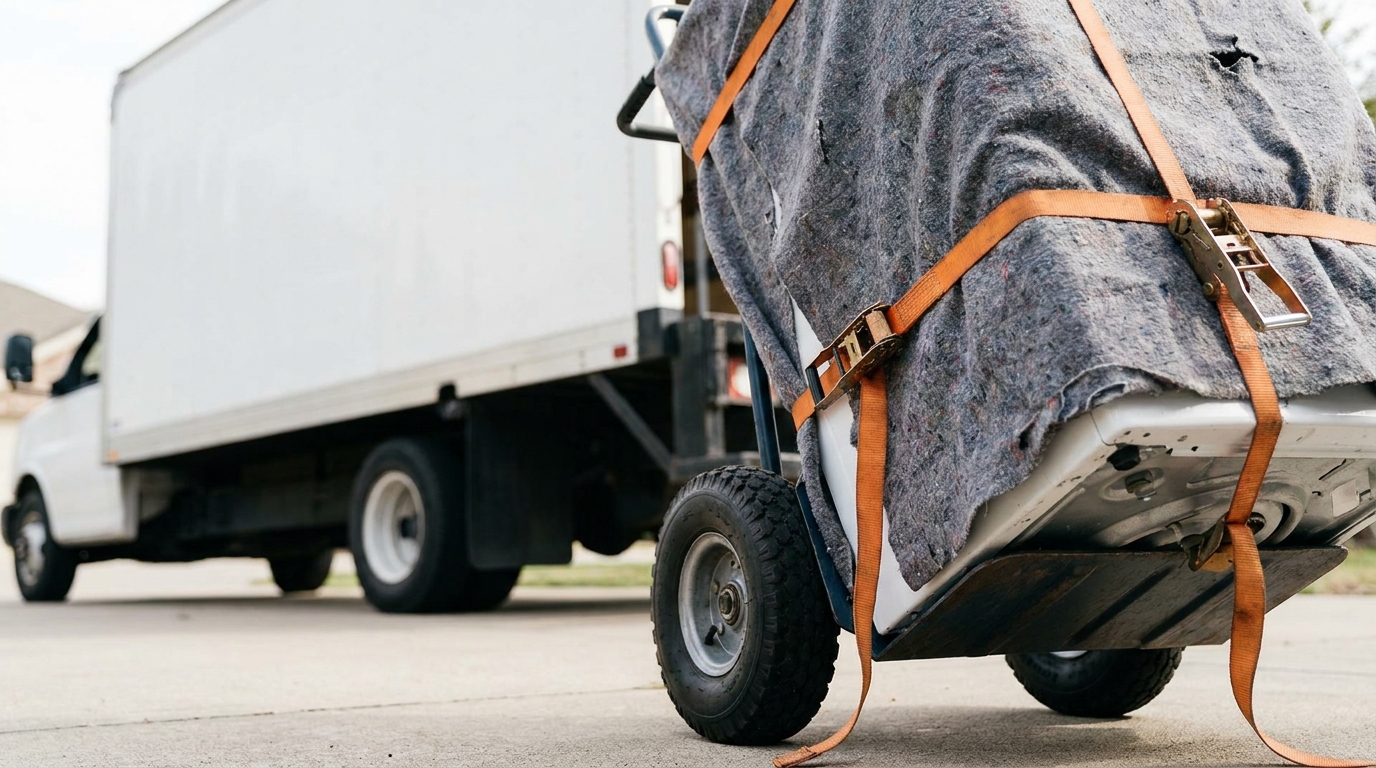
- Wrap each appliance in moving blankets to protect both the finish and your walls and doorways.
- Keep it upright whenever you can (especially the fridge) and walk it slowly up the ramp, never rushing.
- Prep the day before. Defrosting a freezer, draining hoses, and disconnecting lines all take time you won't have on moving morning.
- Don't do gas work you're unsure about. For a gas dryer or gas range, disconnecting the line is a job to treat carefully. Call a professional if you have any doubt.
Everything below is these ideas in detail.
General technique: the part that's the same every time
Before we get appliance-specific, master the moves that apply to all of them.
Rent or buy an appliance dolly. This is the single most important tool for the job. An appliance dolly is taller than a regular hand truck, has a ratcheting or cam strap to lock the appliance in place, and often has "stair climbers," curved rails that let you ease the load down steps one at a time. A regular box dolly has no strap and a short frame; a 300-pound fridge will happily tip right off it. Most truck-rental counters rent appliance dollies for a few dollars a day, and it's worth every penny. Our moving supplies checklist covers what else to have on hand.
Never move one alone. One person steers and tilts the dolly; the other spots the top and watches for obstacles. On stairs this isn't optional. One controls the descent while the other guides from below (never directly beneath the load).
Wrap it in moving blankets. Cover the appliance in furniture blankets and secure them with stretch wrap or tape (tape the blanket, not the finish). Blankets protect the appliance's paint and, just as important, your door frames, banisters, and walls when you nudge them on the way out.
Lift with your legs, and let the dolly do the work. Slide the dolly's plate fully under the appliance, strap it tight, then tip the dolly back toward you until the weight settles over the wheels. Keep your back straight and let your legs and the tool carry the load rather than carrying it yourself.
Walk it up the ramp slowly. The loading ramp is where accidents happen. Go one deliberate step at a time, keep the appliance tilted back against the dolly, and have your helper spotting. Once it's in the truck, stand it upright against the wall behind the cab, strap it to the anchor points, and don't stack anything heavy on top. Our loading guide explains where appliances fit in the overall load plan.
Refrigerator and freezer
The fridge is usually the heaviest appliance in the house and the one most sensitive to how it travels.
Empty it and eat down the food in the days before the move. A full fridge is heavier, and everything inside becomes a projectile. Remove or secure loose shelves and drawers so they don't rattle.
Defrost about 24 hours ahead. Unplug it the day before and prop the doors open so any frost melts and the interior dries out. Lay towels down to catch the water. A fridge that's still wet inside when you seal it up will smell musty by the time you arrive.
Secure the doors. Once it's clean and dry, tape the doors shut or use a strap or rope so they can't swing open on the dolly or in the truck. Don't leave the tape on for weeks. Just for the move.
Keep it upright in transit. This is the big one. Refrigerators have compressor oil that can migrate into the cooling lines if the unit is laid on its side, and that can damage the compressor when you power it back up. Move and transport a fridge standing upright whenever possible.
Let it stand upright before plugging it back in. After the move, leave the fridge standing upright for several hours before you power it on. That lets the oil settle back where it belongs. A common rule of thumb: if it was tilted or on its side at all, let it sit upright for at least as long as it was tilted. When in doubt, give it a few hours minimum.
Washing machine
Washers hide two hazards: water still in the hoses, and a heavy drum that can slam around inside the cabinet.
Turn off the water and disconnect the hoses. Shut the hot and cold supply valves, then disconnect the fill hoses. Have a bucket and towels ready, because water will drain out. Drain the hoses fully and pack them where they won't leak onto anything.
Deal with the leftover water. Even after you disconnect, a little water sits in the pump and drum. Run a quick spin cycle beforehand if you can, tip the machine gently to drain the rest into a bucket, and leave the lid open so the interior can dry.
Use the shipping (transit) bolts if you have them. Front-loading washers ship with transit bolts that lock the drum in place so it can't bounce on its suspension during transport. Moving a front-loader without them can damage the internal suspension. If you kept the bolts from the original purchase, reinstall them before the move. If you don't have them, keep the machine upright and padded, avoid rough handling, and consider checking the manufacturer's instructions for your model.
Dryer
The dryer is lighter than the washer but still needs a little prep.
Disconnect it fully. Unplug an electric dryer. For the exhaust, disconnect the vent duct from the back and from the wall.
Clean the vent. A move is the perfect moment to clear the lint out of the vent duct and the lint trap. A clogged vent is a common cause of dryer fires, so you might as well start fresh in the new place.
Gas dryers need the gas line safely disconnected. A gas dryer has a supply line behind it that must be shut off and disconnected before the appliance can move. This is not a step to improvise. If you're not confident shutting off the valve, capping the line, and checking for leaks, hire a professional or your gas utility to do it. Gas work done wrong is dangerous.
Dishwasher
Dishwashers are usually built in under a counter, so the move starts with getting it out cleanly.
Disconnect the water and drain lines. Shut off the water supply, then disconnect the supply line, the drain hose, and the electrical connection. Have towels ready: there's always some water left in the lines and the sump.
Let it dry and protect the connections. Leave the door ajar to dry out the interior. Coil the hoses and tuck the loose fittings and wiring against the unit, taped or wrapped so nothing snags or bends in transit.
Move it upright and padded. Wrap it in a blanket and keep it standing. The exposed connections at the back are the vulnerable part, so load it where nothing will press against them.
Stove and range
Electric and gas ranges are handled very differently, and the difference matters for your safety.
Electric ranges are relatively straightforward: unplug the unit, secure or remove the racks and any loose grates, tape the oven door shut, and move it upright on the dolly like any other appliance.
Gas ranges are a different story. A gas range is connected to a gas supply line, and shutting that off and disconnecting it safely is a job to treat with real care. If you are not completely comfortable turning off the gas valve, disconnecting the line, and capping it correctly, we strongly recommend hiring a professional or arranging for your gas utility to handle it. The cost of a pro is trivial next to the risk of a gas leak. This is the one part of appliance moving where "figure it out as you go" is the wrong approach.
Once a gas range is properly and safely disconnected and capped, it moves like any other heavy appliance: blanket-wrapped, strapped to the dolly, upright, and walked slowly up the ramp.
Safety, in one scannable list
- Two people minimum on every large appliance. No heroics.
- Appliance dolly with a strap, not a plain box hand truck.
- Lift with your legs, keep your back straight, and let the dolly carry the weight.
- Keep the fridge upright in transit, and let it stand upright for several hours before powering on.
- Drain hoses and lines on the washer, dryer, and dishwasher before moving them.
- Never do gas work you're unsure about. A pro or the gas utility is the right call for a gas dryer or range.
- Clear the path first: measure doorways, remove doors if needed, and know where you're setting the appliance down before you start moving it.
- Watch the ramp: slow, deliberate steps, one at a time, with a spotter.
The bottom line
Big appliances reward planning. Do the prep the day before (defrost the fridge, drain the washer, disconnect the dryer and dishwasher) and the moving-day work becomes a calm, two-person job with an appliance dolly and a stack of blankets. Keep everything upright, take the ramp slowly, and hand off any gas connection you're not 100% sure about. Nothing here is hard; it's just heavy, and heavy demands respect.
Getting organized for the whole move? Build your plan with our moving checklist, stock up using the moving supplies checklist, and if you still need a truck, start with how to rent a moving truck.
Not sure which truck to book?
Answer two quick questions and get a size recommendation, plus a side-by-side of how U-Haul, Penske, and Budget stack up.