How to Unload a Moving Truck Fast and Safely
The load-in is the finish line, but rushing it is how movers get hurt and furniture gets scratched. Here's how to unload a moving truck quickly, keep the load stable the whole way down, and land every box in the right room the first time.
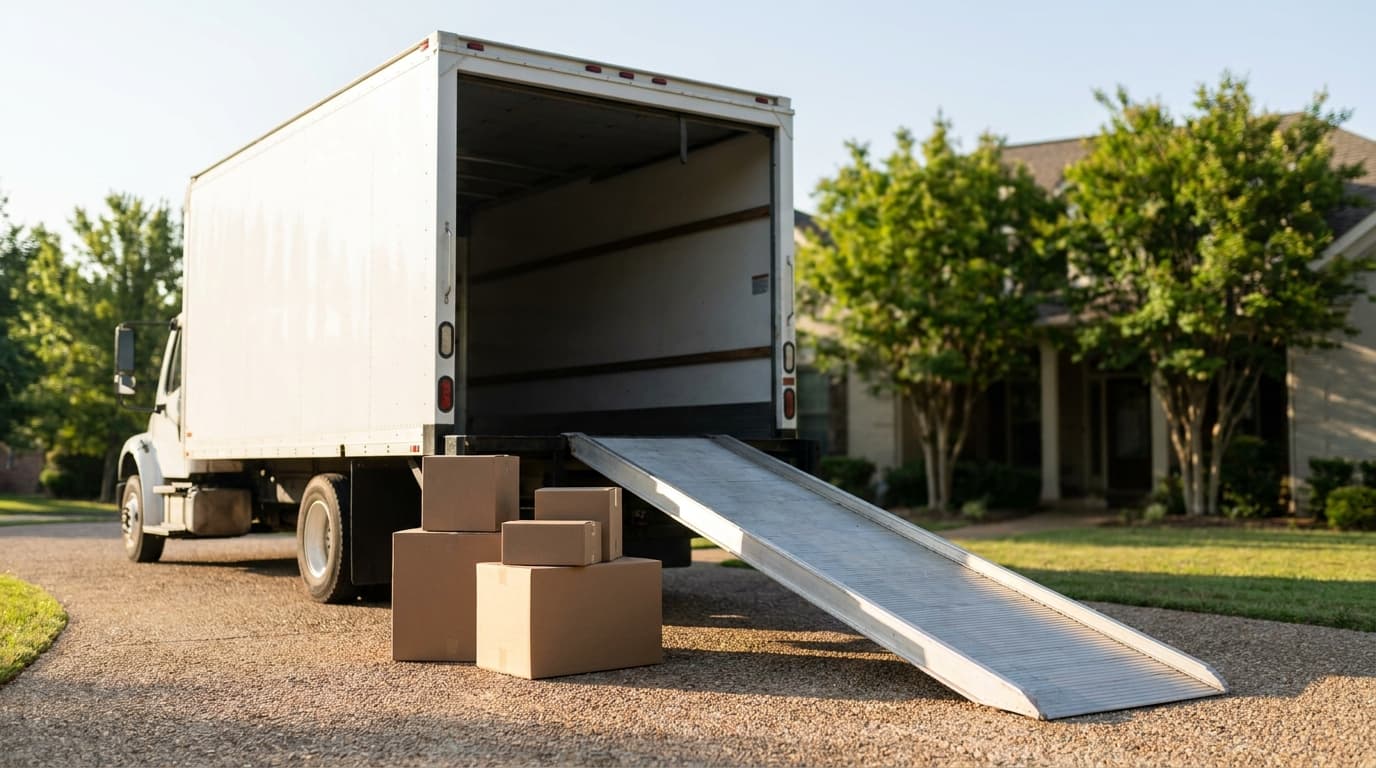
You've driven the truck across town or across the country, and now the only thing between you and being done is emptying it. It's tempting to fling the door open and start hauling. But the unload is where tired people get hurt, where furniture picks up its last scratches, and where a badly packed load can fall out on you. A little order here turns a chaotic afternoon into a smooth one.
This guide covers unloading a moving truck the safe, fast way: how to set up before you open the door, why you unload in the exact reverse of how you loaded, and how to land boxes in the right rooms without wearing yourself out.
The short version
If you only read one section, read this. Unloading well comes down to five ideas:
- Set up before you open the door. Park as close to the entrance as you legally can, protect the new home's floors and doorways, line up your help, and know where each labeled box is headed.
- Unload in reverse. Whatever went on last comes off first. Working back-to-front keeps the remaining load balanced and stops the stack from toppling.
- Move heavy things with a dolly and a team. Lift with your legs, communicate every step, and never overload the hand truck or rush the ramp.
- Work in a chain and stage by room. Carry boxes straight to the room on the label instead of dumping everything by the front door. This is where your labeling pays off.
- Unstrap carefully, then finish clean. Items shift in transit, so expect something to lean on the straps. Take breaks, stay hydrated, then sweep the empty truck and do a walkaround before you return it.
Everything below is those five ideas in detail.
Set up before you open the door
The fastest unloads start before the ramp comes down. Five minutes of setup saves an hour of backtracking.
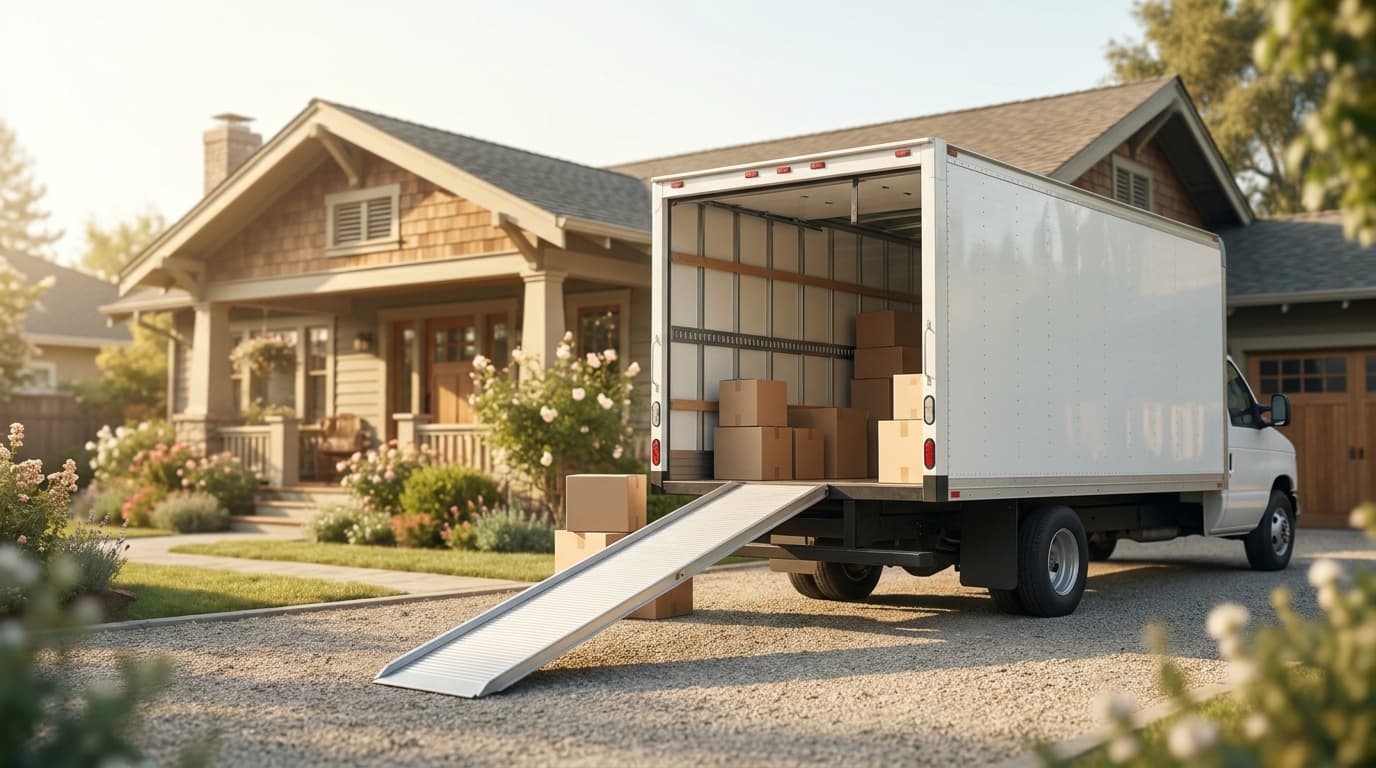
Park as close to the door as you safely and legally can. Every extra foot between the ramp and the entrance is a foot you carry every item. If the street is tight, look for a spot you can reserve. A driveway beats a curb, and a curb beats halfway down the block. Just don't block a hydrant, a neighbor's drive, or a fire lane.
Protect the house before anything comes in. Lay floor runners, cardboard, or old blankets over hardwood and tile, and put a mat inside the door where grit collects. Pad the doorframes and stair banisters where a dresser corner will inevitably kiss the wall, and prop open any doors in your path. Our guide on protecting furniture when moving covers padding and wrapping in more depth.
Line up your help and give everyone a job. Decide who's on the truck handing items down, who's carrying, and who's placing inside. Then appoint a "traffic director" who knows which room every piece belongs in, so carriers don't wander.
Know where each box goes. If you labeled boxes by room when you loaded, this is the moment that work pays off. Post a sign on each room's door so your traffic director can route labels at a glance. Our moving checklist helps you get organized room by room.
Unload in the reverse of how you loaded
Here's the single most important rule of unloading: take things off in the opposite order you put them on. The last items you loaded, nearest the door, come off first, and you work forward toward the cab.
There's a reason beyond convenience. A well-loaded truck is stacked so the heaviest, largest pieces sit forward against the cab wall, with lighter, looser items toward the rear. Yank heavy pieces out of the middle and the balanced stack loses its support, shifting or tipping toward the open door. Peeling the load off back-to-front keeps everything that's left leaning the way it was meant to. (Curious how it was built? Our loading guide shows the front-to-back logic in reverse.)
Work in layers: clear the loose boxes near the door, then unstrap and remove the next section, and keep moving forward. Don't dig a tunnel to grab one specific item. You'll destabilize everything around it.
Unstrap carefully and watch for shifting
Cargo moves on the highway no matter how well you strapped it, so assume something has shifted before you release a strap. When you undo a tie-down, stand to the side, not directly in front of the section, and keep one hand ready to steady anything that leans out. Release straps one at a time and re-check the stack before pulling items free: boxes or a mattress held upright by a strap can fall the instant the tension is gone.
If something has clearly shifted into a precarious lean, get a second person before you touch it. One person catching a falling wardrobe alone is how backs and toes get hurt.
Move the heavy stuff with a dolly and a team
Boxes are the easy part. It's the appliances, the sofa, and the dresser that separate a smooth unload from a trip to urgent care.
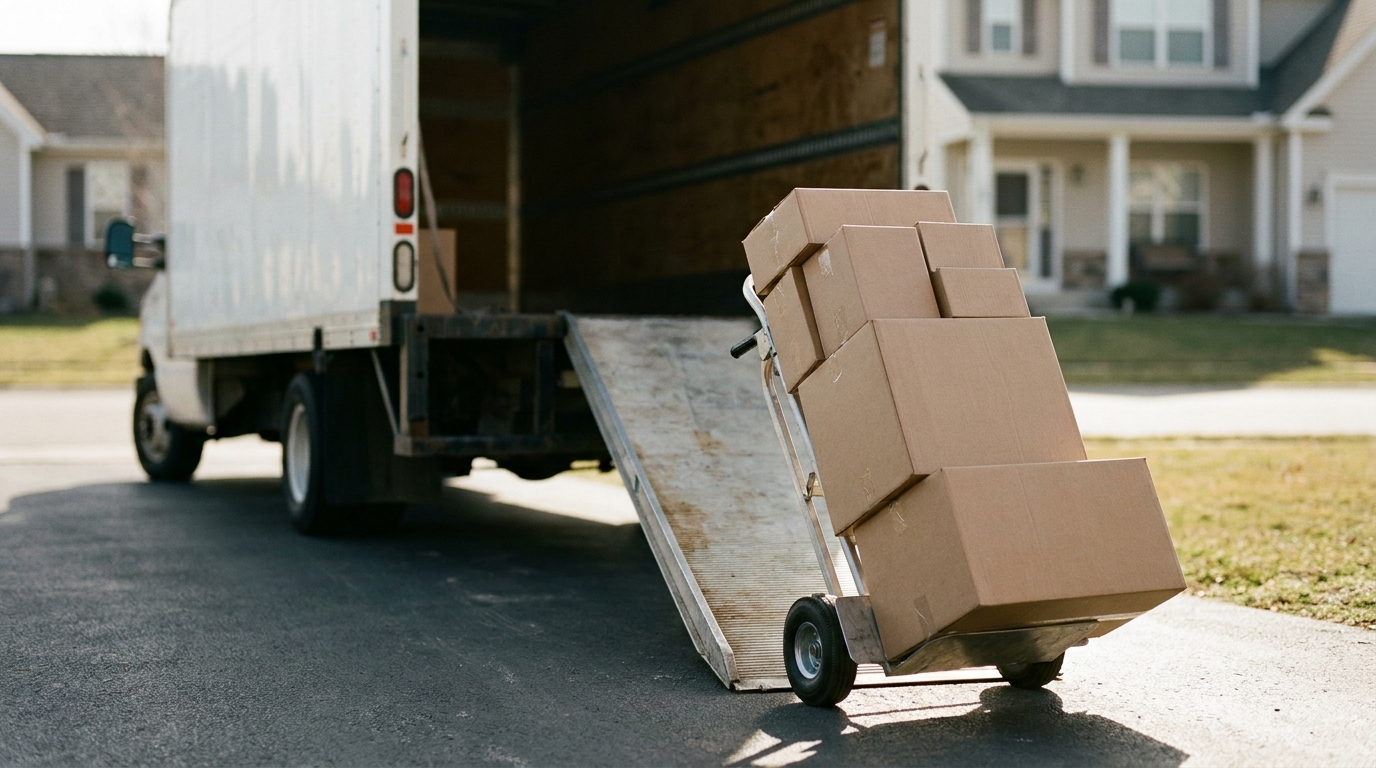
Use a dolly (hand truck) for anything heavy. Strap the item on, tip it to a balanced angle, and let the wheels do the work. But don't overload it. Stack only what you can control, keep the load low and centered, and never pile it so high you can't see over it. On the ramp, a top-heavy dolly is a runaway waiting to happen.
Team-lift the big pieces the right way:
- Lift with your legs, not your back. Squat down, keep the item close to your body, keep your back straight, and stand up with your leg muscles.
- Communicate every move. Agree on "lift on three," call out steps, thresholds, and turns, and name who's steering. Silence is how fingers get pinched in a doorway.
- Don't rush. Set a piece down and re-grip rather than shuffling with a failing hold. Speed comes from rhythm, not from hurrying a single lift.
- Clear the path first. Trip hazards, pets, and curious kids belong out of the way before a two-person load is on the move.
For the heavy machines (refrigerators, washers, dryers, ranges), slow down further and use an appliance dolly with a strap. Our guide on moving large appliances walks through securing doors, keeping a fridge upright, and getting these up steps without wrecking your back or the appliance.
Respect the ramp. It's the most dangerous ten feet of the move. Steep, sometimes slick, and often walked backward under load. Keep it clear and dry, and never let a wheeled load get ahead of you; on a downward slope, stay below or beside the dolly so it can't run away. Take heavy items down slowly, and if the ramp is wet, post someone at the base to spot each load.
Work in a chain and stage by room
The fastest teams don't have everyone doing everything. They form a chain. One or two people work inside the truck, breaking down sections and handing items to the ramp; carriers ferry a steady stream to the house; a traffic director inside routes each item to its room. Nobody stands idle, and nobody crisscrosses the yard.
Stage boxes in the room they belong to as they come off the truck. Don't pile everything inside the front door. That just creates a second move later. A box marked "kitchen" should land in the kitchen the first time it's carried. That's the entire payoff of labeling: boxes route themselves and you unpack a room at a time instead of excavating a mountain in the living room. And decide furniture placement before you set a heavy piece down. Moving a loaded dresser twice is wasted effort a little planning prevents.
Pace yourself: breaks and water
Unloading is a workout, and it usually comes after a long drive when you're already drained. Tired movers make the mistakes that hurt people and break things.
- Take short breaks between big pushes. Right after the heavy furniture is out is a natural point.
- Drink water, kept cold and handy, especially in summer heat. Dehydration sneaks up fast during physical work.
- Eat something. A snack keeps energy and focus up over a multi-hour unload.
- Stop before you're wrecked, not after. The last few items are when fatigue-driven drops happen, so slow down for the finish.
Finish clean: sweep the truck and do a walkaround
When the truck looks empty, it usually isn't quite.
Do a final sweep of the cargo area. Check the front wall, the corners, the wheel wells, and the overhead cab shelf. Small boxes, tools, straps, and blankets love to hide there. Grab any furniture pads and dollies you rented so you're not charged for missing equipment.
Walk around the truck before you drive off. Confirm the ramp is stowed and latched, the rear door is rolled down and locked, and nothing is left on the ground. A glance at the fuel gauge tells you whether to refuel on the way to the drop-off.
Then it's just the return. Our guide on how to return a moving truck covers refueling to the right level, hitting the drop-off time, and photographing the clean, empty truck so you're not surprised by a fee. The checklist is much the same whether you rented from U-Haul, Penske, or Budget.
The bottom line
A great unload is mostly a well-run one: set up before you open the door, take the load off in reverse so it stays stable, move the heavy stuff with a dolly and a proper team lift, and route every labeled box straight to its room. Respect the ramp, expect things to have shifted, take your breaks, and finish with a clean sweep and a walkaround. Do that and you'll be unpacking in the right rooms instead of nursing a sore back.
Ready for the last step? See how to return a moving truck without the extra fees, and keep the whole move on track with our moving checklist.
Not sure which truck to book?
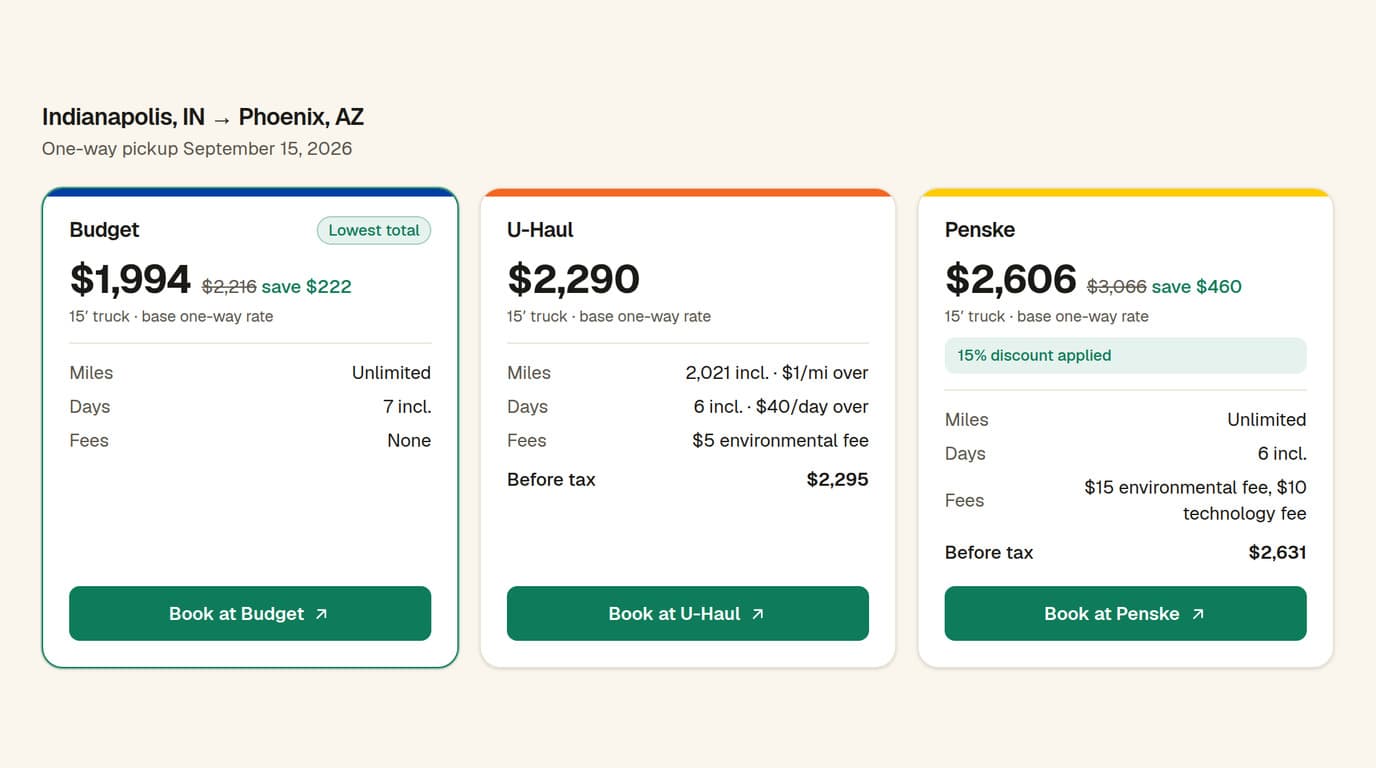
Answer two quick questions and get a size recommendation, plus a side-by-side of how U-Haul, Penske, and Budget stack up.