How to Load a Moving Truck So Nothing Breaks (or Shifts)
A well-loaded truck drives level, packs tight, and arrives with nothing broken. Here's the load order, the equipment, and the strapping tricks the pros use, explained step by step so your first load looks like your tenth.
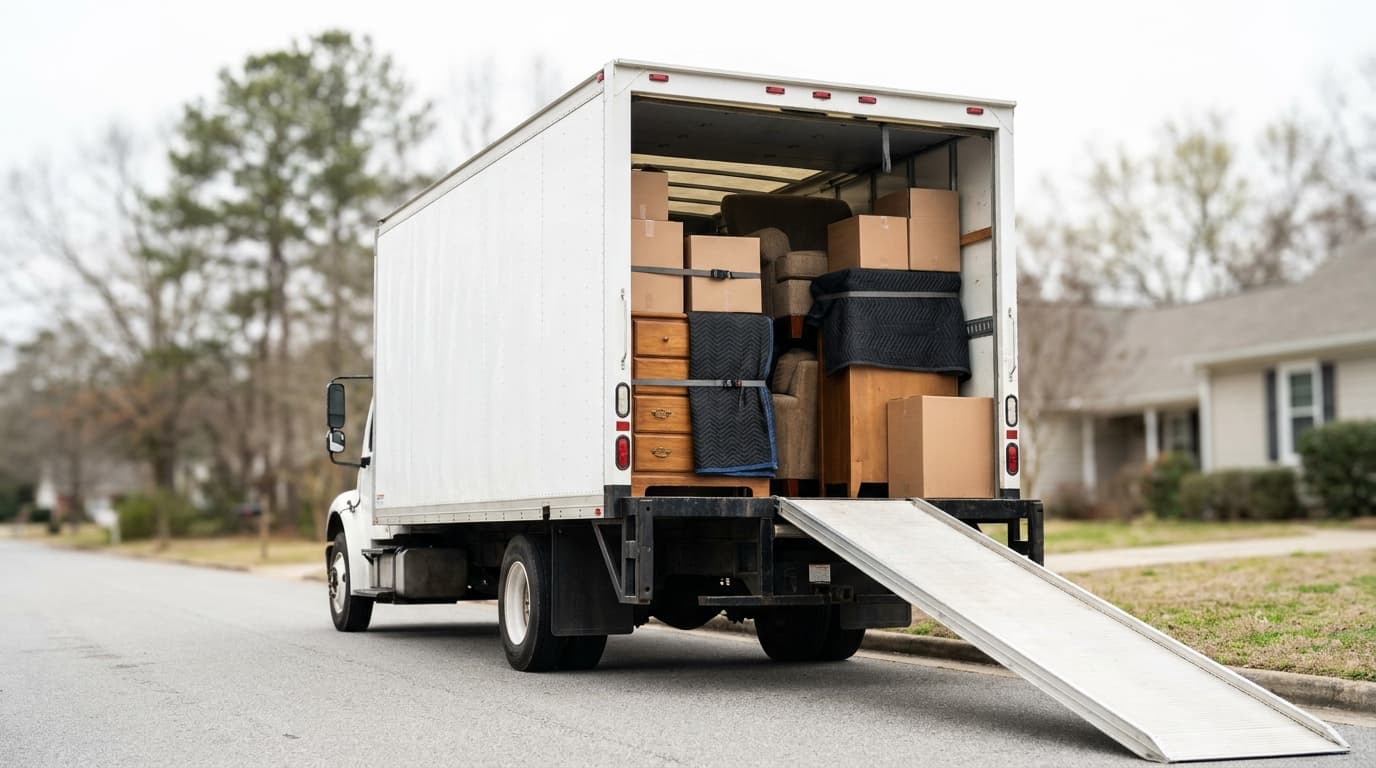
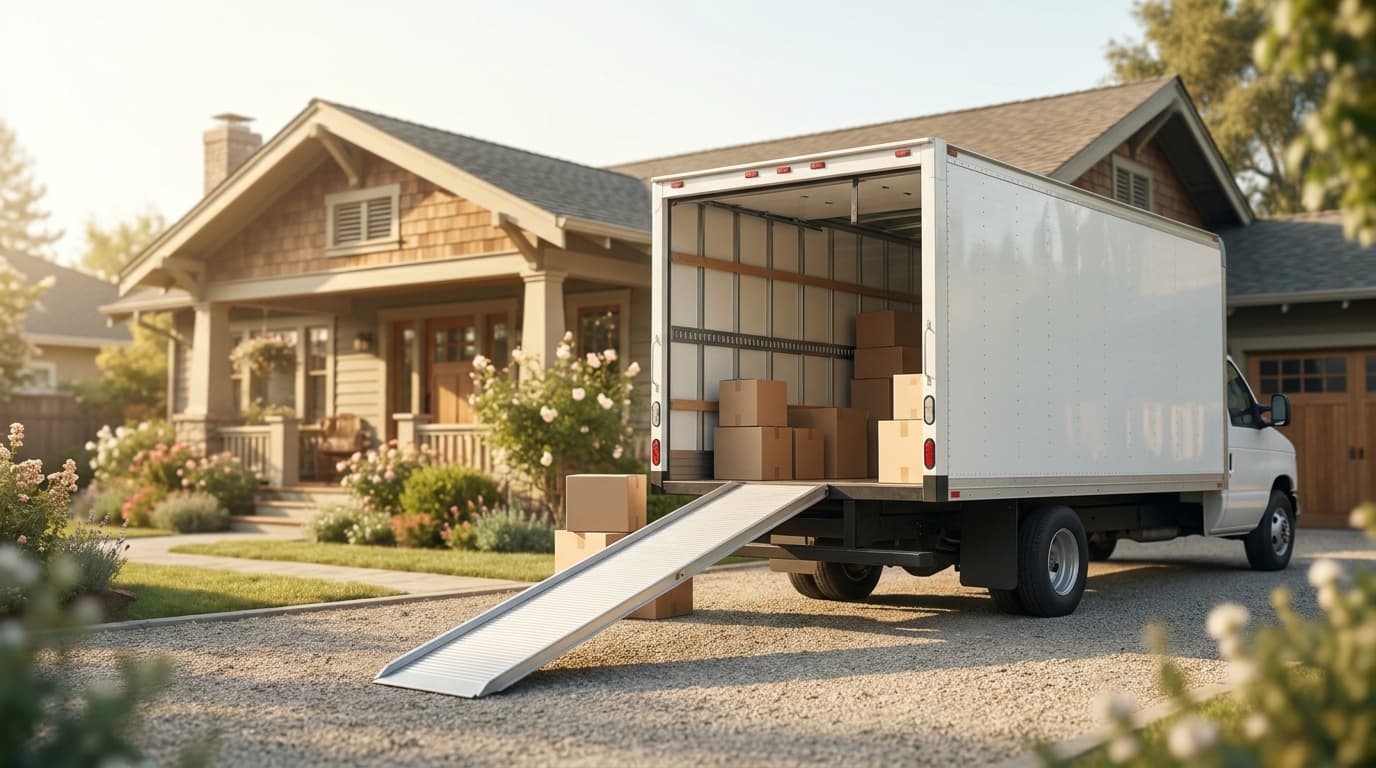
Loading a moving truck well isn't about strength. It's about order. Do it right and everything fits, the truck drives level, and your mirror arrives in one piece. Do it wrong and you get a tower of boxes that topples at the first hard stop, a sofa with a cracked leg, and a truck that leans in the turns. The good news: loading follows a handful of simple principles, and once you know them, your first load looks a lot like a pro's.
This guide walks through the whole thing in the order you'll actually do it, from the gear you gather before you lift a single box to the last-minute essentials box you slide in by the door.
The short version
If you only read one section, read this. Loading a truck comes down to six ideas:
- Gather the right gear first. A hand truck, a furniture dolly, moving blankets, and a set of ratchet or cam straps do more for your load than an extra pair of hands.
- Heaviest and biggest go in first. Appliances, dressers, and sofas load against the wall behind the cab. Everything else builds out from there.
- Build in tiers, floor to ceiling. Fill each vertical slice fully before you move deeper into the truck, keeping heavy on the bottom and light on top.
- Balance the weight. Keep it even side to side and distribute it front-to-back so the truck sits level and drives straight.
- Strap it in sections. Use the truck's anchor rails to tie the load off in tiers so nothing shifts on the highway.
- Fill every gap. Soft items go into the empty spaces so there's no room for anything to slide.
Everything below is just these six ideas in detail.
Step 1: Gather your equipment first
The single biggest difference between an easy load and a miserable one is having the right gear before you start. Chasing down a dolly halfway through, with a fridge stranded on the ramp, is how people get hurt and how furniture gets dropped.
Here's the short list worth having on hand:
- A hand truck (upright dolly). For boxes, appliances, and anything you can tip and roll. It saves your back and lets you move stacks instead of single items.
- A furniture dolly (four-wheel flat dolly). For heavy, wide pieces (dressers, sofas, chests) that don't balance on a hand truck.
- Moving blankets (furniture pads). The workhorse of a clean move. They wrap wood, glass, and finished surfaces so nothing rubs or scratches in transit.
- Ratchet straps and cam straps. Ratchet straps cinch heavy items down hard; cam straps are quicker for lighter loads. You want several of each to strap the load off in sections.
- A mattress bag for each mattress. Cheap insurance against dirt, moisture, and tears on the ride.
- Rope and stretch wrap. Rope for tying off odd shapes; stretch wrap for holding drawers shut and blankets in place.
Most rental counters rent or sell this gear when you pick up the truck, so you can add it to your reservation instead of making a separate hardware-store run. If you haven't booked yet, our step-by-step rental guide covers what to line up before pickup.
Step 2: Disassemble what you can
Before anything goes in the truck, break down the big pieces. It's tedious, but flat parts pack far tighter than assembled furniture, and disassembled items are much less likely to snap.
Take apart bed frames, unscrew table legs, remove shelves from bookcases, and detach anything that unbolts. Keep the hardware for each piece in a labeled zip-top bag, and tape the bag to the item it belongs to (or drop all the bags in your essentials box). Wrap loose panels and legs in a blanket so they don't get dinged.
Standing furniture on end where you can also saves enormous floor space: a mattress, a table top, or a headboard riding on its edge takes up a fraction of the footprint it would lying flat.
Step 3: Load the heaviest and largest items first
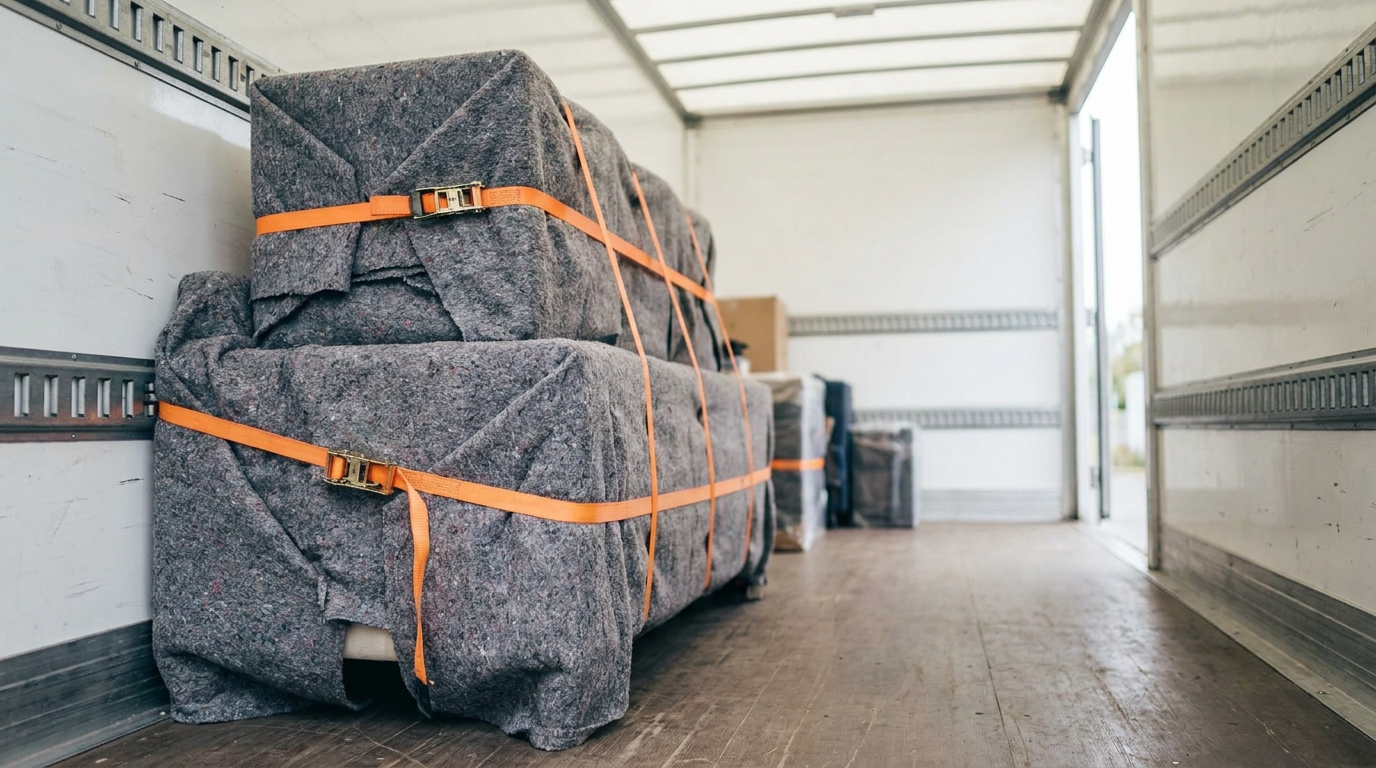
This is the core principle of the whole job: heavy and big go in first, against the wall behind the cab. That means your appliances (refrigerator, washer, dryer, stove), your dressers, and your sofas load before anything else, packed tight against the front wall of the cargo area.
There are two reasons. First, that front wall is the anchor for your whole load. Everything else builds back from it, so you want your most stable, heaviest pieces forming that base. Second, loading heavy items over the front axle keeps weight forward, which is what makes the truck drive level and steer predictably. A truck that's tail-heavy handles badly and stops worse.
Wrap each big piece in a moving blanket before it goes in, strap appliance doors shut, and stand tall items like mattresses and box springs on end against the side walls. Load sofas on end too when the length allows. A couch standing vertical frees up a huge amount of floor.
Step 4: Build in tiers from floor to ceiling
Once the big pieces are in, load the rest in tiers. Think of the truck as a series of vertical slices, and fill each slice completely from floor to ceiling before you move on to the next one.
Within each tier, the rule is simple: heavy on the bottom, light on top. Your sturdiest, heaviest boxes (books, dishes, tools) form the base. Medium boxes stack on those. Light and fragile items (lamps, pillows, boxes marked fragile) ride on top where nothing is pressing down on them.
Keep the tops of your tiers roughly level so the next slice stacks cleanly against it, almost like building a wall. Load boxes with the labels facing out so you can read them at the other end, and keep the heaviest boxes low and toward the front for the same weight-balance reason as your appliances.
Step 5: Keep the weight balanced
A truck that's loaded lopsided is genuinely harder to drive, and less safe. Two balance rules matter:
- Side to side. Put a heavy item on the left, and balance it with a heavy item on the right. An evenly loaded truck sits flat and doesn't pull in the turns.
- Front to back. The bulk of the weight belongs in the front half, over the cab and front axle. If all the heavy pieces ride in the back, the truck sways and the steering goes light. Both bad on the highway.
You don't need a scale for this. Just keep asking, as you work, "is this side heavier than that one, and is more weight up front than in the back?" If the answer drifts, adjust the next few items to even it out. When you're done, the truck should sit level, not squatting on its rear wheels. Driving that balanced load is a different experience. Our guide to driving a moving truck covers what to expect once you're on the road.
Step 6: Strap the load in sections
Here's what separates a load that arrives intact from one that becomes a pile at the first off-ramp: strapping. The cargo walls have horizontal anchor rails (also called logistics rails or E-track) running along them for exactly this purpose.
Work in sections. Once you've built a tier or loaded a wall of furniture, run a ratchet or cam strap across it and hook both ends to the rails, cinching it snug against the load. Then build the next section and strap that. By the time you reach the door, your whole load is a series of tied-down blocks that can't shift, tip, or slide, no matter how the truck rocks on the highway.
Don't wait until the end to strap everything at once. A load that's secured in sections as you go stays stable while you're still working, and you'll never end up with a leaning stack that's already too tall to fix.
Step 7: Fill every gap with soft items
Empty space is the enemy. Any gap in the load is room for something to slide, tip, and break on the road. So as you go, stuff the gaps: pillows, cushions, blankets, bags of soft goods, and rolled rugs go into every hole between boxes and furniture.
This does double duty: it uses up space you'd otherwise waste, and it wedges everything into place so the whole load moves as one solid mass. Slide protected pictures, mirrors, and glass tabletops vertically into the tight slots between mattresses and padded furniture, where they're cushioned on both sides and can't take a flat impact.
Step 8: Load your essentials box last
The final thing into the truck should be the first thing you'll want out: an essentials box you keep right by the door. This is your "load-last, unload-first" box: tools for reassembling furniture, the hardware bags, box cutters, chargers, snacks, toilet paper, cleaning supplies, and anything you'll need in the first hour at the new place.
Don't bury it. Set it just inside the roll-up door so it's the first thing you grab, and you won't be digging through half the truck looking for a screwdriver at midnight. A moving checklist helps you remember what belongs in it before it's too late to add anything.
Common loading mistakes
- Loading light items first. Boxes go in before the fridge, the fridge ends up by the door riding tail-heavy, and the truck drives like a seesaw. Heavy and big go in first, always.
- Stacking too high. A tower taller than it is stable will topple at the first hard brake. Keep stacks bottom-heavy and tie them off; don't build past what a strap can hold.
- Skipping the straps. An unsecured load will shift on the highway. Sections that aren't tied to the anchor rails are sections waiting to fall.
- Leaving gaps. Empty space lets everything slide and slam. Fill the holes with soft goods so nothing can move.
- Loading lopsided. All the weight on one side or all of it in the back makes the truck sway and steer poorly. Balance side to side and keep weight forward.
- Laying everything flat. Mattresses, tables, and sofas ride on end to save floor space. Flat-loading wastes half your cargo area.
- Not disassembling. Assembled bed frames and table legs eat space and snap easily. Break them down and pack the parts flat.
- Burying the essentials box. If it's at the front wall, you'll unload the whole truck to reach it. Keep it by the door.
The bottom line
A well-loaded truck is mostly a matter of order: gather your gear, break down the big pieces, load heaviest-and-largest first against the front wall, build tight tiers from floor to ceiling, keep the weight balanced, strap each section to the anchor rails, and fill every gap with something soft. Do that and your load rides as one solid, level, unshakeable mass.
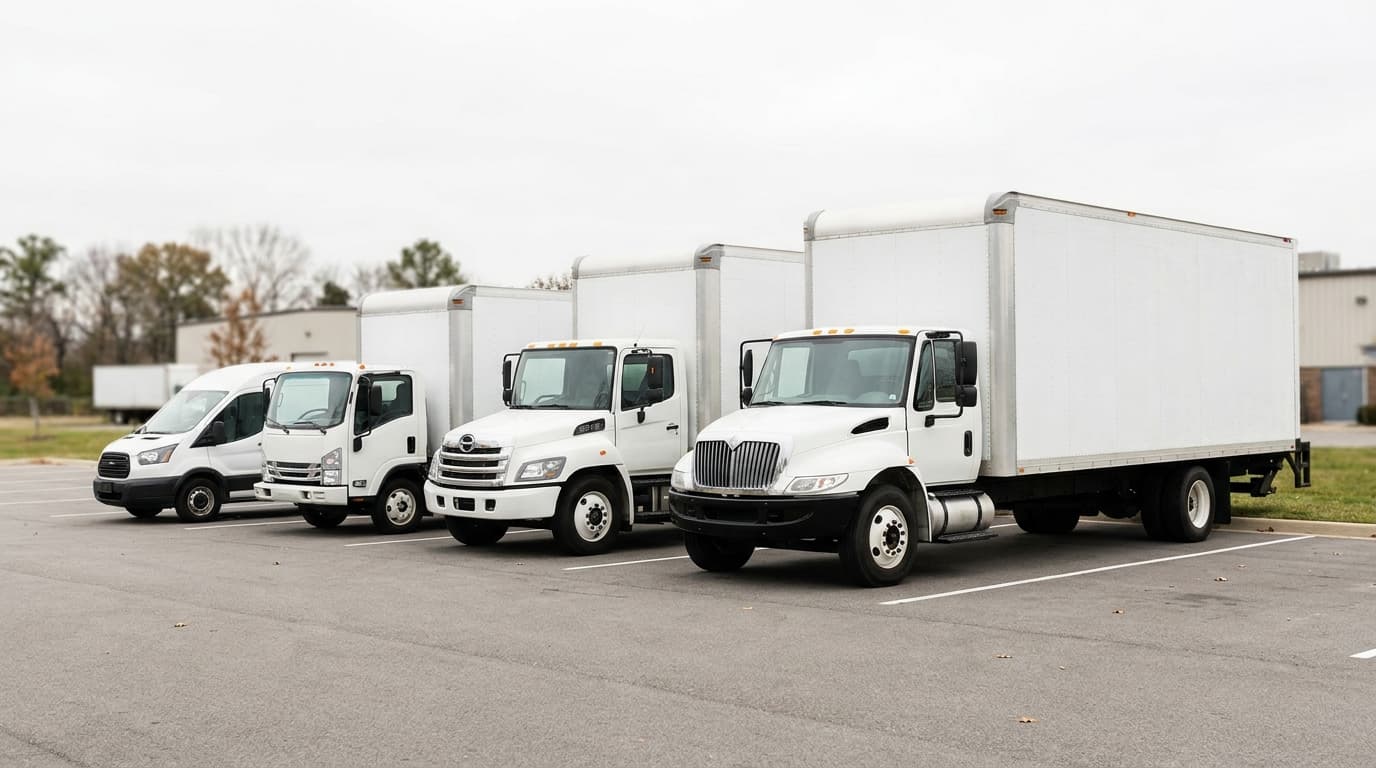
One last tip: give yourself room to work. Trying to Tetris everything into a truck that's a hair too small is where loads get sloppy, stacks get too tall, and things break. The extra space in a size-up truck makes it far easier to build a stable, well-secured load. That's one more reason our size guide recommends sizing up when you're on the fence.
Not sure you've got enough room? Run your home through the truck size calculator before you book, and you'll have space to load it right.
Not sure which truck to book?
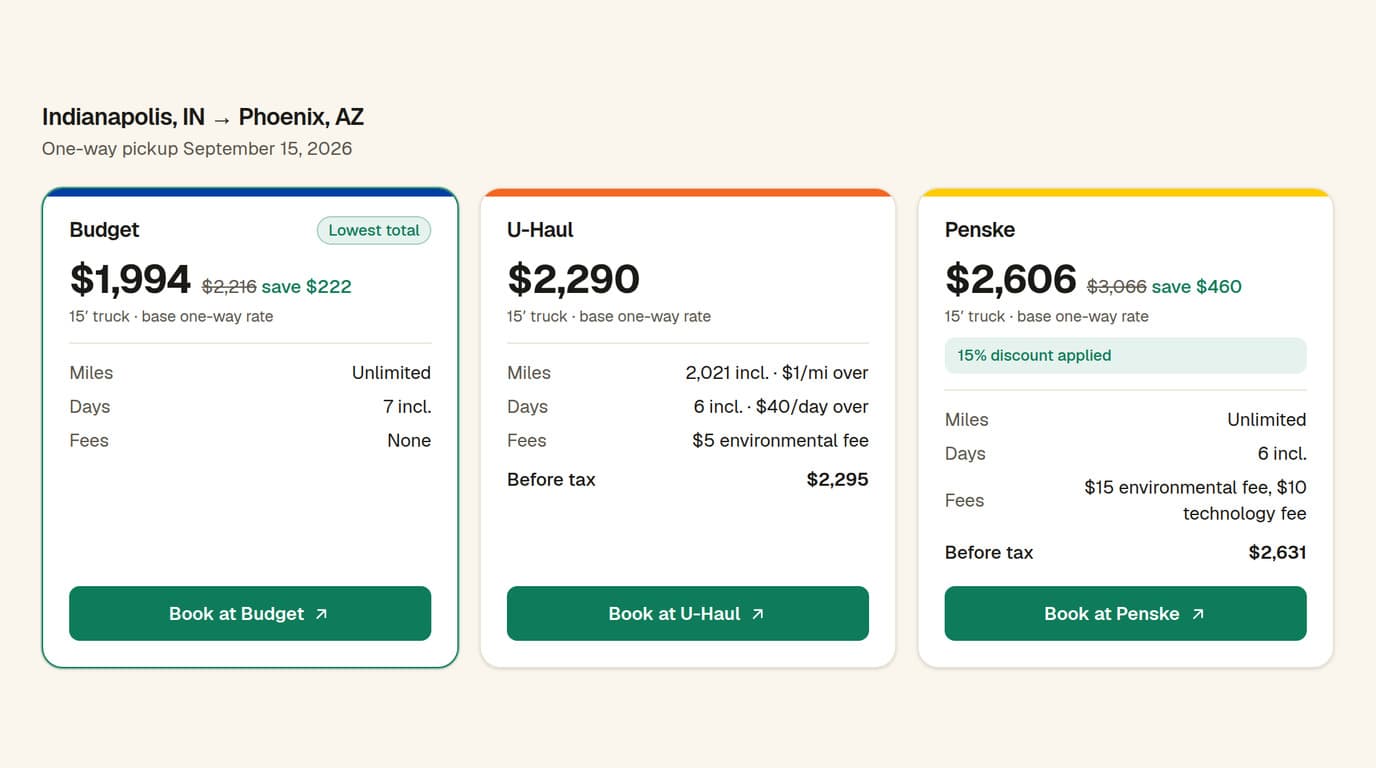
Answer two quick questions and get a size recommendation, plus a side-by-side of how U-Haul, Penske, and Budget stack up.