Moving Truck Rental Insurance, Explained (Do You Really Need It?)
The coverage question everyone freezes on at the counter. Here's what the rental protection products actually do, why your car insurance and credit card probably don't cover the truck, and how to decide before you're standing there under pressure.
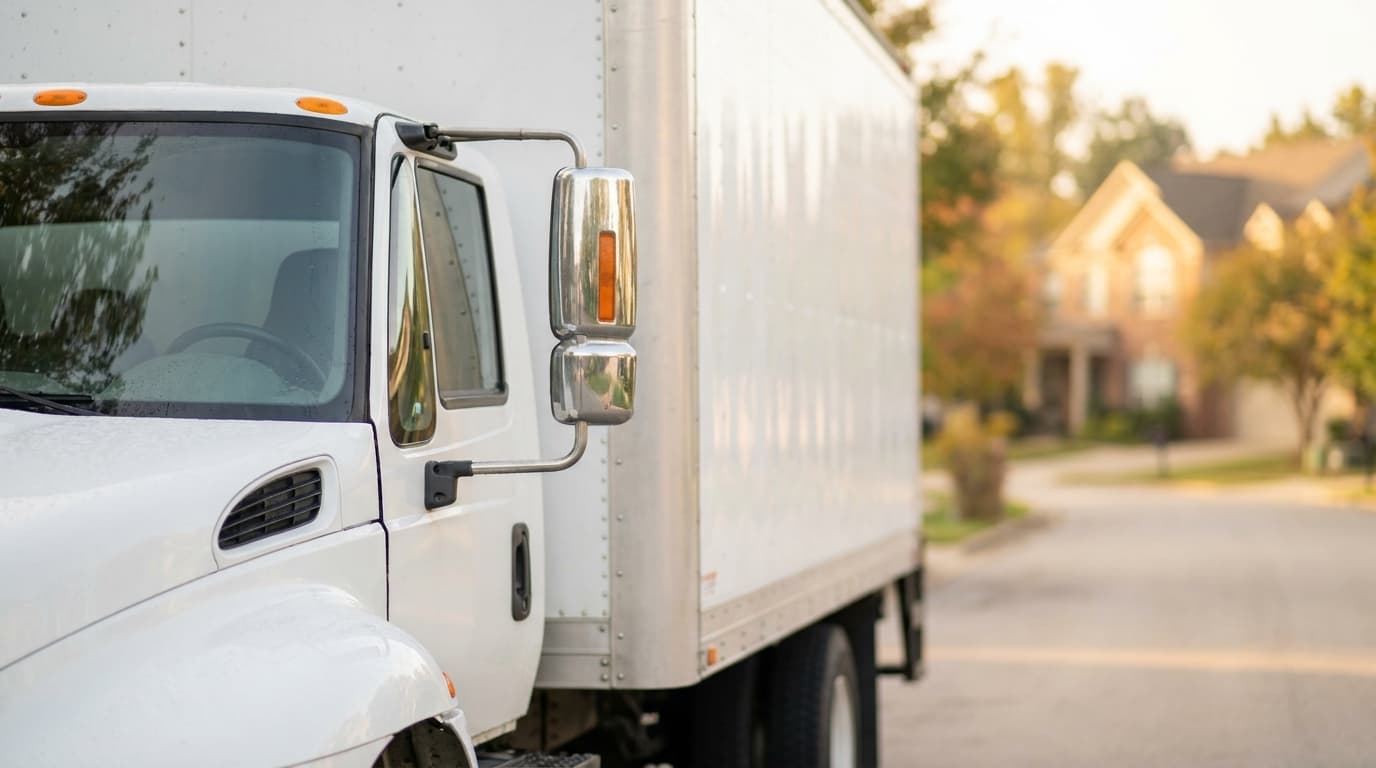
At some point during your reservation (online, or at the counter with the keys almost in your hand), you'll be asked whether you want to add protection to your truck. The options have official-sounding names, the prices add up, and the clerk is waiting. Most people either wave it all away to save money or panic-buy everything. Neither is a great way to make the call.
The honest truth is that the right answer depends on your stuff, your existing policies, and your tolerance for risk. But you can figure it out in advance, which is exactly what this guide is for. We'll walk through what each product covers, clear up the biggest misconception (the one about your car insurance), and give you a simple way to decide before you're on the spot.
The short version
If you only read one section, read this:
- Your personal auto insurance and your credit card's rental coverage usually do NOT extend to a rental moving truck. Both are typically written for passenger cars, and box trucks are commonly excluded. That often makes the rental company's own protection your only real coverage. But policies vary, so verify with your insurer and card issuer instead of assuming either way.
- A damage waiver limits what you owe if the truck itself gets damaged. For most renters, this is the one worth thinking hardest about.
- Supplemental liability covers damage or injury you cause to other people and their property.
- Cargo coverage protects your belongings inside the truck; your homeowners or renters policy might already cover goods in transit, so check before you double-pay.
- Personal accident/medical covers you and your passengers, and tow protection matters only if you're towing a car.
- Decide before you get to the counter. Call your insurer, know your answer, and you'll skip both the panic-buy and the costly gamble.
Everything below is just these points in detail. This is general information, not insurance advice. Always confirm the specifics with the rental company and your own insurer before you sign.
The big misconception: "my car insurance has me covered"
This is the assumption that gets people in trouble, so it's worth being blunt about.
Your personal auto policy is written to cover the car (or cars) listed on it, plus, often, a temporary substitute passenger vehicle. A 26-foot box truck is neither. Many personal auto policies specifically exclude vehicles above a certain size or weight, or exclude "rented trucks" outright. So the collision and liability coverage you count on every day may simply not follow you into the cab of a moving truck.
Credit card rental coverage works the same way. That perk where the card covers a rental car if you decline the counter's damage waiver is, in the fine print of most cards, limited to passenger vehicles and excludes trucks, cargo vans over a certain size, and vehicles rented to move household goods. The very thing you're renting is often on the exclusion list.
Here's the important balance, though: policies vary, so don't assume the coverage is missing any more than you'd assume it's there. Some insurers do offer to extend coverage to a rental truck, sometimes for an added premium or a quick phone call. Some cards differ from the norm. The only way to know is to ask two specific questions of two specific people:
- Call your auto insurer and ask: "Does my policy cover a rental box truck, including collision damage to the truck and liability to others? If not, can you add it?"
- Call your credit card issuer (use the number on the back of the card) and ask whether its rental coverage applies to a moving truck used to haul household goods.
Get the answers before your rental date. If both say no, which is common, the rental company's protection is likely your only option, and this guide's next section is where you'll be making your decisions.
The protection products, in plain language
Names and bundles differ by company (U-Haul, Penske, and Budget each brand these a little differently), but nearly every rental protection menu is some combination of these five things:
| Coverage | What it protects | Who tends to want it |
|---|---|---|
| Damage waiver | Limits or removes your responsibility for damage to the rental truck itself (collision, and sometimes theft or windshield). | Almost anyone without confirmed coverage from their own insurer. Repairs on a big truck get expensive fast. |
| Supplemental liability | Damage or injury you cause to other people, their vehicles, or their property while driving. | Renters whose auto policy won't extend liability to the truck. |
| Cargo / contents coverage | Your belongings inside the truck if they're damaged in a covered event. | People without homeowners/renters coverage for goods in transit, or with high-value loads. |
| Personal accident & medical | Medical costs for you and your passengers after an accident in the truck. | Renters with thin health coverage or extra passengers; often skippable if you have solid health insurance. |
| Tow / auto-transport protection | Damage related to a tow dolly or car trailer if you're towing a vehicle. | Anyone towing a car behind the truck. |
A few things worth understanding about each:
Damage waiver. This isn't insurance in the technical sense. It's the rental company agreeing not to charge you (or to cap what they charge you) for damage to their truck. Without it, a scrape against a low branch, a cracked windshield, or a backing-into-a-pole moment can land on your card in full. Read what it excludes, too: waivers commonly don't apply if you drove on an unauthorized road, were impaired, or damaged the roof by hitting something overhead (a shockingly common truck mishap).
Supplemental liability. Rentals typically come with only a bare legal minimum of liability. Depending on the state and company, it can be essentially none, on the assumption that your own policy covers it. If you cause a serious accident and your auto insurer won't extend to the truck, this is the product that stands between you and a very large bill. For many renters it's the most valuable line item after the damage waiver.
Cargo coverage. Check this one against your existing policies first. Some homeowners and renters policies cover your belongings while they're in transit during a move. But many limit it, exclude certain causes of loss, or require an add-on. Ask specifically about "property in transit during a move" before you buy cargo coverage at the counter, so you're not paying twice.
Personal accident and medical. If you already have good health insurance, this is often the easiest one to decline. If your health coverage is limited or you've got a truck full of passengers, it can be worth the small add-on.
Tow protection. Only relevant if you're pulling a car. If you are, though, it's usually inexpensive relative to the risk and worth a serious look. Our guide on towing a car with a moving truck covers the equipment and the coverage questions together.
How to decide what to take
There's no universal right answer, but there is a clear way to reason through it. Work through these four questions:
1. Did your insurer and card issuer confirm coverage? If your own auto policy already extends collision and liability to the truck, you may be able to skip the damage waiver and supplemental liability. If it doesn't (the common answer), lean toward taking the rental company's damage waiver and liability. Otherwise you're driving a large, unfamiliar vehicle with no backstop.
2. What's your cargo worth, and is it already covered? Add up what's going in the truck. If it's a lot, or irreplaceable, and your homeowners/renters policy doesn't cover goods in transit, cargo coverage starts to make sense. If your policy does cover the move, you may not need it.
3. How far and how long are you driving? A cross-town round trip is a very different risk profile from a three-day, thousand-mile one-way haul over mountain passes. The longer and more unfamiliar the drive, the more the protection tends to be worth it. (Our how to rent a moving truck walkthrough puts the whole decision in context.)
4. What's your risk tolerance, and your ability to absorb a bad day? Protection trades a known small cost now against a large unknown cost later. If a surprise repair bill or a liability claim would genuinely hurt your finances, buying the coverage is reasonable even if the odds are low. If you could comfortably eat a repair bill and you're okay with the gaps in your own policies, you might carry the risk yourself.
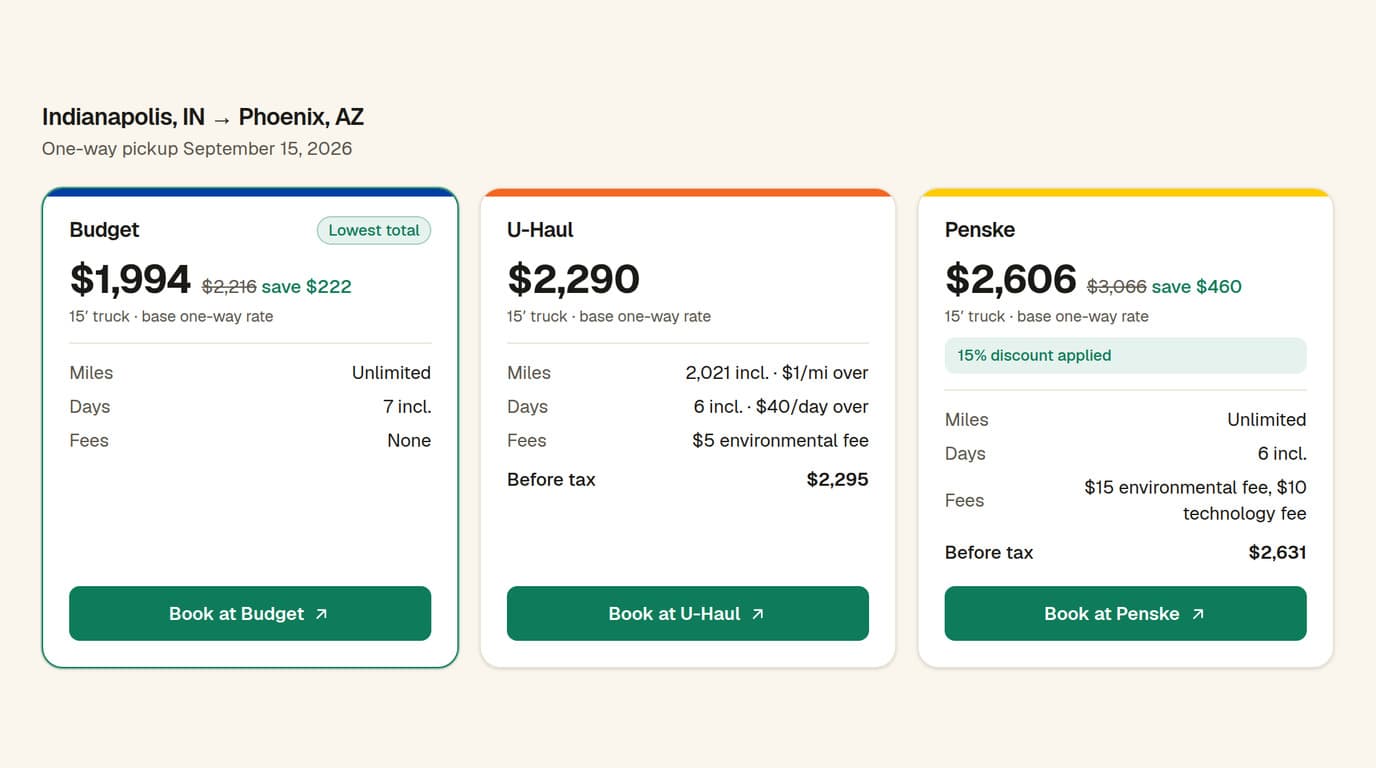
The cost of these products varies widely by company, route, and truck size, so get the real numbers in your own quote. When you compare U-Haul, Penske, and Budget for your route, note the protection options alongside the base rate. A cheaper truck with pricier add-ons can end up costing more once you've added what you actually need. For how these pieces fit into the total, see our moving truck rental cost breakdown.
Before you decide, run this checklist
- Call your auto insurer and ask, specifically, whether your policy covers a rental box truck for both collision damage and liability, and whether it can be added.
- Call your credit card issuer and ask whether its rental coverage applies to a moving truck used to haul household goods (it often doesn't).
- Check your homeowners or renters policy for "property in transit" coverage during a move before buying cargo coverage.
- Confirm your health insurance is solid before deciding on personal accident/medical.
- Add up the value of what's going in the truck so you're deciding on cargo coverage with a real number.
- Factor in the trip. A long, one-way, or mountainous drive tilts toward more protection.
- Read what each waiver excludes (overhead/roof damage, unauthorized drivers, off-road use) so you know where you're still exposed.
- Check the rental requirements too. Age, license, and who's allowed to drive can affect coverage; see our moving truck rental requirements guide.
- Write down your decision before your rental date so the counter is a formality, not a negotiation.
The bottom line
Moving truck protection isn't a scam and it isn't a must-buy. It's a decision, and it's easier when you make it calmly and in advance. The one thing to internalize is that your car insurance and credit card probably don't follow you into that truck, which often leaves the rental company's coverage as your only net. But "probably" isn't "definitely," so the move that saves you the most money and stress is a fifteen-minute phone call to your insurer and card issuer before your rental date.
Do that, weigh your cargo and your route, and you'll walk up to the counter already knowing your answer. No panic-buy, no expensive gamble. This is general guidance, not insurance advice, so confirm the specifics with the rental company and your own insurer before you sign.
Ready for the next step? Compare U-Haul, Penske, and Budget for your route, then read how to rent a moving truck to put the whole process together.
Not sure which truck to book?
Answer two quick questions and get a size recommendation, plus a side-by-side of how U-Haul, Penske, and Budget stack up.