How to Drive a Moving Truck: A Nervous First-Timer's Guide
Never driven anything bigger than a car? This calm, safety-first walkthrough covers what actually changes behind the wheel of a moving truck (the height, the wide turns, the long stops) so you get there in one piece without the white-knuckle stress.
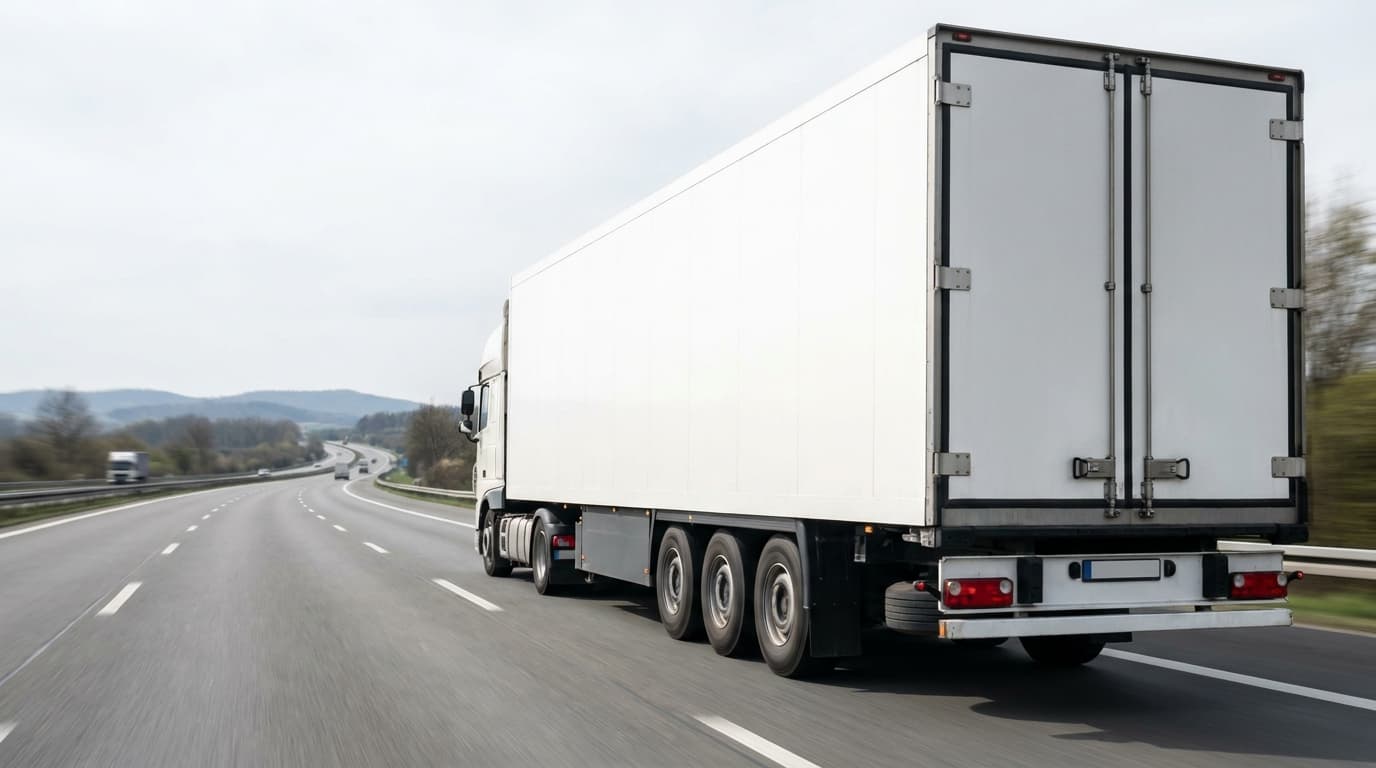
The scariest part of a DIY move usually isn't the lifting. It's the moment you climb into a truck twice the size of anything you've driven and have to merge onto a highway. If your palms are sweating just thinking about it, you're in good company, and you're going to be fine.
Here's the reassuring truth: a moving truck isn't hard to drive, it's just different. It's taller, wider, heavier, and slower to stop. Once you understand those four differences and give yourself room to work with them, the whole thing gets calm in a hurry.
The short version
If you only read one section, read this:
- You don't need a special license. A regular driver's license covers every truck you can rent up to 26 feet.
- Know your truck's height. Low bridges, parking garages, and drive-thrus are the number-one way people wreck a rental. Write the height on a sticky note on the dash.
- Turn wider than feels natural. The back of the truck cuts the corner, so go past the turn before you crank the wheel.
- Leave a huge following distance. A loaded truck needs far more room to stop. Double what feels normal.
- There's no rear-view mirror. You live in your side mirrors now, and check your blind spots deliberately.
- Back up with a spotter, and go slow everywhere. Slow is smooth, and smooth is safe.
Everything below is just these ideas in detail.
You (probably) don't need a special license
Let's clear the biggest worry first. In the United States, you do not need a commercial driver's license (CDL) to rent and drive a moving truck up to 26 feet. Your ordinary passenger-car license is all the rental company requires, and all the law requires for a personal move. That's true for the little cargo van and the giant 26-footer alike.
A couple of common-sense conditions apply: rental companies set a minimum age (often the mid-20s, sometimes lower for a fee), and you'll need a valid license and the credit card on the reservation at pickup. If you're towing a car or trailer, the rules and the driving get more involved. See the towing a car with a moving truck guide and our rental requirements guide for what you'll need at the counter.
So: no special license, no test, no endorsement. The only thing between you and the driver's seat is a little know-how.
Height is the thing that will bite you
If you remember one hazard from this entire guide, make it this one. The most common and most expensive mistake first-timers make is forgetting how tall the truck is and driving it into something a car would have sailed under.
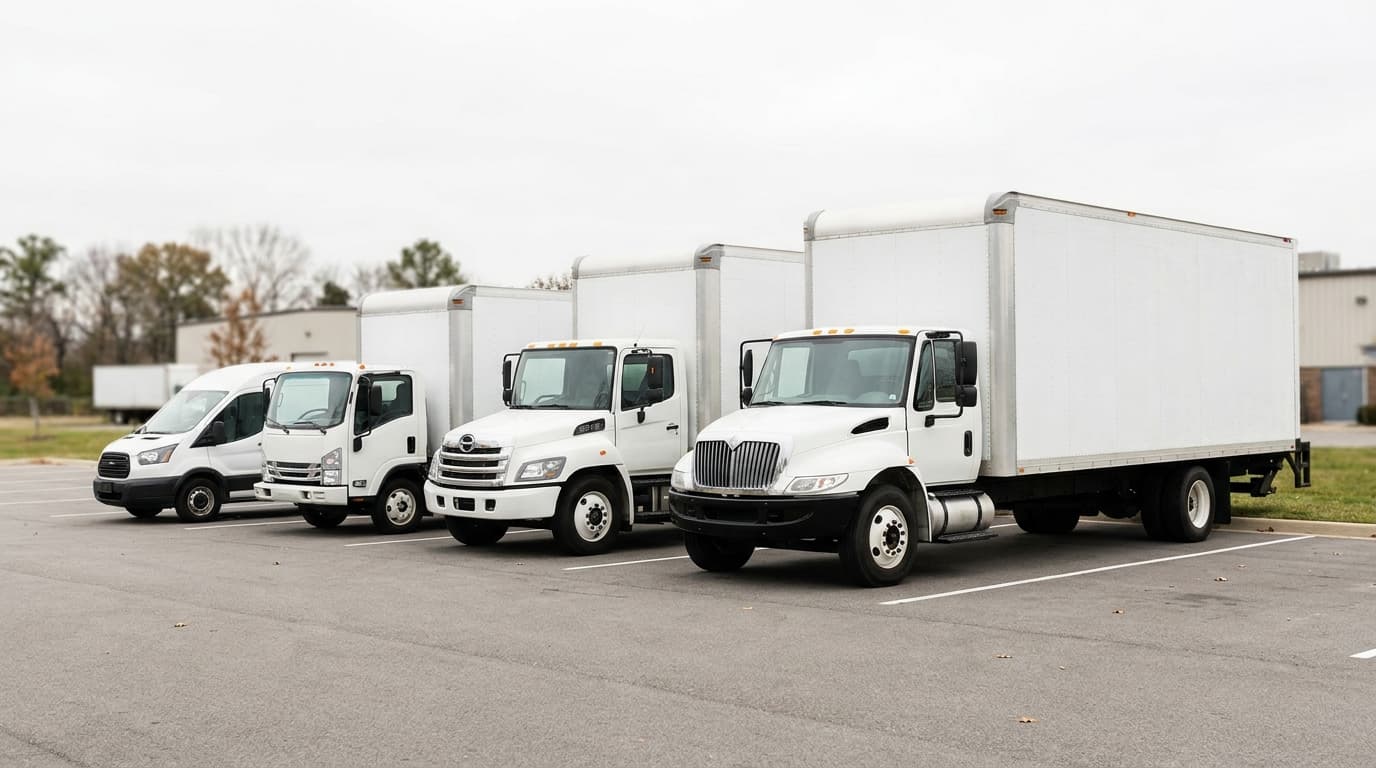
A typical box truck stands roughly 10 to 13 feet tall depending on the size. That's tall enough to be a problem at:
- Low bridges and railroad underpasses, which post a clearance height on a yellow sign.
- Parking garages, most built for cars and happy to shear the top off a truck.
- Fast-food drive-thrus. Skip them entirely and park to go inside.
- Gas station canopies, motel porticos, and covered entrances, all lower than they look.
- Tree branches and awnings on residential streets, especially near your old and new homes.
The habit that saves you is simple: find your truck's exact height before you pull out of the lot (it's usually printed in the cab or on the paperwork), then write it on a sticky note and stick it to the dashboard where you'll see it. When a clearance sign shows a number, you'll know in a half-second whether you fit. If a posted clearance is anywhere close to your height, don't risk it. A two-mile detour is nothing compared to peeling the roof back on a rented truck.
Wide turns and tail swing
A truck doesn't pivot the way a car does, and two things surprise your car-brain.
First, the rear wheels track a tighter path than the front wheels. Turn where you normally would and the back of the truck cuts the corner, clipping the curb, a signpost, or the car at the light. The fix is to swing wide: drive the cab a little past the turn, then bring the wheel around so the back end has room to follow through.
Second is tail swing. When you turn, the rear overhang of the box swings out to the opposite side, so the back corner can sweep into the next lane or a parked car even as the front turns away. Give yourself space on both sides before you commit, and never assume the back sits where a car's bumper would.
Either way, take corners slowly. There's no prize for a quick turn, and going slow gives you time to watch your mirrors and place the truck where you want it.
It stops slower. A lot slower.
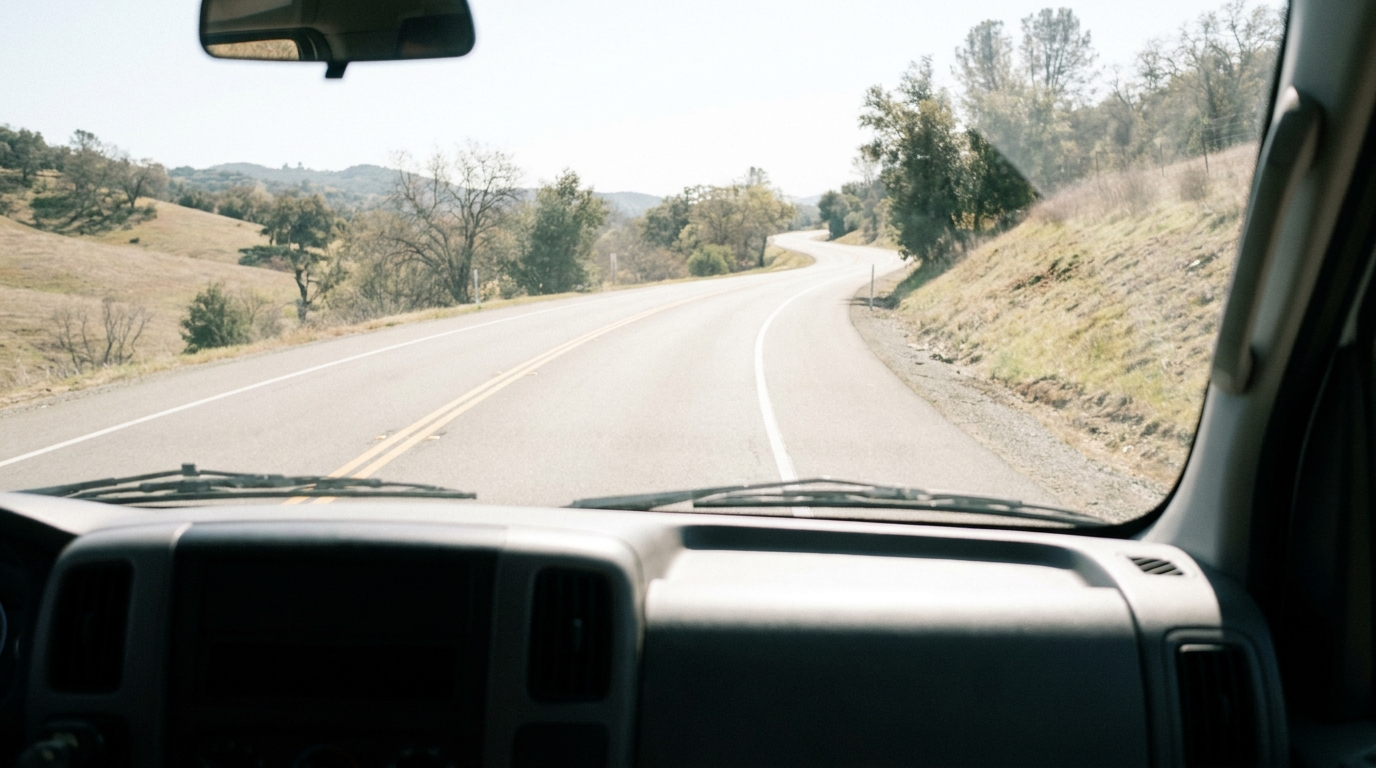
A loaded moving truck can weigh several times what your car does, and all that weight takes much longer to stop. More mass means more distance to brake. A truck packed with furniture doesn't shed speed the way an empty car does.
The whole game here is following distance. Whatever gap you'd normally leave, at least double it. Pick a fixed point like a sign, and if you reach it less than about four seconds after the car ahead passed it, you're too close. Ease back.
A few more braking habits that keep things smooth:
- Look far down the road so you can slow gradually instead of stabbing the brakes.
- Brake sooner and gentler for lights, stop signs, and off-ramps. Sudden hard braking can shift an unbalanced load, one more reason a well-packed truck drives better. Our loading guide covers keeping the weight low and secured.
Your mirrors are your whole world
Here's a surprise the first time you sit in the cab: there is no rear-view mirror showing anything but a wall of cargo. You cannot see directly behind you. That feels alarming for about ten minutes, and then you adapt.
The truck makes up for it with large side mirrors, usually a flat mirror plus a small convex ("wide-angle") mirror on each side. Before you drive off, adjust both mirrors so you can see down the length of the truck and a slice of the lane beside it. Then use them constantly. A truck's blind spots are much bigger than a car's, especially on the right side and directly behind.
Two rules make this safe: check your mirrors early and often, especially before every lane change, glancing at the convex mirrors to catch what the flat ones miss; and signal early and change lanes slowly, giving nearby cars time to react. When in doubt about the right side, wait. Or ask your passenger to be a second set of eyes.
Backing up: get a spotter
Reversing a truck you can't see behind is where a lot of driveway and parking-lot damage happens. The answer is simple: use a spotter.
Have a friend stand where you can see them in your side mirror, never directly behind the truck, and guide you with clear hand signals. Agree on the signals first, go dead slow, and stop the instant you lose sight of them. If you're alone, walk the path behind the truck first so you know what's there, then reverse in small increments, checking both mirrors the whole way. When you can, back into a spot on arrival so you can pull forward to leave. Nosing out is far easier and safer than reversing into traffic.
Hills, ramps, and the highway
Big vehicles and gravity have a complicated relationship, so take long climbs and descents with respect.
Going up, expect the truck to lose speed on steep grades. That's normal. Keep right, let faster traffic pass, and don't panic.
Going down, don't just hold the brake pedal the whole way; riding the brakes on a long descent overheats them and fades their stopping power. Instead, shift to a lower gear (most automatics have a low setting or numbered gears for exactly this) and let the engine help hold your speed, using the brakes in firm, occasional presses rather than one long squeeze.
On the highway, watch for crosswinds. A box truck is basically a big sail. A strong side gust, or the wall of wind when you pass or get passed by a semi, can shove the truck sideways more than you'd expect. Keep both hands on the wheel, hold your lane with small steady corrections, and ease off the accelerator in gusts rather than fighting to keep speed. Open stretches and bridges are where wind hits hardest.
Speed: slower is the whole strategy
Resist any urge to keep up with fast traffic. A moving truck is happiest and most controllable at a moderate speed. Some states set lower speed limits for larger trucks, and some rental companies ask you to stay at or below a set speed regardless. Watch the signs and check your paperwork. Even where you're allowed to go faster, driving a bit slower gives you more time to react, shorter stopping distances, and better fuel economy. There's no version of this trip where hurrying pays off.
Parking, routes, and long-haul fatigue
A little planning removes most of the on-the-road stress.
Plan your route before you leave, favoring bigger roads with room to maneuver over tight downtown streets, and note anywhere a low clearance or narrow turn could be a problem. Truck-friendly navigation can route you around low bridges. When you park, look for pull-through spots or open edges of a lot so you won't have to reverse into traffic, and leave extra room on every side.
For anything beyond a couple of hours, fatigue is a real safety risk. Driving a big truck takes more concentration than your car and tires you out faster. Stop every couple of hours to stretch, stay hydrated, don't drive drowsy, and split very long days if you can. Our long-distance moving truck guide goes deep on multi-day drives, and the moving checklist helps you line up the details beforehand.
Safety rules to memorize
- Know your height and keep it on the dash. When a clearance sign is close, take the detour.
- No drive-thrus, no car parking garages. Assume anything covered is too low until you've checked.
- Turn wide and mind the tail swing on both sides.
- Double your following distance; brake early and gently.
- Live in your side mirrors; signal early and change lanes slowly.
- Use a spotter to back up, and back in when you park.
- Downshift on long descents instead of riding the brakes.
- Both hands on the wheel in crosswinds; ease off the gas in gusts.
- Go slower than you think you need to.
- Take breaks. A rested driver is a safe driver.
The bottom line
Driving a moving truck comes down to respecting four differences: it's taller, wider, heavier, and slower to stop. Give yourself room to handle each. Know your height, turn wide, leave lots of stopping distance, and slow everything down. Do that, and the truck that looked so intimidating in the parking lot becomes just another quiet, careful drive.
Not booked yet? Start with our how to rent a moving truck guide, pack it right with the loading guide, and keep the move on track with the moving checklist. You've got this.
Not sure which truck to book?
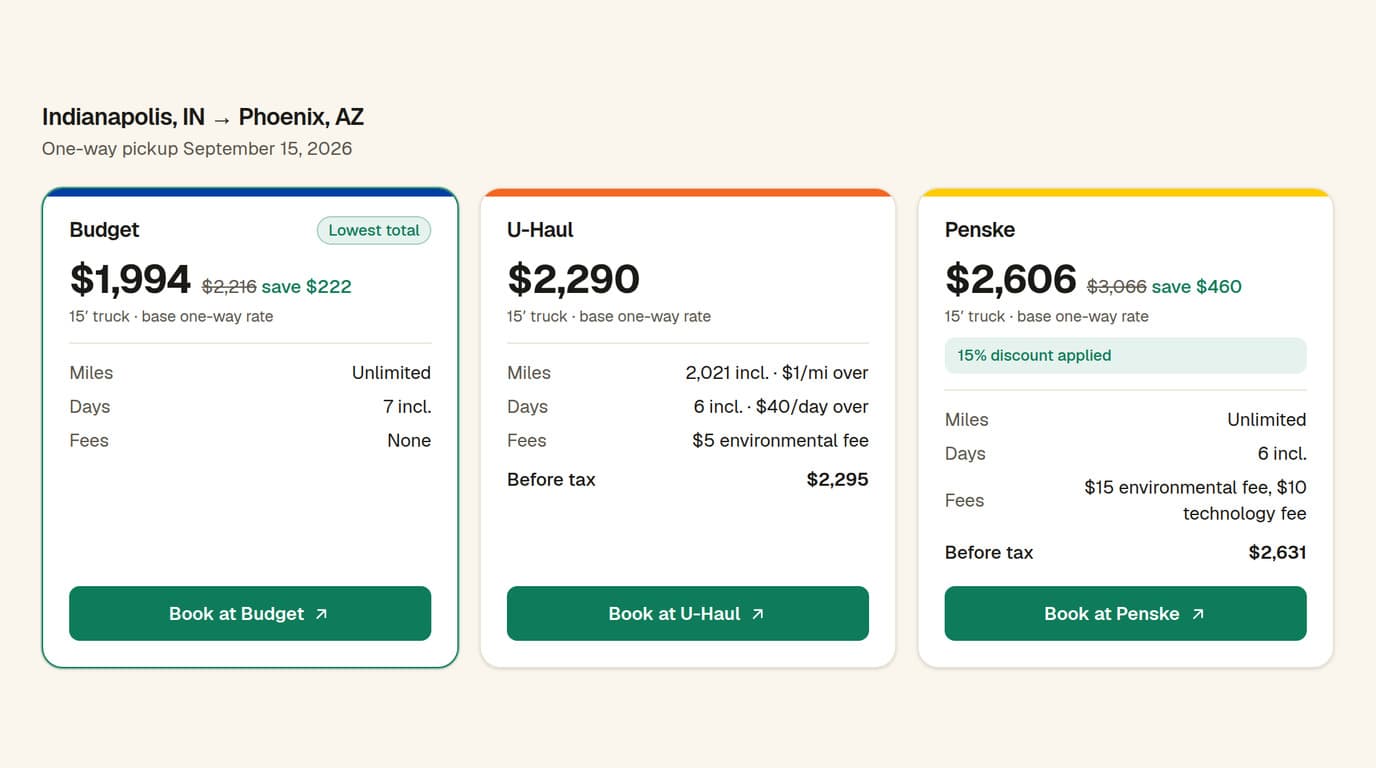
Answer two quick questions and get a size recommendation, plus a side-by-side of how U-Haul, Penske, and Budget stack up.