How to Pack Boxes for Moving Like a Pro
Packing a box well is a real skill, and it's the difference between a move where nothing breaks and one where you're sweeping up broken glass. Here's how the pros pack, from picking the right box size to labeling every last one.
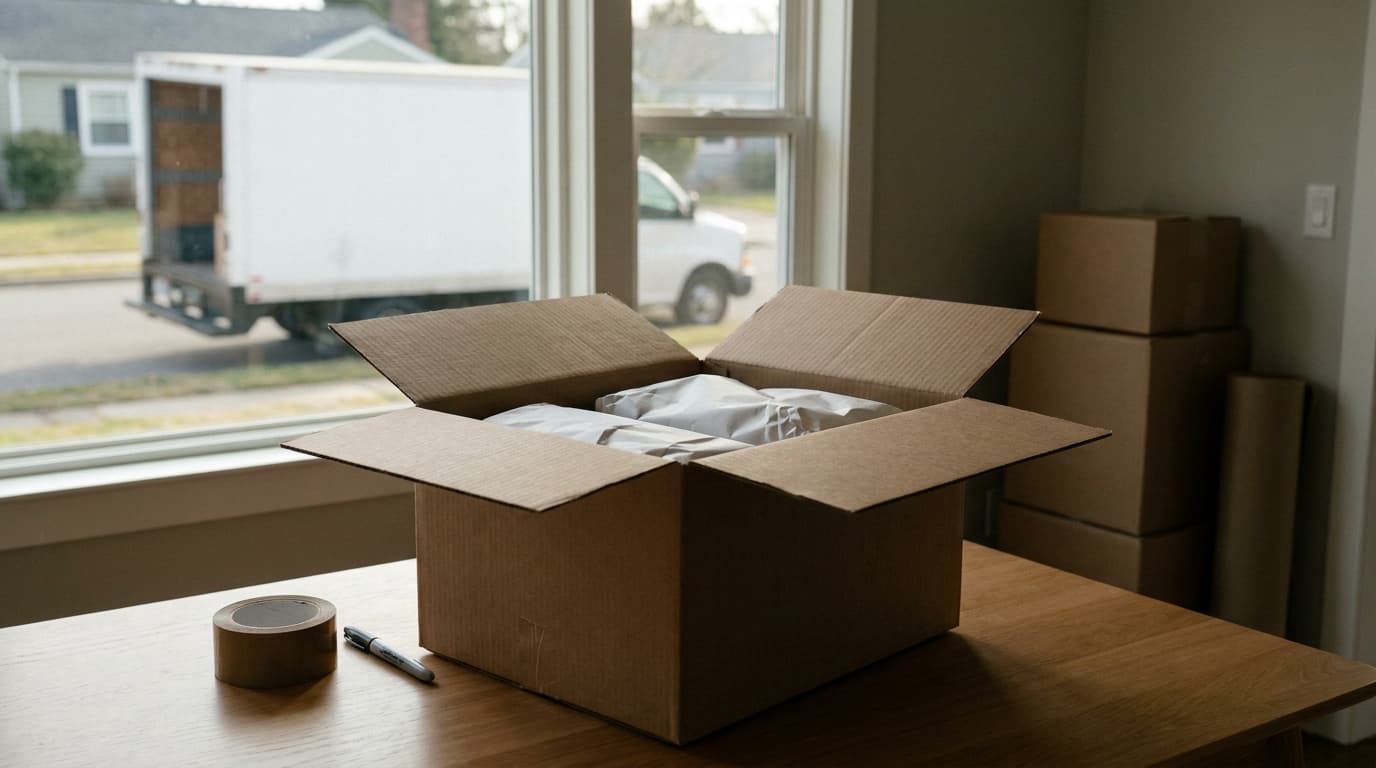
Anyone can throw things in a box. Packing a box so it survives being stacked, driven down a bumpy highway, and carried up a flight of stairs is a skill almost nobody teaches you. The good news: it comes down to a handful of simple rules the pros follow on every single box.
This guide is about packing the boxes themselves: what goes in which size, how to wrap fragile things, how to keep nothing shifting, and how to label so unpacking isn't a scavenger hunt. (Still gathering supplies? Start with our moving supplies checklist, then come back.)
The short version
If you only read one section, read this. A well-packed box follows six rules:
- Match the box size to the weight. Heavy things (books, tools, canned goods) go in small boxes; light, bulky things (linens, pillows, lampshades) go in large boxes. Never the reverse.
- Keep every box under about 50 pounds. If you can't lift it comfortably, neither can the person carrying it, and overpacked boxes burst.
- Wrap fragile items individually in packing paper, and stand plates on edge rather than stacking them flat.
- Cushion the bottom, fill the gaps, and pad the top so nothing can shift inside.
- Tape the bottom seam with an "H" pattern, and don't skimp.
- Label every box with the room, a few contents, and any warnings like "Fragile" or "This Side Up."
Everything below is just these six rules in detail.
Rule 1: Match the box size to what's going in it
This is the rule that surprises people most. The instinct is to put heavy things in big boxes. They're heavy, they need room, right? That's exactly backwards.
Heavy items go in small boxes. Books are the classic example: a small book box packed full is already a real workout. Put those same books in a large box and you've built something no one can lift, that strains the cardboard until the bottom gives out. Same for tools, canned food, dishes, and records.
Light, bulky items go in large boxes. Pillows, comforters, blankets, coats, and lampshades fill space without adding weight, so a big box fills up nicely and stays liftable. Medium boxes handle everything in between.
The mental model: the smaller the box, the heavier the thing inside it should be.
| Box size | Best for | Rule of thumb |
|---|---|---|
| Small | Books, tools, canned goods, dishes | The heaviest items |
| Medium | Kitchenware, toys, small electronics, décor | General everyday items |
| Large | Linens, pillows, lampshades, light bulky items | Light and fluffy only |
Rule 2: Don't overpack, keep every box under ~50 pounds
There's a temptation to fill every box to the brim to save on box count. Resist it. An overpacked box is heavier than anyone wants to lift, more likely to have its seams give out, and harder to stack cleanly in the truck.
The working target the pros use is about 50 pounds per box, maximum, and less for anything an older or less able helper will carry. Gut-check: if you can pick the box up and walk it across the room without straining, it's fine. If it's a grunt to lift, take something out. Boxes that are too heavy also get dropped or dragged, which breaks contents even when they were wrapped well.
Rule 3: Wrap fragile items individually and stand plates on edge
Fragile things break when they touch each other, so the whole game is keeping them apart. Wrap each item (every glass, plate, and mug) individually in a sheet or two of clean packing paper. Don't wrap in bunches; a single sheet around three glasses lets them clink together the moment the box moves.
For plates, one counterintuitive trick makes an enormous difference: stand them on edge, vertically, like records in a crate, never stacked flat. A flat stack concentrates the shock of every bump onto the plate at the bottom, while plates on edge each absorb force independently and are far more likely to survive. Glasses and stemware go upright too, each wrapped, ideally in a box with cell dividers. Fill hollow items like vases and mugs with crumpled paper so they don't collapse.
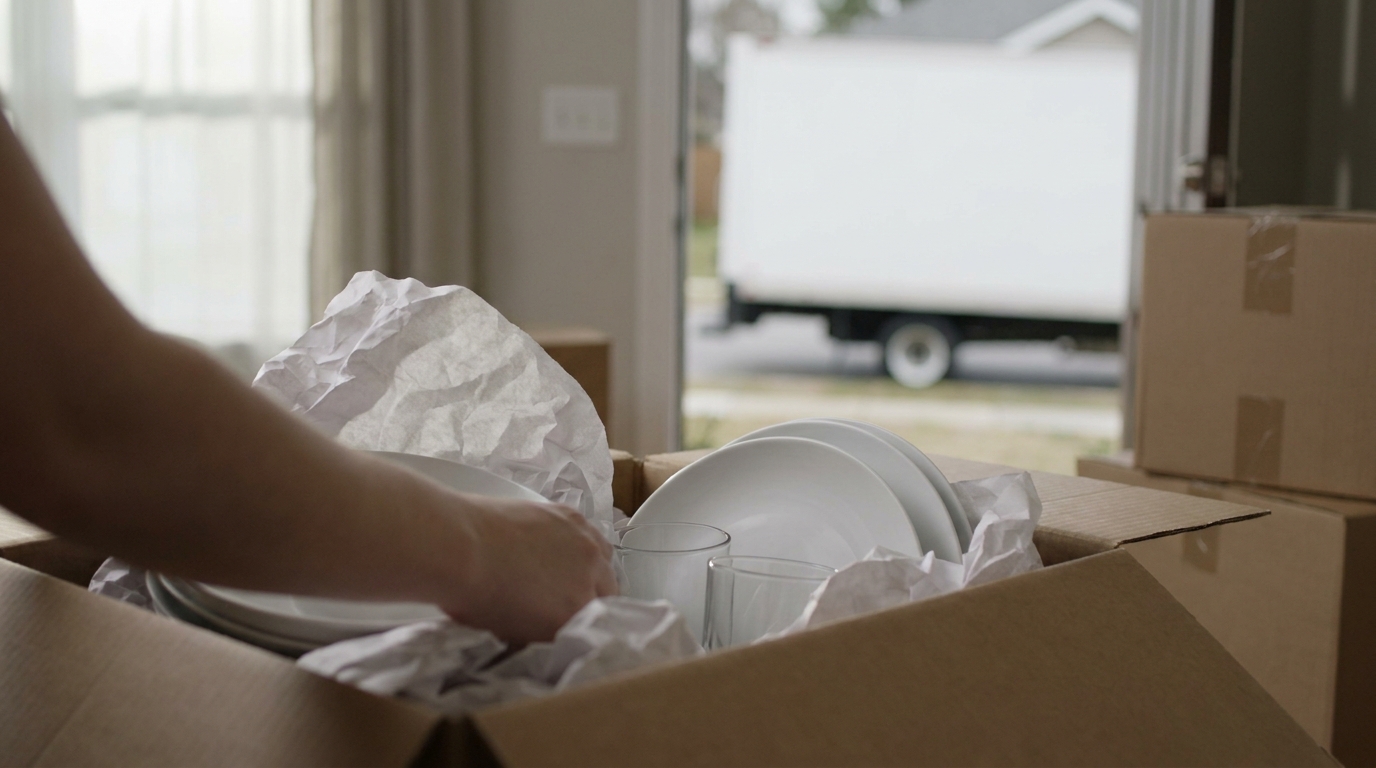
Rule 4: Cushion the bottom, fill the gaps, pad the top
A box that rattles is a box that breaks. Inside every box, your job is to make sure nothing can move.
Cushion the bottom with a few inches of crumpled paper, a folded towel, or bubble wrap. It gives fragile contents a soft landing and absorbs shock from below. Boxes get set down harder than you'd think.
Pack the heaviest items on the bottom and lighter ones on top, just like loading a truck in miniature. Keep the load level so the box sits and stacks flat.
Fill every gap. Empty space is where things slide, tip, and knock together. Stuff crumpled paper, dish towels, or soft goods into the corners and voids until nothing shifts when you rock the box.
Pad the top before you close it, so the box is filled right to the flaps. A full box can be stacked on without the lid caving in; a half-empty one crushes. Give the closed box a gentle shake. If you feel movement, add more filler.
Rule 5: Tape the bottom seam like you mean it
More boxes fail at the bottom than anywhere else, almost always because the bottom was under-taped. Don't just fold the flaps over each other and hope. That interlocking trick gives out under weight.
Use packing tape and an "H" pattern: run one strip down the center seam where the two flaps meet, then a strip across each of the two end seams where the flaps meet the box walls. Those three strips trace an "H" and lock all three stress points. For heavy boxes, add a second center strip for insurance. Give the top the same care once it's packed.
Rule 6: Label every box with room, contents, and warnings
The version of you unloading the truck will be tired, and the version unpacking will be tired for days. Labeling is a gift to both of them. On every box, write three things:
- The room it belongs in: "Kitchen," "Primary Bedroom," "Garage." This tells helpers where to set it down, so it ends up in the right room instead of a hallway pile.
- A few contents: "pots, mixing bowls, utensils." Not an inventory, just enough to find something without opening five boxes.
- Any warnings: "Fragile" and "This Side Up" on anything breakable, so nobody stacks a book box on your wine glasses or flips them over.
Label on the sides, not just the top. Once boxes are stacked, the tops disappear. Marking two adjacent sides means you can read a box no matter how it's turned. A thick marker beats a thin one, and a color per room (a strip of colored tape) lets everyone sort at a glance.
Clear labeling also makes loading smarter: helpers can group boxes by room and keep the fragile ones out of the crush zone. Our loading guide explains where those boxes should go in the truck.
Pack a first-day essentials box and mark it clearly
Pack one box (or a suitcase) with everything you'll need the first 24 hours:
- Toilet paper, paper towels, hand soap, a trash bag
- Phone chargers, a basic tool for reassembling beds, scissors or a box cutter
- Medications, toiletries, and a change of clothes per person
- Snacks, water, a few cups, plates, and utensils
- Bedding for the first night
Then label it loudly, "OPEN FIRST," and either carry it in your own car or load it last so it comes off the truck first. Nothing sours a moving day like digging through twenty identical boxes at midnight for the toilet paper.
Pack room by room, and don't mix rooms
Work through your home one room at a time, and keep each box to a single room. It's slower now and far faster on the other end: every box that's cleanly "Kitchen" or "Office" goes straight to the right place and unpacks in one sitting.
The box that ruins this is the "miscellaneous" box (a little kitchen, a little bathroom, some office supplies) that has to be sorted item by item into five rooms. Avoid it.
Packing room by room also pairs perfectly with a schedule: start with the rooms you use least (guest room, storage, off-season clothes) weeks ahead, and leave the kitchen and daily essentials for last. Our moving timeline checklist lays out when to pack what.
Packing mistakes to avoid
- Heavy items in big boxes. Books in a large box make an unliftable, bursting brick. Heavy = small box, always.
- Overpacking past ~50 pounds. If it's a strain to lift, it'll get dropped or dragged. And dropped boxes break.
- Wrapping fragile items in bunches. Every glass and plate gets its own paper, or they clink and crack.
- Stacking plates flat. Stand them on edge; a flat stack crushes the bottom plate on the first bump.
- Leaving empty space. Gaps let contents slide and collide. Fill every void until nothing moves.
- Under-taping the bottom. Folded-and-tucked flaps fail under weight. Use the "H" pattern.
- Labeling only the top. Tops vanish once boxes are stacked. Label the sides too.
- Forgetting the essentials box. Without an "OPEN FIRST" box you'll be hunting for toilet paper at midnight.
- Mixing rooms in one box. A box with a bit of everything has to be sorted item by item. One room per box.
The bottom line
Packing boxes well isn't complicated, but it is deliberate. Match the box size to the weight, keep every box liftable, wrap fragile things one at a time and stand your plates on edge, fill the gaps so nothing shifts, tape the bottom in an "H," and label every box with its room and contents. Do that room by room, keep an "OPEN FIRST" box handy, and moving day gets a whole lot calmer.
Ready to keep going? Run through our moving supplies checklist to make sure you have everything, learn how to protect your furniture too, and use our free moving checklist tool to track it all the way to the new place.
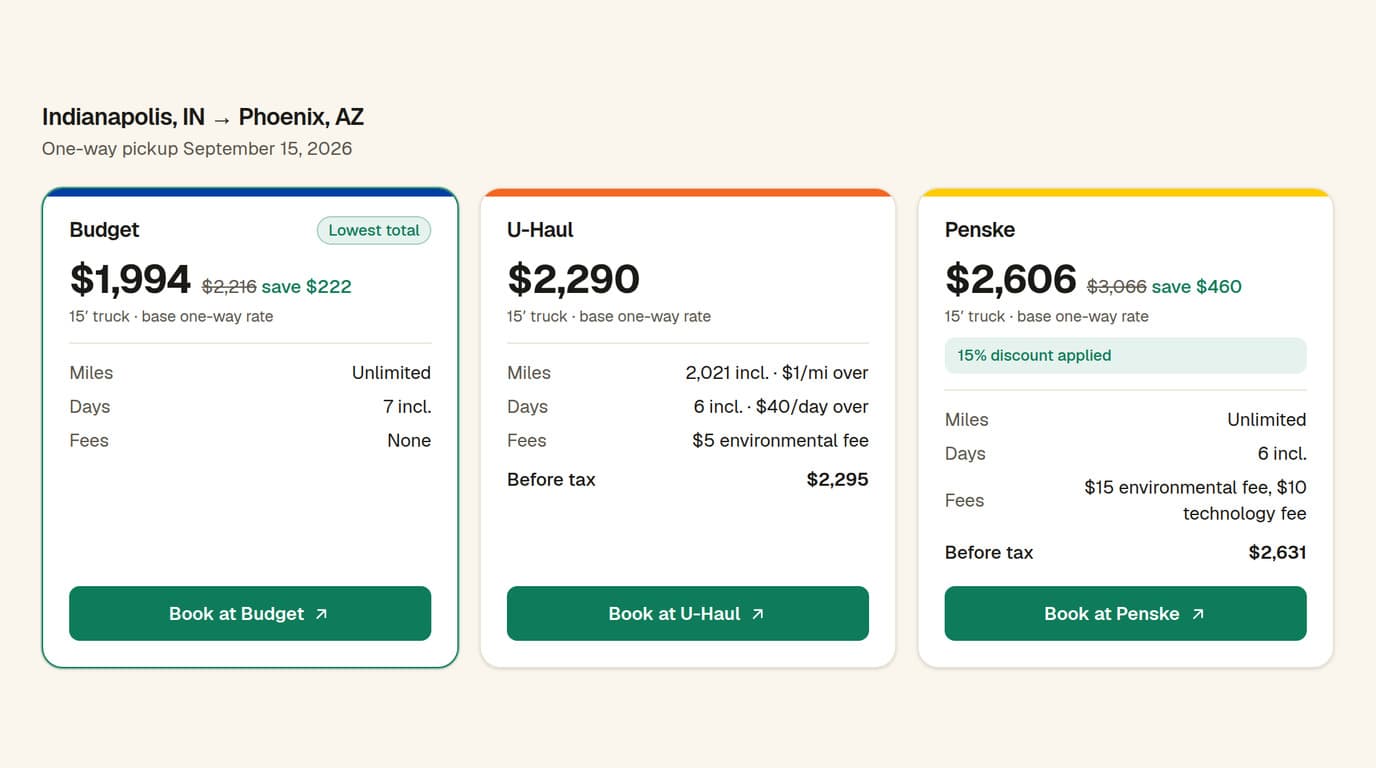
Not sure which truck to book?
Answer two quick questions and get a size recommendation, plus a side-by-side of how U-Haul, Penske, and Budget stack up.