Towing a Car Behind a Moving Truck: Dolly vs. Car Trailer
Bringing your car along on a long-distance move? Here's the plain-English breakdown of the two ways to tow it (a tow dolly or a full car trailer), which one fits your vehicle, and how towing changes the way you drive.
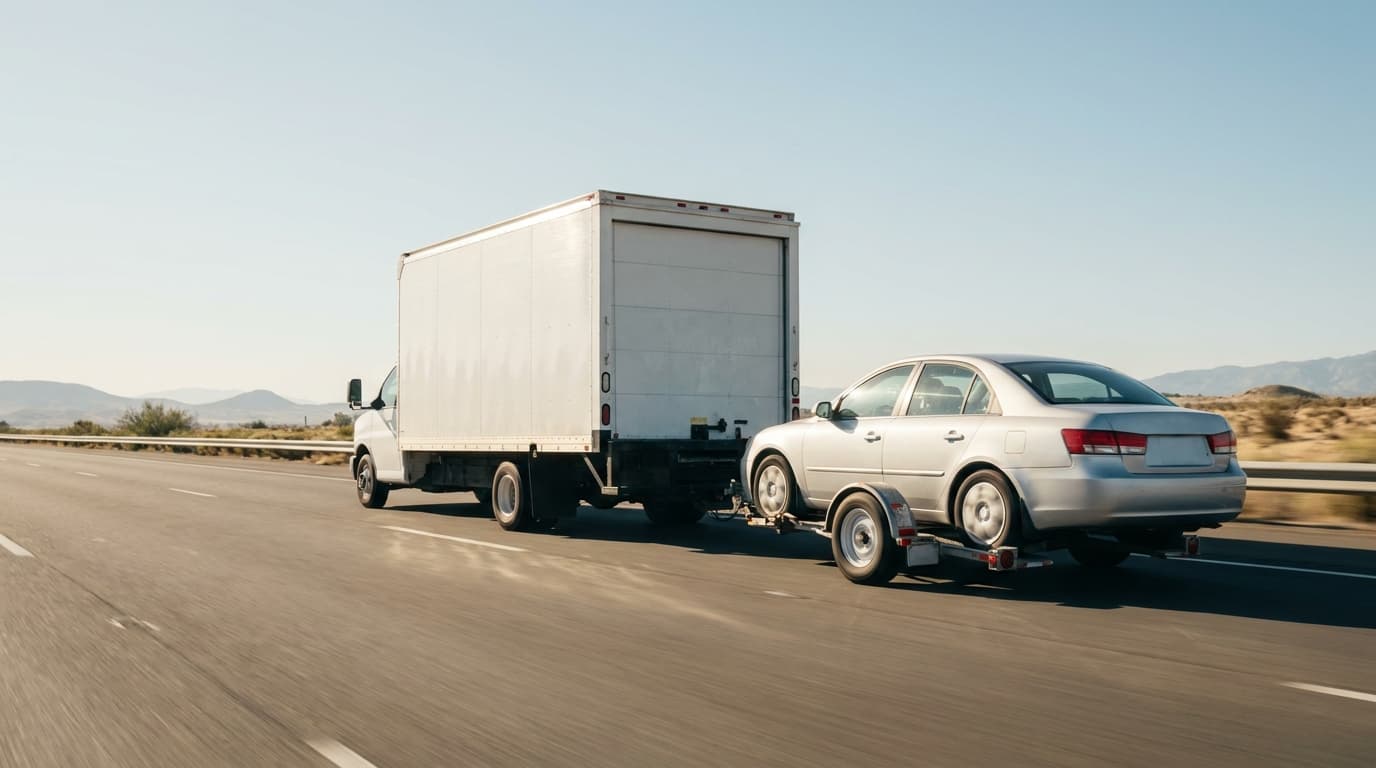
You've booked the truck, you're moving across the country, and there's one problem left: you own two cars and one driver. Or maybe you just don't want to put another 1,500 highway miles on the family sedan. The answer is to tow your car behind the moving truck. The rental companies make that easy by renting you the towing gear right along with the truck.
But there's a catch that trips people up, and it's not a small one. There are two completely different ways to tow, and picking the wrong one for your car can damage the drivetrain before you've left the driveway. This guide explains the two options in plain English, which car goes with which, and how pulling a car behind you changes everything about the drive.
The short version
If you only read one section, read this:
- There are two ways to tow: a tow dolly (front wheels up on the dolly, rear wheels rolling on the road) and a car trailer, also called a car carrier (all four wheels up off the ground).
- A tow dolly generally suits front-wheel-drive cars. Most rear-wheel-drive and all-wheel-drive vehicles need a full car trailer. Towing them on a dolly can damage the transmission or drivetrain.
- Always confirm your specific vehicle with the rental company. They match the equipment to your car's make, model, year, and weight. Do not guess.
- You rent the towing gear with the truck, and the pickup location should help hook it up and verify the connection before you leave.
- Towing changes the drive: much longer stopping distances, wider turns, no backing up on a tow dolly, slower speeds, and more fuel.
- If it all feels like too much, you can skip towing entirely and ship the car separately with an auto-transport company.
Everything below is just those points in detail.
The two ways to tow
Tow dolly
A tow dolly is a small two-wheeled trailer. You drive the front wheels of your car up onto it and strap them down; the car's rear wheels stay on the pavement and roll along behind you.
Because the drive wheels of a front-wheel-drive car are the front ones, and those are the wheels lifted off the ground, a dolly keeps the powered wheels from spinning. That's exactly what you want. For a typical front-wheel-drive commuter car, a dolly is lighter, cheaper, and easier to maneuver than a full trailer.
Car trailer (car carrier)
A car trailer is a larger four-wheeled trailer that carries your entire car off the ground: all four wheels sit on the trailer bed, strapped down, with nothing touching the road. It's heavier and pulls longer, but it works for almost any car, and it's the only safe choice for vehicles whose drive wheels can't be left rolling free.
Which one fits your car?
Here's the rule that matters most, and the reason you can't just grab whichever is cheaper:
- Front-wheel-drive (FWD): usually fine on a tow dolly. The front (drive) wheels are up on the dolly; the rear wheels are non-powered and can safely roll.
- Rear-wheel-drive (RWD): usually needs a full car trailer. If you put an RWD car on a dolly, its drive wheels are the ones left spinning on the road for hundreds of miles, which can damage the transmission.
- All-wheel-drive (AWD) and four-wheel-drive (4WD): almost always needs a full car trailer, because no set of wheels can be safely left turning while the drivetrain is connected.
There are exceptions baked into specific vehicles, and your car's weight matters too (more on that next). So treat the list above as the general rule, not the final word.
The single most important step: confirm your exact vehicle with the rental company. When you reserve, they'll ask for your car's year, make, and model (sometimes the drivetrain and curb weight too) and tell you whether a dolly or a trailer is approved. Do this before you show up. It's the difference between a smooth hookup and a ruined transmission.
Here's how the two options compare at a glance:
| Tow dolly | Car trailer / carrier | |
|---|---|---|
| Wheels on the road | Rear wheels roll on pavement | None (all four wheels off the ground) |
| Best for | Front-wheel-drive cars | RWD, AWD/4WD, and heavier vehicles |
| Size & weight | Smaller, lighter, easier to pull | Larger, heavier, longer |
| Maneuvering | Can't back up | Can back up (with practice) |
| Vehicle weight limit | Lower | Higher |
| Cost | Generally the cheaper option | Generally more |
Weight limits and matching the gear to your car
Every piece of towing equipment has a maximum load weight, and every truck has a maximum it can safely pull. Your car has to fit inside both.
This is why the rental company asks about your specific vehicle rather than just "a car." A compact hatchback and a full-size SUV are wildly different loads. A tow dolly has a lower weight ceiling than a full car trailer, so even a front-wheel-drive vehicle that's too heavy or too wide for the dolly may need to go on a trailer instead.
You don't have to work the math out yourself (that's the rental company's job), but you do have to give them accurate information. Know your car's drivetrain (FWD, RWD, or AWD), its curb weight, and its exact model year when you book, and mention any modifications. Getting matched to under-rated equipment is a safety problem, not a paperwork one.
Renting and hooking up the equipment
The good news: you don't source the towing gear separately. You add the dolly or trailer to the same reservation as your truck, and it's waiting at the pickup location. (If you're new to the whole rental process, our step-by-step rental guide walks through booking the truck itself.)
Hooking up is where you should lean on the professionals. Have the rental location connect the equipment, or verify it before you drive off. A proper hookup involves several things that all have to be right:
- The hitch coupler seated and locked onto the truck's ball.
- Safety chains crossed underneath and attached. The crossed pattern cradles the tongue if the coupler ever comes loose.
- The lighting connector plugged in, so your brake lights and turn signals work on the trailer.
- Your car's wheels strapped down correctly and the straps ratcheted tight.
- Tire pressures and strap tension re-checked after the first few miles.
Do a walk-around before you pull out, and photograph the hooked-up rig the same way you'd photograph the truck at pickup. If anything looks loose or you're unsure, ask someone at the counter to check it. Nobody has ever regretted double-checking a hitch.
How towing changes the drive
Towing a car behind a truck that's already big and heavy is a different animal from driving the truck alone. The physics change, and your habits have to change with them. If you haven't driven a large truck before, read our how to drive a moving truck guide first, then layer these towing-specific changes on top:
- Stopping takes much longer. You've added thousands of pounds behind you with its own momentum. Leave far more following distance than feels necessary and brake early and gently.
- Turns need to be wider. The trailer's wheels cut inside the truck's path (they "track in"), so swing wide around corners and curbs or you'll clip them.
- You cannot back up with a tow dolly. A dolly isn't designed to be reversed and can jackknife instantly. Plan your stops (gas, food, overnight) so you can pull through and never need to reverse. A car trailer can be backed up, but it takes practice.
- Take it slow. Towing has a lower safe speed. Stay in the right lanes, keep it under the speed you'd drive solo, and don't let downhill grades run away with you.
- Budget for more fuel. The extra weight and the wind drag of a car riding behind you noticeably cuts your miles per gallon. Plan more fuel stops and more money for gas.
For a cross-country haul, all of this compounds over the miles. Our long-distance moving truck guide covers route planning, overnight stops, and pacing a multi-day drive. Well worth reading if towing is part of a big trip.
Towing safety rules
Keep this list handy:
- Confirm dolly-vs-trailer compatibility for your exact car with the rental company before you book. Never assume.
- Match the equipment's weight rating to your vehicle. Give the company accurate drivetrain, weight, and model-year info.
- Let the rental location hook up the gear or verify it before you leave the lot.
- Check the coupler, crossed safety chains, light connector, and wheel straps yourself, too.
- Re-check straps and connections after the first several miles, then at every fuel stop.
- Leave extra stopping distance. A lot of it.
- Take turns wide so the trailer doesn't clip curbs.
- Never back up with a tow dolly. Plan pull-through stops.
- Drive slower than you would without the tow.
- Fuel up more often and expect worse mileage.
- Confirm your coverage before you go. Our truck rental insurance guide explains what does and doesn't apply, including the towed vehicle.
The alternative: ship the car separately
Towing isn't the only way, and for some people it isn't the right way. If your car needs a full trailer, if the drive is very long, or if the idea of never backing up for 2,000 miles makes you nervous, consider auto transport, a company that ships your car on a carrier while you drive the truck unencumbered.
Shipping the car separately costs more than renting a dolly, but it buys you a lighter, simpler drive and no towing to learn on the fly. For AWD vehicles, heavy vehicles, or a first-time long-distance mover with a lot on their plate, it's often worth the trade.
The bottom line
Towing your car behind the moving truck is very doable. You just have to match the method to your vehicle and respect what it does to the drive. Front-wheel-drive cars usually ride on a tow dolly; rear- and all-wheel-drive cars usually need a full car trailer; and in every case, the one non-negotiable step is to confirm your specific vehicle with the rental company and let them verify the hookup. From there it's all about driving slower, braking sooner, turning wider, and never reversing that dolly.
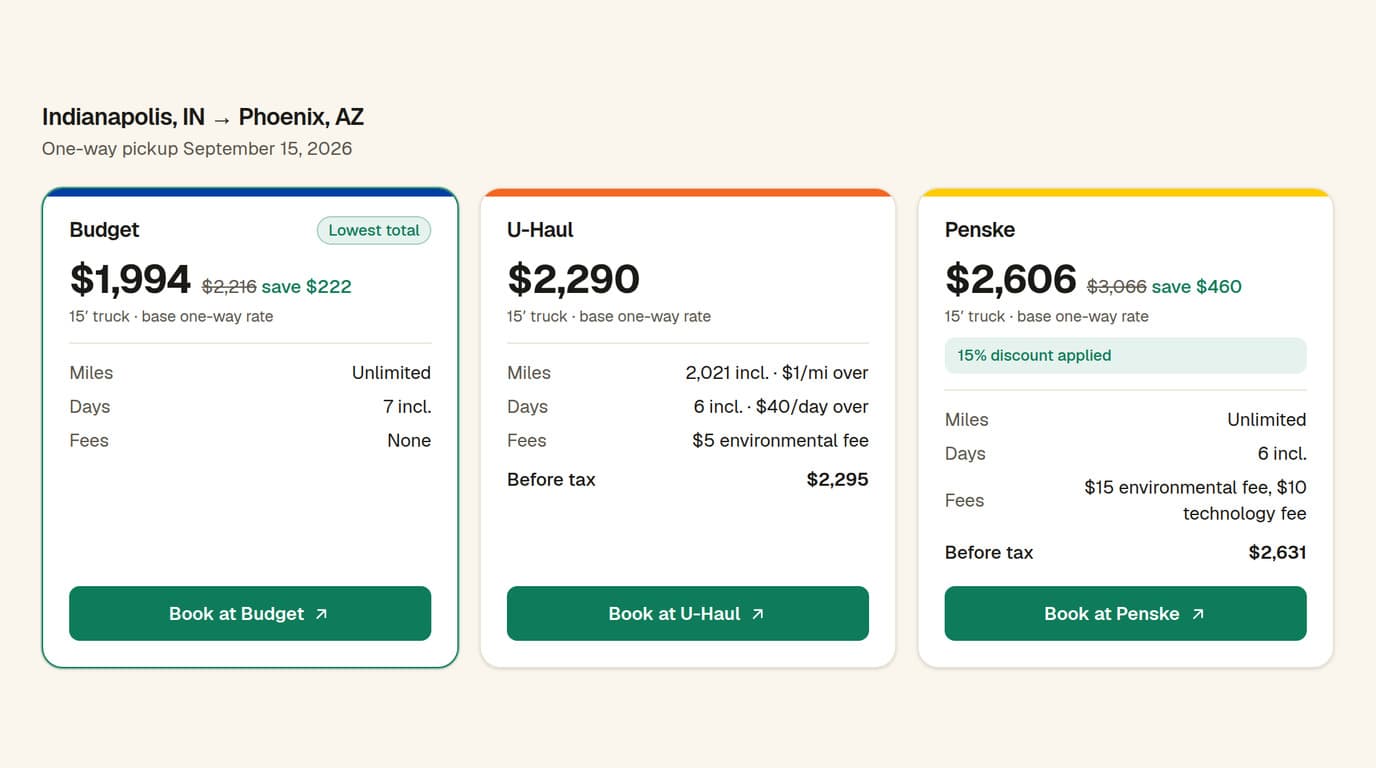
Ready to plan it out? Compare U-Haul, Penske, and Budget for your route and ask each one what towing equipment fits your car, then read our long-distance guide to map the drive.
Not sure which truck to book?
Answer two quick questions and get a size recommendation, plus a side-by-side of how U-Haul, Penske, and Budget stack up.