Moving With Pets: How to Keep Them Safe and Calm on Moving Day
Moving day is loud, chaotic, and full of open doors. That's a recipe for a stressed or lost pet. Here's how to keep your dog, cat, or small animal safe and calm before, during, and after the move, including the rules for riding in a rental truck.
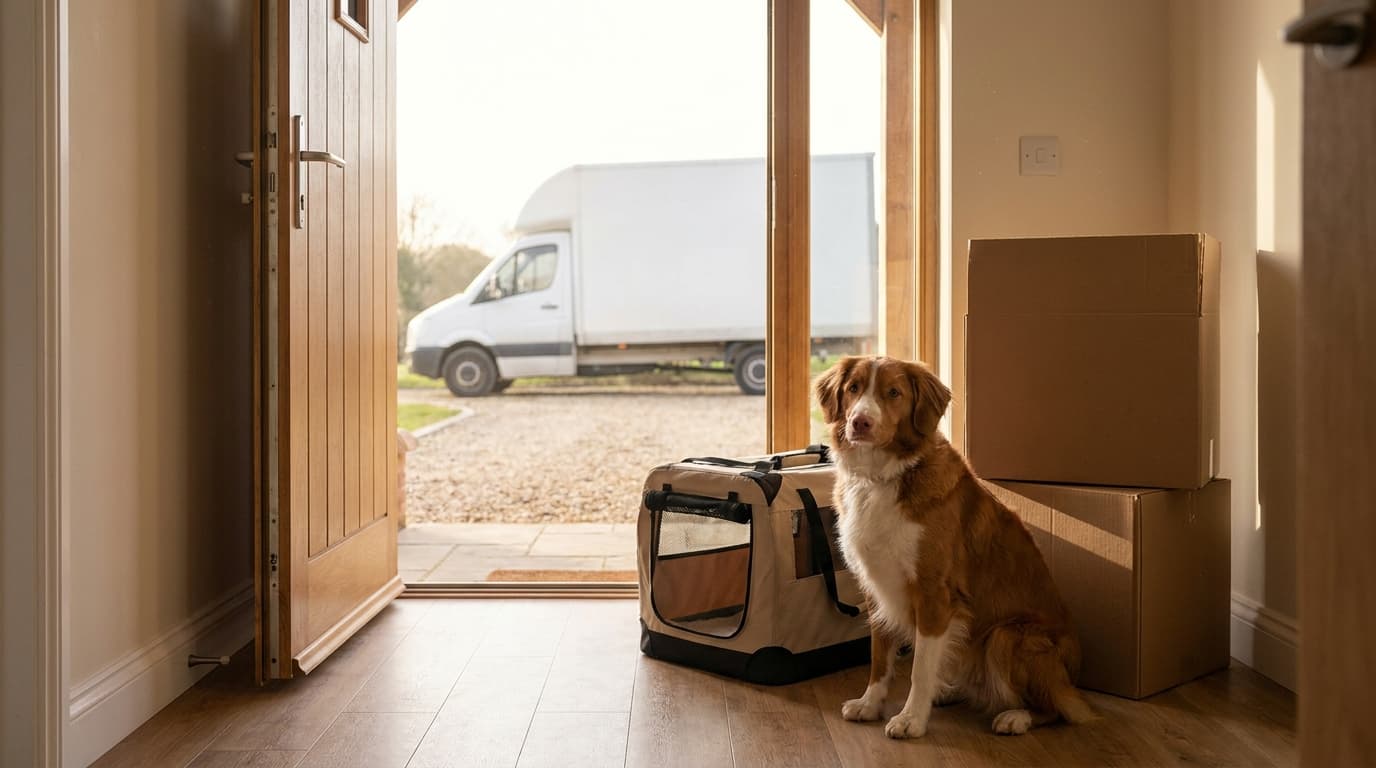
Your pets have no idea what's happening on moving day. To them, the house is suddenly full of strangers, the furniture is disappearing, boxes are everywhere, and the front door keeps swinging open. That combination of stress, open doors, and a broken routine is exactly how animals bolt, hide, or get hurt. The good news: a calm, safe move is almost entirely about planning ahead. Here's how to keep your dog, cat, or small animal safe and settled at every stage.
The short version
If you only read one section, read this:
- Update the ID first. Refresh your pet's tag and microchip registration with your new address and current phone number before moving day. This is what gets a lost pet home.
- Pack a pet essentials bag. Food, water, meds, bowls, a leash, waste bags or litter, and a favorite toy, all in one grab-and-go bag, not buried in a box.
- On loading day, keep pets out of the chaos. A closed quiet room with a sign on the door, or a day at a friend's or a boarding facility, away from movers and open doors.
- Pets ride in the cab with you, never in the cargo box. The back of a moving truck has no ventilation or temperature control and no way to secure a carrier. It is not safe for any animal.
- Never leave a pet in a parked truck. A closed cab becomes deadly hot (or dangerously cold) fast. If you can't take them along at a stop, someone stays with them.
- Check the rental company's pet policy when you book. Some restrict animals in the cab, so confirm before you reserve.
- Set up a safe room at the new home first. One quiet, closed room lets them decompress before exploring.
Everything below is these points in detail.
Before the move: get the basics squared away
The single most important thing you can do happens before you touch a box: make sure your pet can be identified and returned to you.
- Update the ID tag. A physical tag with your current cell number is the fastest way a stranger reunites you with a pet who slips out. If the tag still shows your old landline or address, replace it now.
- Update the microchip registration. A microchip only works if the registry has your correct phone number, so log in to the chip company's database and update your info. If your pet isn't chipped, ask your vet about it before a long-distance move.
- Gather vet records and prescriptions. Get a copy of your pet's vaccination and medical records, especially if you're changing states or boarding them overnight. Refill any medications so you're not hunting for a pharmacy mid-move.
- Help them get used to the carrier. Don't let the carrier's first appearance in years be moving morning. That teaches your pet it means something scary. Bring it out a week or two early, leave it open with a blanket and treats inside, and let them wander in on their own.
Finally, pack a pet essentials bag you keep with you rather than loading into the truck, with everything your pet needs for a day or two: food, a collapsible bowl, medications, a spare leash and collar, waste bags or litter, and a familiar toy or blanket that smells like home.
Our moving timeline checklist shows where pet prep fits alongside everything else, and the moving checklist tool lets you track it.
On loading day: keep them away from the chaos
Loading day is the highest-risk day for pets: the front door is open constantly, strangers come and go, and everyone is distracted. A scared animal underfoot can get stepped on, shut in a box, or, most commonly, slip out an open door and disappear.
The fix is to physically separate your pet from the action. Two good options:
- A closed, quiet room. Pick a room you'll empty last (a bathroom or bedroom works well). Put your pet inside with their bed, water, a litter box or pee pad, and a toy, then close the door and tape a clear sign on it: "DO NOT OPEN — PET INSIDE." Tell everyone helping that the room is off-limits.
- A day away from the house entirely. For anxious pets, or big moves with heavy foot traffic, the calmest option is somewhere else altogether: with a friend or family member, at doggy daycare, or at a boarding facility for the day. They skip the stress, and you move without worrying about the door.
Traveling in the rental truck: the cab, never the cargo box
The most important safety rule in the guide:
Pets ride in the cab of the truck, with you. They must never travel in the cargo box.
The back of a moving truck is a sealed cargo area built for furniture, not living things. It has no ventilation, no temperature control, and no way to safely secure a carrier. Temperatures inside can climb or drop to deadly levels within minutes, and your pet would be alone in the dark. There is no situation in which the cargo box is acceptable for an animal. Ever.
In the cab, keep your pet secured so they can't interfere with driving or get hurt in a stop:
- Small pets and cats: in a hard-sided or sturdy carrier, belted or wedged in place so it can't slide.
- Dogs: in a crate that fits the cab, or wearing a crash-tested safety harness clipped to the seatbelt. A loose dog is a hazard to itself and to your driving.
One crucial booking step: check the rental company's pet policy before you reserve. Some companies restrict or prohibit animals in the cab. Confirm the rules with U-Haul, Penske, Budget, or whoever you're renting from when you book, not at the counter with a nervous cat. If you're still choosing a company, our guide on how to rent a moving truck covers what to ask.
A big truck stops slower than your car, so a secured pet is far safer in a hard brake. That's one more reason to skim our driving guide before a long haul.
Never leave a pet alone in a parked truck
This one bears repeating on its own: never leave your pet in a parked truck cab, not even for a few minutes.
A closed vehicle in the sun becomes an oven: temperatures can spike 20 degrees or more within ten minutes, and cracking a window barely helps. In cold weather, a parked cab turns frigid just as fast. Heatstroke and hypothermia are fast-moving emergencies.
So the rule for every stop: if you can't bring your pet with you, one person stays with them in the running, climate-controlled cab. Traveling solo? Plan stops around drive-throughs and outdoor rest areas, not sit-down restaurants.
Rest stops, water, and breaks on longer drives
For a long-distance move, the drive is a big part of the pet's day, so plan for it the way you would a road trip with a toddler.
- Stop every few hours. Give dogs a chance to stretch, relieve themselves, and drink. Keep them leashed the entire time. A rest stop next to a highway is no place for an off-leash dog.
- Offer water regularly, food lightly. Dehydration is a real risk; a big meal in a moving truck is a recipe for nausea. Small amounts, often.
- Cats usually prefer to stay put. Most cats do better left in their secured carrier for the whole drive than handled at every stop. Keep it out of direct sun.
- Watch for stress signs. Heavy panting, drooling, whining, or hiding can mean your pet is overheating or overwhelmed. Adjust the temperature and offer water.
Our long-distance moving truck guide covers pacing a multi-day drive, and the same rhythm of regular stops works well for pets.
Overnight stops: hotel and motel pet policies
If your move takes more than a day, line up pet-friendly lodging in advance. Don't assume you can sort it out at 9 p.m.
Many hotel and motel chains welcome pets, but policies vary widely: some charge a pet fee, some cap the number or size of animals, and plenty of individual locations don't allow pets at all even when the brand generally does. Book ahead, confirm the specific property's rules directly, and keep that essentials bag handy so your pet has familiar food, bedding, and a toy in an unfamiliar room.
Settling into the new home: a safe room first
You've arrived. But for your pet, the new place is a disorienting space with no smells they recognize, so resist the urge to let them roam the whole house immediately.
Set up one safe room first. Prepare a single quiet room with their bed, food and water, litter box or pee pads, and familiar toys, ideally items that already smell like the old home. Let your pet settle there behind a closed door while the rest of the unloading happens.
Once the house is quiet, let them explore gradually, one area at a time. Check that the new place is escape-proof (gaps in fencing, screens that don't latch, doors that don't fully close) before giving a pet free run. Keep their feeding and walk schedule close to normal; familiar routines tell an anxious animal everything is okay, and most pets settle faster than you'd expect once the noise stops.
The bottom line
A safe move with pets comes down to a few calm habits: update their ID first, keep them out of the moving-day chaos, ride with them in the cab and never the cargo box, never leave them in a parked truck, plan your stops and overnights around them, and give them a quiet safe room at the new place. Do those things and your pet arrives calm, accounted for, and ready to settle in.
Getting the rest of the move organized helps too. Start with our moving timeline checklist, track every task in the moving checklist tool, and read how to rent a moving truck so the vehicle side is handled well before your pet ever climbs into the cab.
Not sure which truck to book?
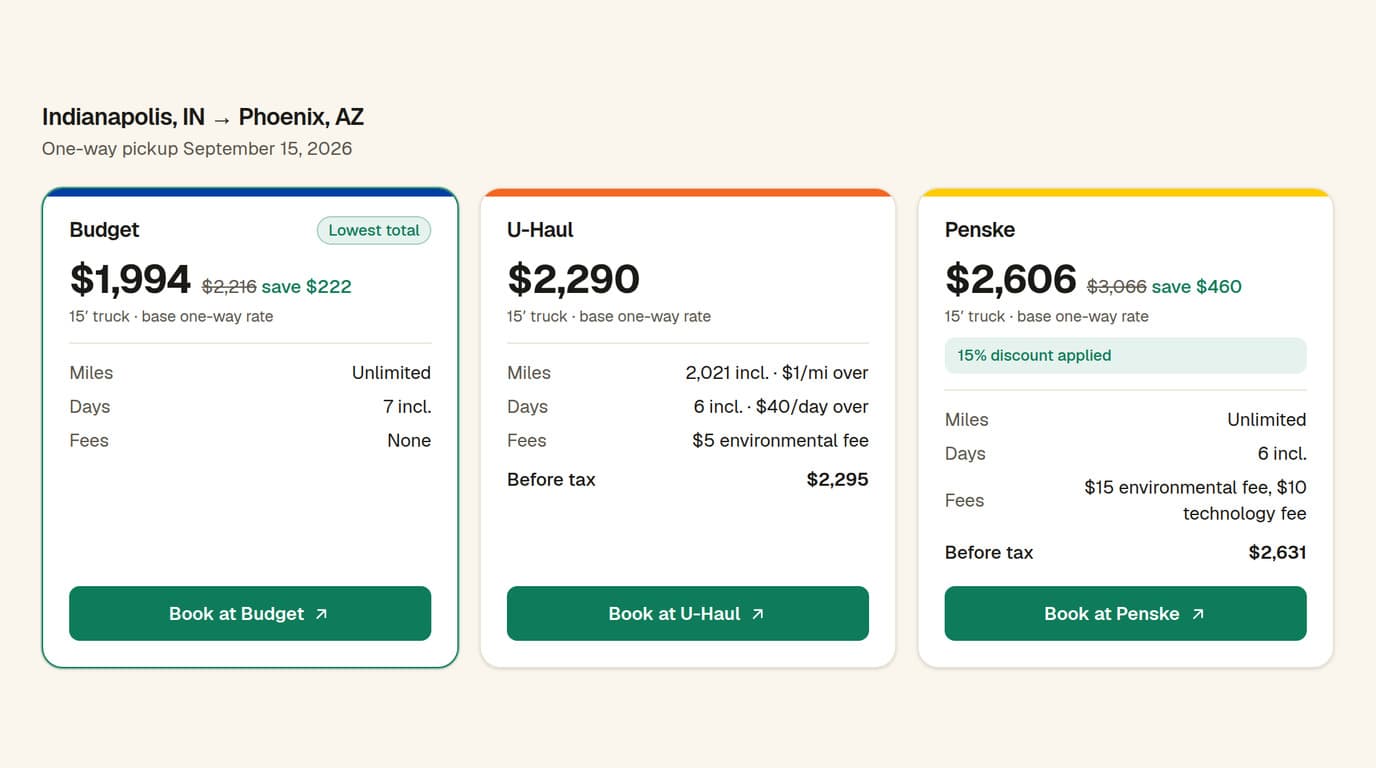
Answer two quick questions and get a size recommendation, plus a side-by-side of how U-Haul, Penske, and Budget stack up.