Moving Truck Gas Mileage: What You'll Actually Spend on Fuel
Moving trucks are thirsty, and fuel is the line item most people forget to budget for. Here's the honest range of what these trucks get, a simple formula to estimate your fill-ups, and the tricks that keep the number down.
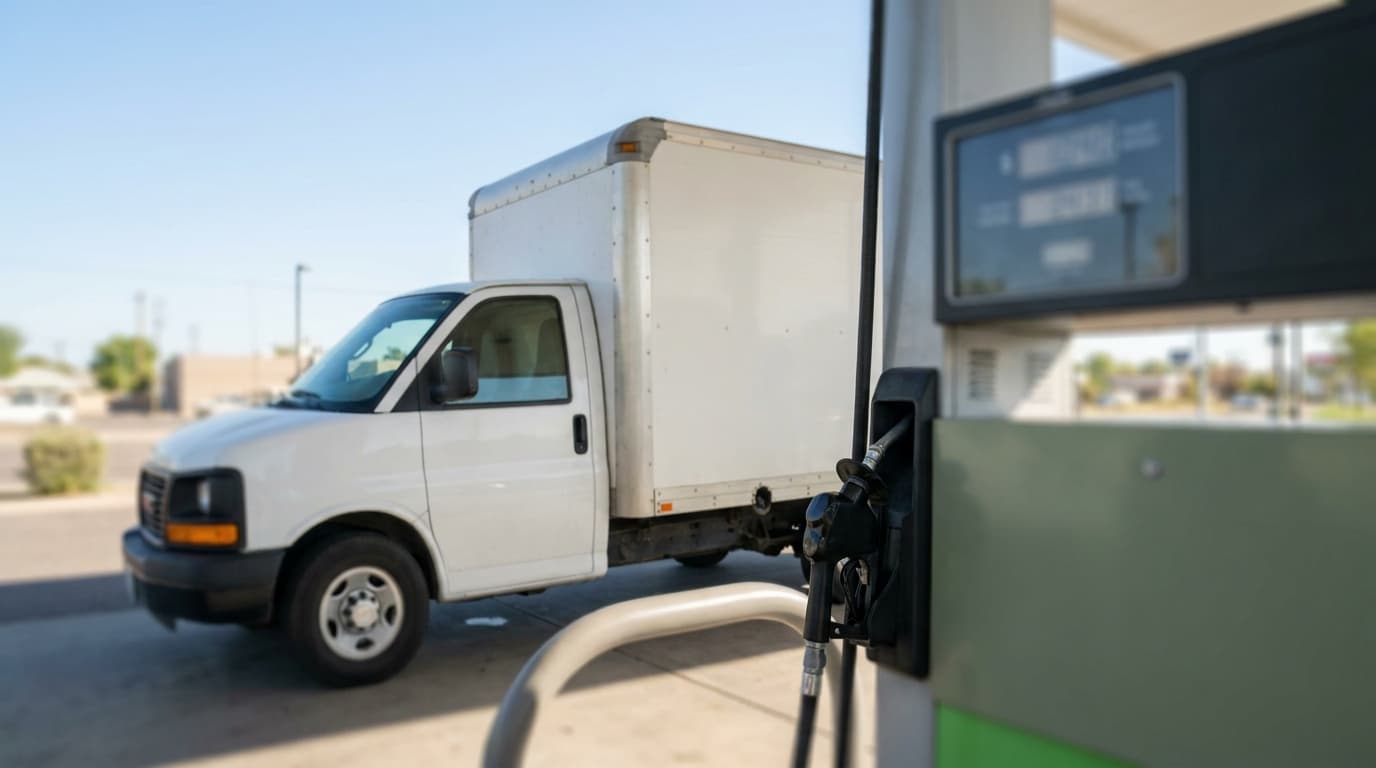
When people budget for a moving truck, they think about the daily rate and the per-mile charge. Then they pull up to the first gas station, watch the pump tick past what a car would cost, and realize nobody warned them: these trucks drink. Fuel is one of the biggest hidden costs of a move, and on a long haul it can rival the rental itself.
The good news is that fuel is also one of the most predictable costs, once you know roughly what your truck gets and how far you're driving. This guide gives you honest mileage ranges by size, a formula to estimate the total, and a handful of habits that keep the pump from surprising you.
The short version
If you only read one section, read this:
- Moving trucks get bad gas mileage. Expect single digits to the high teens depending on size, and worse when fully loaded.
- Rough ranges: cargo van around 12–18 mpg, a 10–16' truck around 8–12 mpg, and a 26' truck around 6–10 mpg. Treat these as ballpark, not promises.
- The formula is simple: miles ÷ mpg × price per gallon = your fuel cost. Everything else is just plugging in numbers.
- A loaded truck burns more than an empty one, often a couple of mpg worse, so budget on the low end of the range.
- Drive gently to save real money: steady speed, easy acceleration, less idling, and properly inflated tires all add up.
- Always refuel before you return it. The rental company's refueling charge is one of the worst per-gallon deals you'll ever see.
What kind of mileage do moving trucks actually get?
There's no official window sticker for rental trucks the way there is for cars, and real-world numbers swing based on load, terrain, wind, speed, and how new the truck is. So everything here is a rough range: useful for budgeting, not a guarantee.
That said, here's what these vehicles typically deliver:
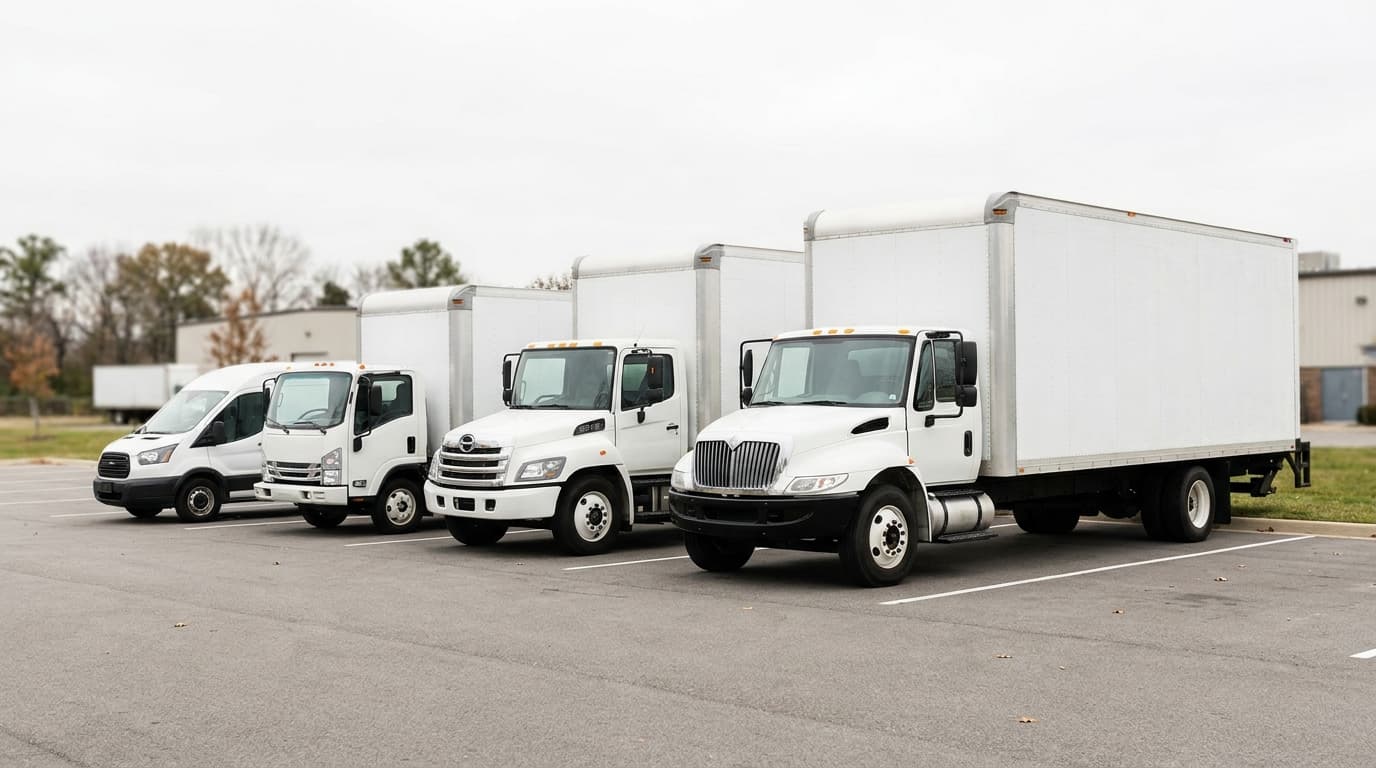
- Cargo van: roughly 12–18 mpg. The most car-like option. Empty and on the highway, a van can flirt with the high teens; loaded and around town, expect the lower end.
- Small to medium truck (10–16'): roughly 8–12 mpg. The most-rented sizes. A studio's worth of stuff barely moves the needle; a fully packed 16-footer sits near the bottom of the range.
- Large truck (20–22'): roughly 7–10 mpg. More frontal area, more weight, more thirst.
- Extra-large truck (26'): roughly 6–10 mpg, and worse fully loaded. The biggest truck you can drive on a regular license is also the hungriest. Pack it to the roof for a cross-country move and single digits are normal.
Notice the pattern: bigger truck, lower mileage, and a wider spread between empty and loaded. If you're still deciding which truck to rent, our size guide walks through matching the truck to your home. Just remember that the smallest truck that fits your stuff is usually the cheapest to fuel.
Gas or diesel?
Truck size isn't the only variable. Fuel type matters too. Smaller trucks and vans typically run on regular gasoline. Many larger box trucks, especially the 22' and 26' models from some fleets, run on diesel.
A few honest notes on the difference:
- Diesel engines are generally more efficient per gallon, so a diesel 26-footer may not be as far behind a smaller gas truck as its size suggests.
- Diesel usually costs more per gallon than regular gas, which can offset some of that efficiency at the pump.
- You have to put the right fuel in. Misfueling a diesel truck with gasoline (or vice versa) is an expensive, trip-ending mistake. The fuel door and dashboard will tell you which one. Check before your first fill-up, not after.
Don't assume. When you pick up the truck, confirm the fuel type at the counter and glance at the label near the filler cap.
The estimate formula (with a worked example)
Here's the whole math, and it's genuinely this simple:
Miles ÷ mpg × price per gallon = estimated fuel cost
Say you're driving a 16' truck 600 miles for a one-way move. You figure it's getting about 10 mpg loaded, and gas is running about $3.50 a gallon:
- 600 miles ÷ 10 mpg = 60 gallons
- 60 gallons × $3.50 = $210 in fuel
That's your ballpark. To be safe, run the number twice (once at the optimistic end of the mpg range, once at the pessimistic end) and budget for the higher figure. If that same truck actually gets 8 mpg because it's packed tight, you're looking at 75 gallons and roughly $263. Better to over-budget and be pleasantly surprised.
If you'd rather not do the arithmetic by hand, our fuel cost calculator does it for you. Enter your start and end ZIP codes and it prices the trip using the latest EIA gas and diesel data for your region. And the moving cost estimator folds fuel into the total picture alongside the rental rate and mileage.
Ballpark fuel cost by distance and size
To make this concrete, here's a rough table of what fuel might run you, using midpoint mileage for each truck and gas at about $3.50 a gallon. These are estimates for planning, not quotes. Your real number depends on load, terrain, driving style, and local fuel prices.
| Distance | Cargo van (~15 mpg) | 10–16' truck (~10 mpg) | 26' truck (~8 mpg) |
|---|---|---|---|
| 50 miles | ~$12 | ~$18 | ~$22 |
| 250 miles | ~$58 | ~$88 | ~$109 |
| 500 miles | ~$117 | ~$175 | ~$219 |
| 1,000 miles | ~$233 | ~$350 | ~$438 |
| 2,000 miles | ~$467 | ~$700 | ~$875 |
The takeaway jumps off the page: on a long-distance move, fuel is a major line item, sometimes hundreds of dollars, and the bigger the truck, the more it stings. If you're planning a haul like this, our long-distance moving guide covers how fuel fits into the total cost of getting across the country.
Loaded vs. empty: why weight changes the math
Every mileage number above depends on one thing the brochure won't mention: how much you're hauling. A moving truck driving home empty and the same truck packed with a four-bedroom house are two different animals at the pump.
A heavily loaded truck can lose a couple of miles per gallon compared to running empty. Sometimes more on hills. That's why the ranges here are wide, and why you should budget toward the lower end for the leg where the truck is full. On a round-trip local move you drive loaded one way and empty the other, which roughly averages out. On a one-way move, you're loaded the entire distance, so plan for the thirstier number the whole way.
Weight also affects how the truck drives, not just what it costs. A full truck accelerates slower, stops longer, and sways more, all reasons to take it easy, which happens to save fuel too. Our driving guide covers handling a heavy truck.
Fuel-saving tips that actually work
You can't change the truck's basic thirst, but driving habits genuinely move the needle. The biggest wins:
- Hold a steady, moderate speed. Fuel economy falls off a cliff at highway speeds in a big box truck. Backing off from 70 to 60 mph on the interstate can save a surprising amount over a long trip. Cruise control on flat stretches helps.
- Accelerate gently. Stomping the pedal away from every light dumps fuel. Ease up to speed smoothly. You're driving a loaded truck, not racing it.
- Cut the idling. Letting the engine run while you take a break or chat with the crew burns gas for zero miles. If you'll be parked more than a minute or two, shut it off.
- Check the tire pressure. Underinflated tires increase rolling resistance and cost you mileage. A quick check at pickup (the correct number is usually on a door-jamb sticker) is free money.
- Avoid stop-and-go. Constant braking and re-accelerating is where heavy trucks waste the most fuel. A slightly longer highway route often beats a shorter city crawl.
None of these are dramatic on their own, but stacked together over a few hundred miles they add up to real dollars. For more ways to trim the total bill, see our guide on how to save on a moving truck rental.
Always refuel before you return it
This is the one fuel mistake that costs the most for the least reason. Every major rental company (U-Haul, Penske, Budget, and the rest) expects you to bring the truck back at the fuel level you picked it up at. Return it lower, and they refill it for you at a per-gallon rate that is dramatically higher than any gas station, often with a service fee on top.
So make the last stop before you drop off the keys a gas station:
- Note the fuel level at pickup (and photograph the gauge). Most trucks go out full; some go out at a marked level.
- Fill back to that level before you return it, using a station near the drop-off so the reading is accurate.
- Keep the receipt in case there's any dispute about where the needle sat.
Ten minutes at a pump beats the refueling surcharge every time. It's covered in our broader rental cost breakdown, which lays out the fees, including fuel, that catch first-timers off guard.
The bottom line
Moving trucks get lousy gas mileage, and there's no way around that, but there's no mystery to it either. Know your truck's rough range (single digits to the high teens by size), budget toward the lower end when you're loaded, run the simple miles-÷-mpg-×-price formula, and treat fuel as a real line item, especially on a long move. Then drive gently and refuel before you return, and the pump won't surprise you.
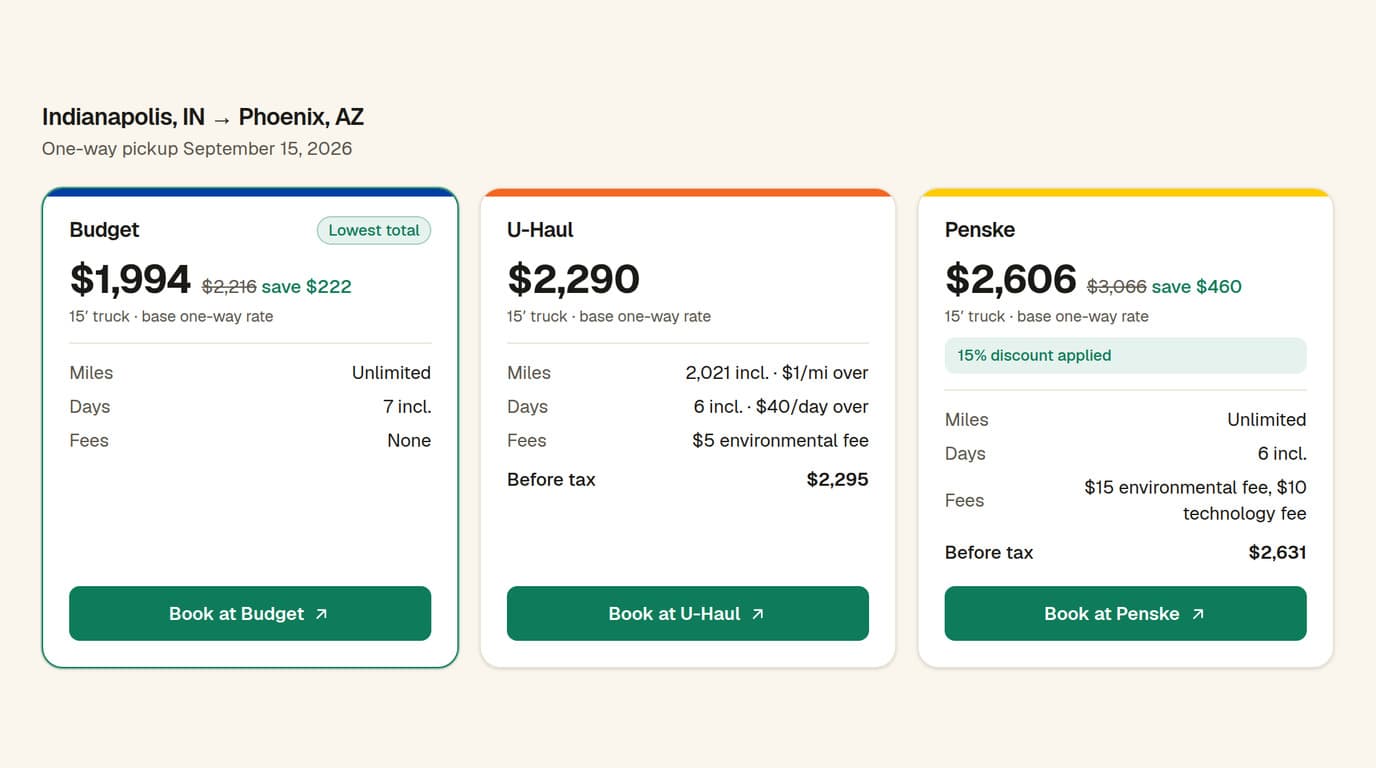
Ready to see the whole number? Run your trip through the moving cost estimator, then compare U-Haul, Penske, and Budget to find the truck that fits your stuff without hauling extra air.
Not sure which truck to book?
Answer two quick questions and get a size recommendation, plus a side-by-side of how U-Haul, Penske, and Budget stack up.