What to Do If Your Moving Truck Breaks Down
A flat tire or a dead battery in a loaded moving truck feels like a disaster, but it's a routine, well-covered situation. Here's the calm, step-by-step playbook for getting safe, getting help, and getting back on the road.
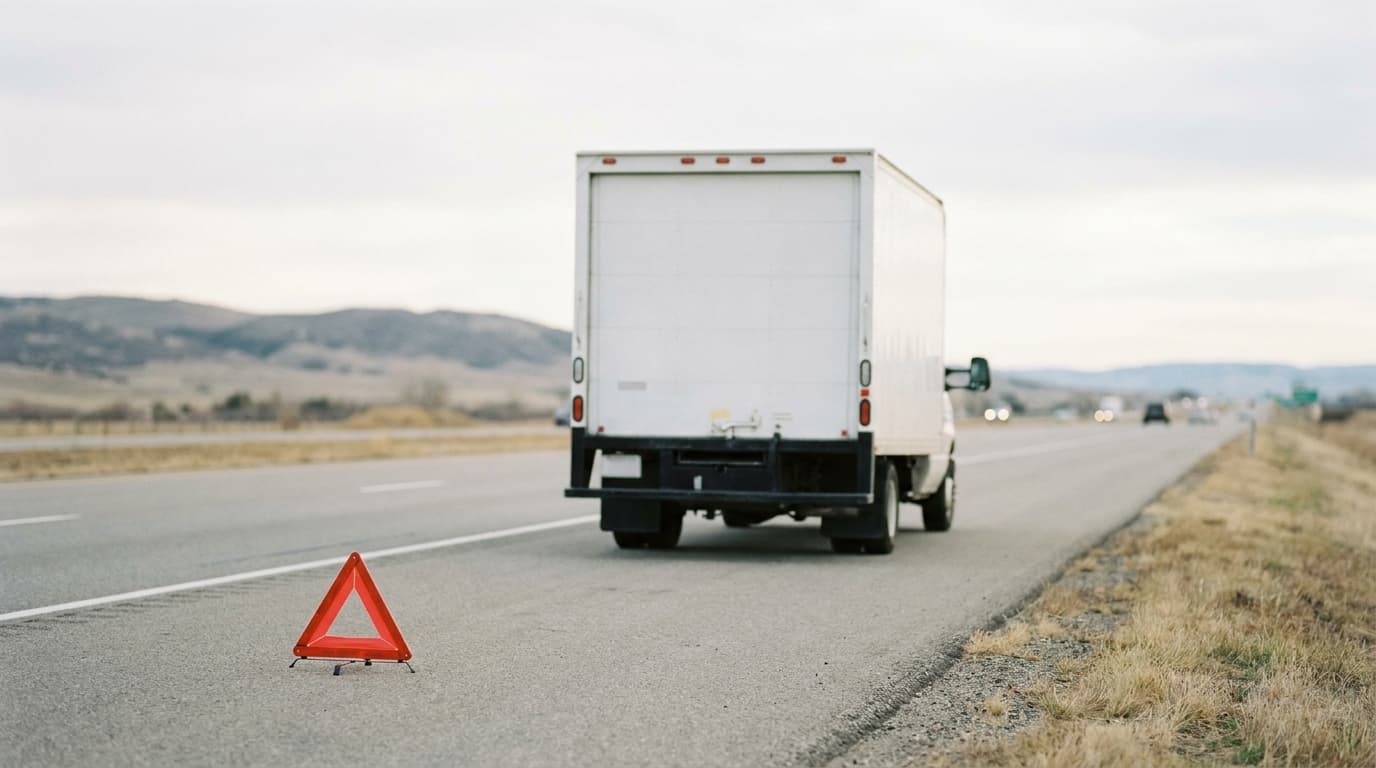
A warning light flickers on. The engine loses power. A tire lets go with a bang on the interstate. When it happens in a rental truck loaded with everything you own, the first feeling is usually panic. That's exactly the moment to slow down.
Here's the reassuring truth: a moving-truck breakdown is a routine event, and the rental companies are built for it. Nearly every consumer rental comes with 24/7 roadside assistance, and the people on that line handle flat tires, dead batteries, and tows every day. Your job on the shoulder isn't to fix anything. It's to get safe, make one phone call, and let the professionals take it from there. This guide walks through exactly how.
The short version
If you only read one section, read this. When a moving truck breaks down:
- Get off the road. Signal, ease onto the right shoulder or the nearest exit, and get as far from moving traffic as you safely can. Don't stop in a live lane if you can avoid it.
- Turn on your hazard lights. Do this the instant you feel something is wrong, even before you've fully stopped.
- Set out warning triangles or flares if the truck has them, well behind the vehicle to give traffic time to react.
- Stay buckled and stay put, away from traffic. On a busy highway, staying inside with seatbelts on is usually safer than standing beside the truck. If you exit, do it on the side away from traffic.
- Call 911 first if anyone is hurt or the truck is in a dangerous spot. Safety before logistics, always.
- Then call the rental company's 24/7 roadside assistance number. It's on your rental contract. They coordinate the tow, the repair, or a replacement truck, and it's typically already included in your rental.
Everything below is just these steps in detail.
Step 1: Get safe before anything else
The moment something feels wrong (a shimmy, a warning light, a loss of power), turn on your hazard lights and start looking for a safe place to stop. Signal early and ease the truck onto the right shoulder, an exit ramp, a rest area, or a parking lot, as far from live traffic as the situation allows. A loaded truck is heavy and slow to stop, so plan the maneuver instead of stabbing the brakes.
Once you're stopped, check whether the truck carries reflective warning triangles or flares. Many larger box trucks do. Set them out well behind the vehicle so approaching drivers have plenty of time to see you and move over.
Now decide where the safest place to wait is. Counterintuitively, standing next to a disabled truck on a busy highway shoulder is one of the more dangerous things you can do. In most highway situations you're safer staying inside the cab with your seatbelt fastened and the doors locked. If you do need to get out, exit on the side away from traffic and stand well back from the roadway, behind a guardrail if there is one.
If anyone is injured, or the truck is stuck somewhere genuinely dangerous, call 911 first. Roadside assistance is for the vehicle; 911 is for people. Never let sorting out the truck delay a call for help.
Step 2: Call roadside assistance first, before you try anything
Once you're safe, your single most important move is one phone call: the rental company's 24/7 roadside assistance line.
Make this call before you attempt any fix and before you pay anyone. Roadside coverage is included with essentially every major consumer truck rental. U-Haul, Penske, and Budget all run round-the-clock assistance lines. Calling them first is how you make sure the help is authorized, coordinated, and covered. A tow you arrange on your own, without their sign-off, can turn into a bill you're stuck with.
The number lives on your rental contract and paperwork, and it's often printed on a sticker in the cab or on the keychain. This is why it pays to note it at pickup. Save it in your phone the day you get the keys so you're not digging through a glovebox on the side of a highway. Our guide to renting a moving truck covers what to check and capture during that pickup walkthrough.
When you get through, be ready to give them:
- Your rental agreement or contract number
- Your location: a mile marker, exit number, cross street, or a dropped pin from your phone's map
- What the truck is doing (flat tire, won't start, overheating, warning light, out of fuel)
- Whether the truck is loaded, and whether you're in a safe spot
They'll dispatch the right help and give you a realistic timeline. Stay near your phone for the service provider's call back.
What roadside assistance typically covers
Roadside programs exist to get a disabled truck moving again, and the common situations are exactly the ones you'd expect. Coverage generally includes:
- Towing to a repair facility if the truck can't be fixed on the spot
- Flat tire service (changing or repairing a tire)
- Jump starts for a dead battery
- Lockout service if the keys end up locked inside
- Fuel delivery if you run out (you typically pay for the fuel itself, but they'll bring it)
A few things are worth knowing. Coverage is usually about mechanical failures and normal breakdowns: problems with the truck itself. Situations caused by the driver, like a lockout or running out of gas, are often still helped, but you may owe a service fee. Roadside assistance also isn't a substitute for insurance: it gets the truck handled, but it doesn't cover damage to the truck or your belongings. For how that side works, see our moving truck insurance explainer.
If you're fuzzy on what your specific rental includes, it's spelled out in the paperwork. That's the same paperwork that lists the requirements you agreed to when you booked, which our rental requirements guide breaks down.
What happens to your belongings
This is the worry that keeps people up at night: my whole life is in the back of this truck. Now what?
Take a breath, because this is a solved problem. When a loaded truck can't be repaired roadside, the rental company arranges the fix: a mobile repair where you sit, a tow to a shop, or (if the truck is out of commission) a replacement truck and a transfer of your load, which they coordinate. You're not expected to figure this out alone.
The one thing you should not do is try to unload a loaded truck on the shoulder yourself. It's dangerous next to traffic, it risks your back and your furniture, and it's unnecessary. The transfer is the rental company's responsibility. Stay safe, stay in contact with roadside, and let them run the logistics. If a delay affects your move-in timing, tell the company; they can sometimes adjust your return window or drop-off details.
Document everything and keep your receipts
A few minutes of documentation now can save you a dispute later.
- Photograph the truck: the flat tire, the warning light, the fluid on the ground, the mile marker or exit sign showing where you are.
- Write down names and numbers: the roadside case number, the service provider, the tow company, the shop.
- Note the times: when it broke down, when you called, when help arrived.
- Keep every receipt. If you pay for anything out of pocket (fuel, a tow, a part), save it. Companies frequently reimburse authorized, covered expenses, but only if you can prove what you spent.
If the breakdown delays your move or adds costs, this record is what you'll lean on when you ask the company to make it right.
Prevent it: your pickup and driving checklist
Most roadside calls trace back to something that could have been caught in the lot or avoided on the road. The best insurance against a breakdown is a careful pickup walkaround. Before you drive off, check:
- Tires: properly inflated, good tread, no visible damage or bulges. Under-inflated tires are a leading cause of highway blowouts.
- Lights: headlights, brake lights, turn signals, and hazards all working.
- Fluids: no warning lights on the dash at startup, no puddles under the truck.
- The ramp and cargo door: they slide, latch, and lock as they should.
- Mirrors: clean, adjusted, and tight so they don't drift on the highway.
- Fuel level: noted and photographed, so you start with a known baseline.
And once you're rolling, drive the truck like the heavy vehicle it is: keep to the speed limit, leave a long following distance, take grades gently, and don't overload beyond the truck's rated capacity. Overheating and brake trouble often come from pushing a loaded truck too hard on long climbs. Our guide to driving a moving truck covers the habits that keep both you and the truck out of trouble. And save that roadside number in your phone while you're in the lot. It's the one item here you'll be grateful for only if you ever need it.
The bottom line
A moving-truck breakdown feels like a catastrophe and is almost always a footnote. Get safely off the road, hazards on, triangles out, and stay clear of traffic. Call 911 first if anyone's hurt. Then call the rental company's 24/7 roadside line, which is included with your rental and staffed by people who do this all day. Let them handle the tow, the repair, or the replacement truck; don't move a loaded truck's contents yourself; and keep photos and receipts for anything you pay. Best of all, prevent the whole ordeal with a five-minute walkaround at pickup and by driving within the truck's limits.
Getting ready to move? Start with our step-by-step rental guide, and skim the driving guide before you take the keys. A confident driver and a well-checked truck rarely meet the shoulder.
Not sure which truck to book?
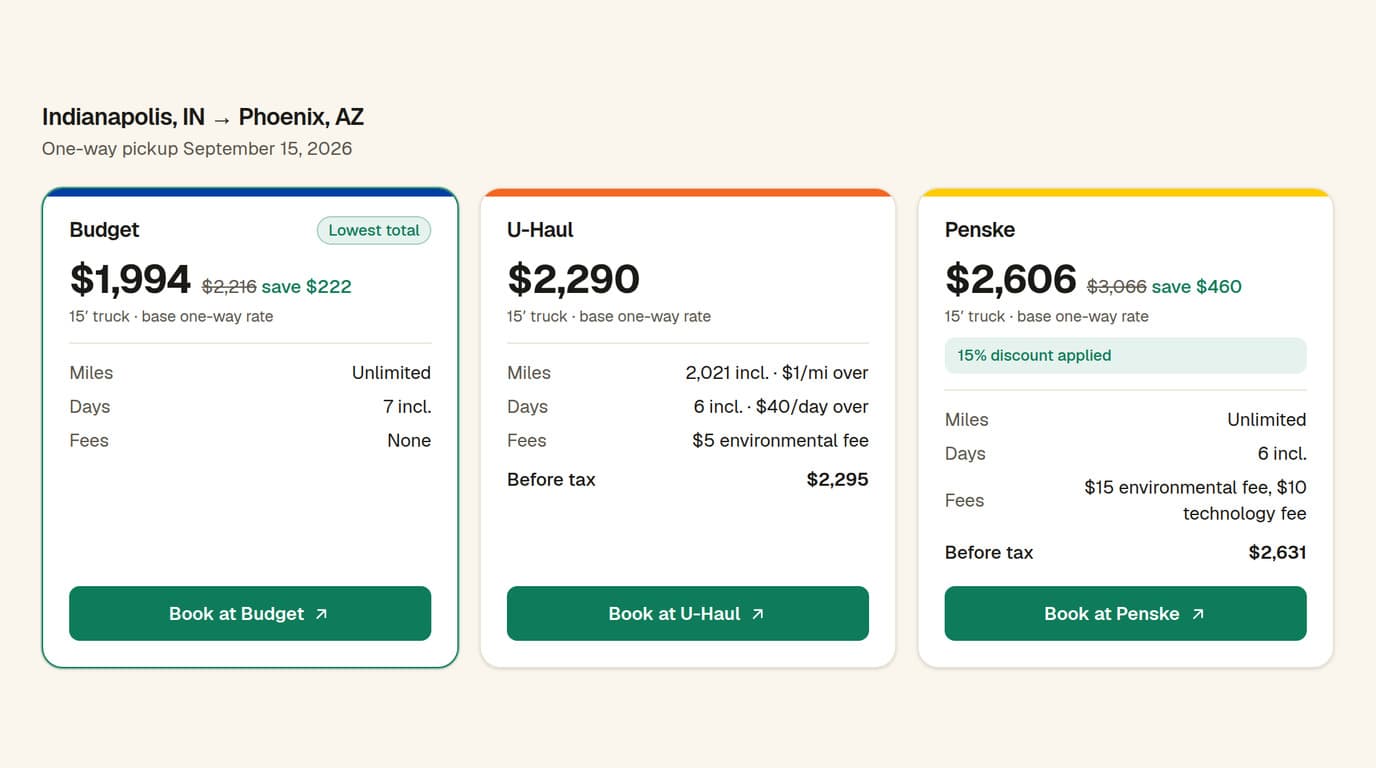
Answer two quick questions and get a size recommendation, plus a side-by-side of how U-Haul, Penske, and Budget stack up.