The College Move: Renting a Truck for a Dorm or First Apartment
Moving into a dorm or first apartment is a small load on the worst possible weekend. Here's how to pick the right-sized truck, beat the move-in rush, split the cost with roommates, and clear the age and license hurdles that trip up younger renters.
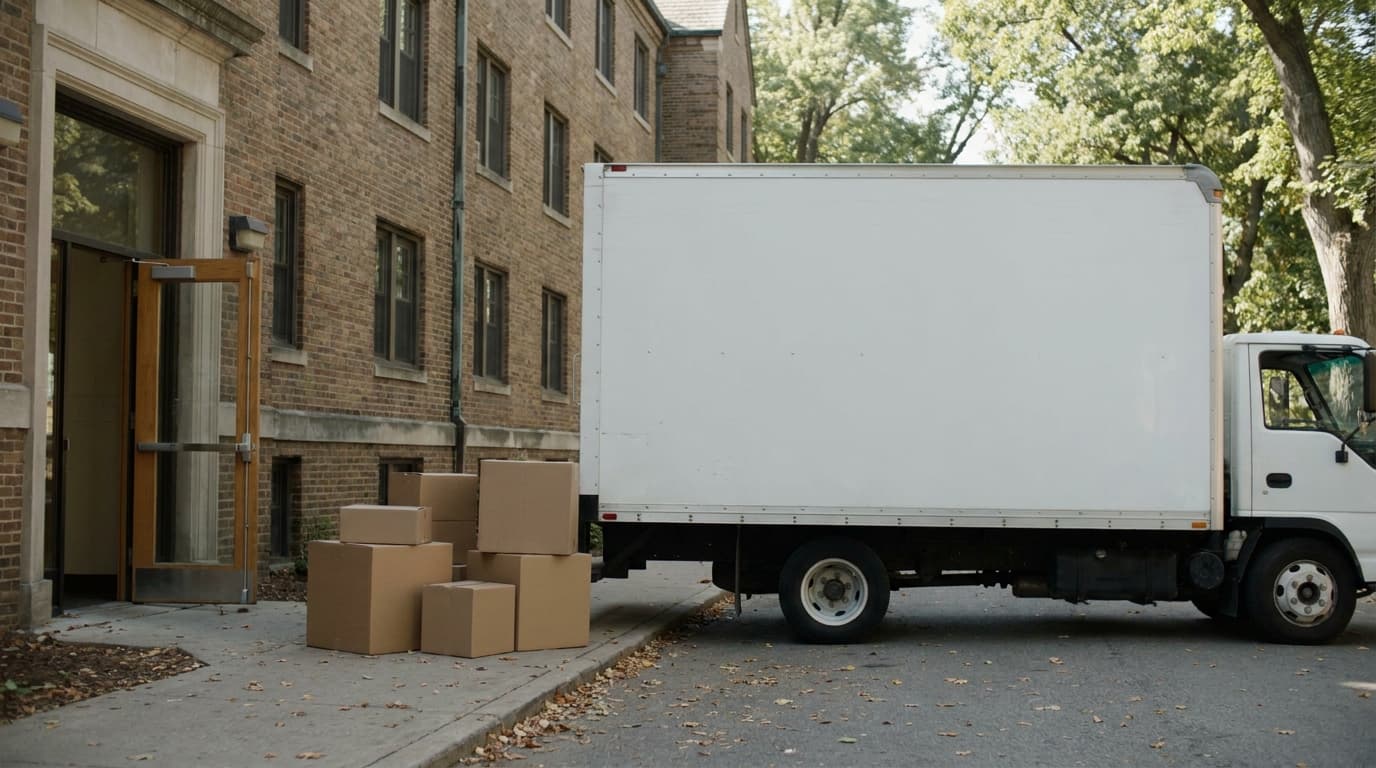
A college move is its own special kind of move. The load is small: a bed's worth of stuff, some boxes, maybe a mini-fridge and a futon. But the timing is brutal, the driver is often renting for the very first time, and everyone in a fifty-mile radius is trying to do the exact same thing on the exact same weekend. That combination catches a lot of students and parents off guard.
The good news: because you're not hauling a whole household, the truck itself is the easy part. This guide covers the size you actually need, how to survive the move-in crush, and the age, license, and payment rules that matter most when the renter is 18 or 19.
The short version
If you only read one section, read this:
- You need less truck than you think. A dorm room or a first apartment usually fits in a cargo van or a small 10–12' truck. Don't rent a 15-footer for a twin bed and six boxes.
- Book far ahead. This is the whole game. College move-in and move-out weekends are peak demand near campus. Trucks near the school sell out and prices climb. Reserve weeks in advance, not days.
- Ask about a student discount, but don't count on it. Some companies and some memberships (like AAA) offer a percentage off. It varies. Always ask, never assume.
- Use a one-way rental to go home or to a new city. Don't pay to drive an empty truck back across the state.
- Split it with roommates. One truck, one bill, three people. It's the cheapest per-person move you'll ever make.
- Check the age and payment rules first. Minimum rental age and debit-card policies vary by company and location. Confirm before you book.
Everything below is the detail behind those points.
The right size for a dorm or first apartment
Here's the reassuring part: a college move is one of the few where you probably won't size up. A single dorm room or a modestly furnished first apartment is a genuinely small load.
- A dorm room (bedding, clothes, a few boxes, a mini-fridge, maybe a small futon) fits comfortably in a cargo van. Two students combining a shared room can usually still manage with a van.
- A first apartment is the classic small (10–12') truck job: a bed, a couch or futon, a dresser, a table, and a stack of boxes. That's the one-bedroom size, and it's plenty.
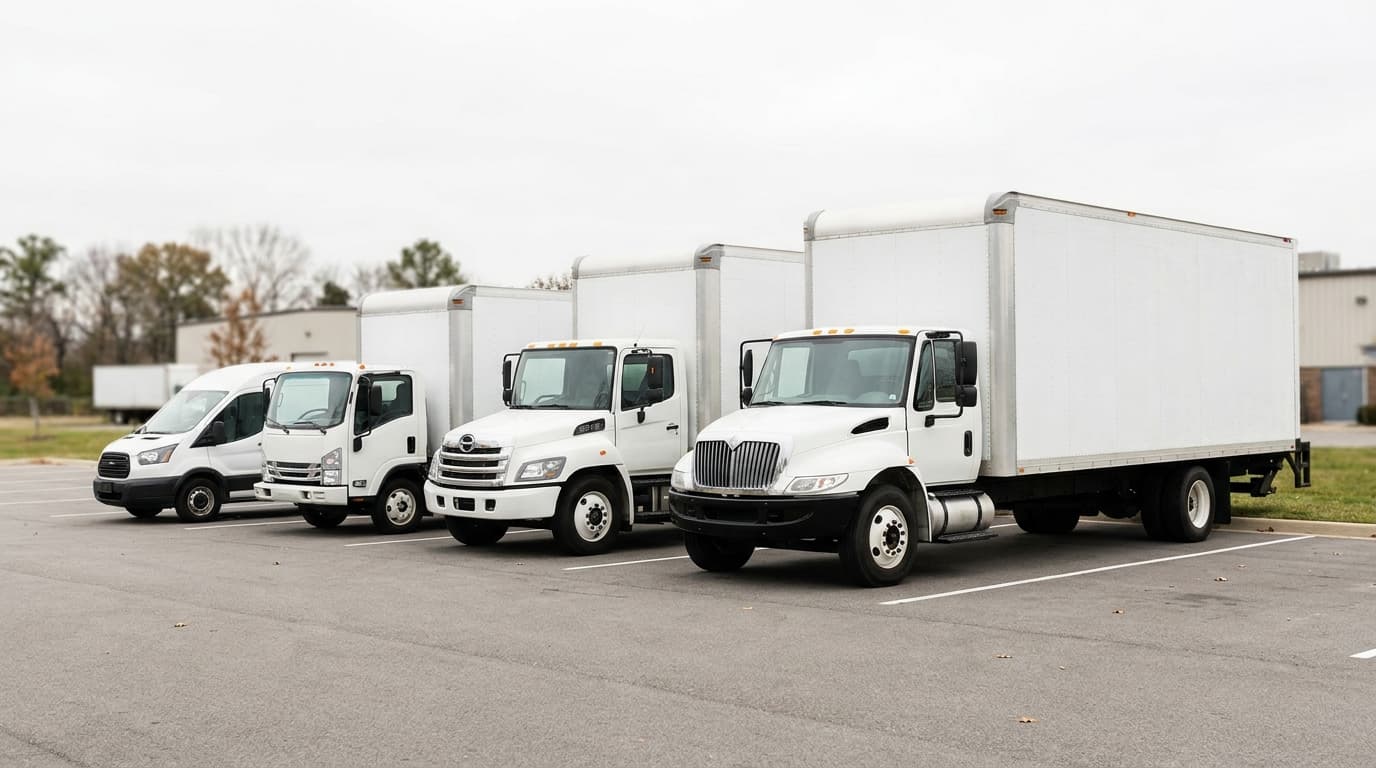
If two roommates are combining real furniture, step up to the small truck rather than cramming a van. But the medium 15–16' truck most families rent is overkill for the average student, and you'll pay for space you don't use. Our truck size guide breaks down each size room by room.
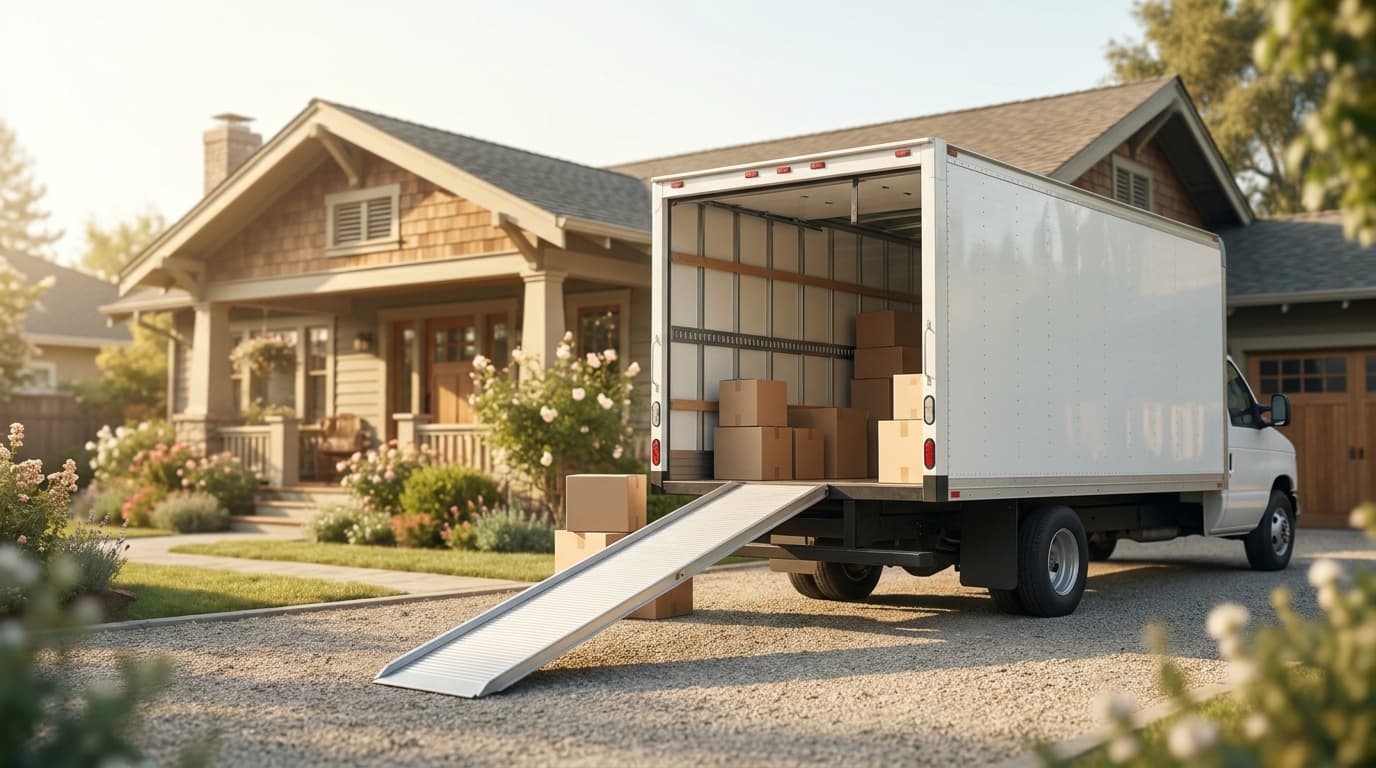
Van or truck? A cargo van drives almost like a big SUV, parks more easily on a tight campus street, and is far less intimidating for a first-time driver. A small box truck holds more and has a low floor and a ramp. If your load is light and you've never driven anything bigger than a sedan, the van is the friendlier choice. Our cargo van vs. moving truck comparison lays out the trade-offs.
The timing crunch nobody warns you about
This is the part that trips people up, so read it twice. College move-in and move-out weekends are among the most extreme, most concentrated demand spikes in the entire truck-rental calendar.
Every dorm at a large university empties over the same few days in May, then refills over the same days in August. Thousands of families all want a van or small truck, from the same handful of locations near campus, on the same dates. Supply near the school runs out, and the trucks that are left get expensive.
What that means for you:
- Book as far ahead as you possibly can. Weeks, not days. The size you want, from a location near campus, on move-in Saturday, can genuinely be sold out. Most reservations cancel free, so there's little downside to locking one in early.
- Expect higher prices and less choice than a random Tuesday. This is normal for peak weekends. Not a scam, just supply and demand.
- Consider a location a little farther from campus. The spots ringing the university sell out first. A branch a few towns over, or in your hometown if you're driving in, may have trucks when the campus-adjacent ones don't.
- Shift your dates if the school allows it. Arriving a day before or after the official rush dodges the worst of it, and so does picking up the truck a day early and loading ahead. Our guide on the best time to rent explains the seasonal and weekend swings.
The single biggest mistake college movers make isn't the wrong truck. It's booking too late and finding nothing available near the school.
Student discounts: ask, but don't bank on it
Do student discounts exist? Sometimes. Policies vary by company, location, and season, so we won't quote a number that might be wrong by the time you book. But it's worth a two-minute ask:
- Ask directly whether the company offers a student rate, and have your student ID handy.
- Check memberships you already have. A family AAA membership, for example, sometimes unlocks a rental discount.
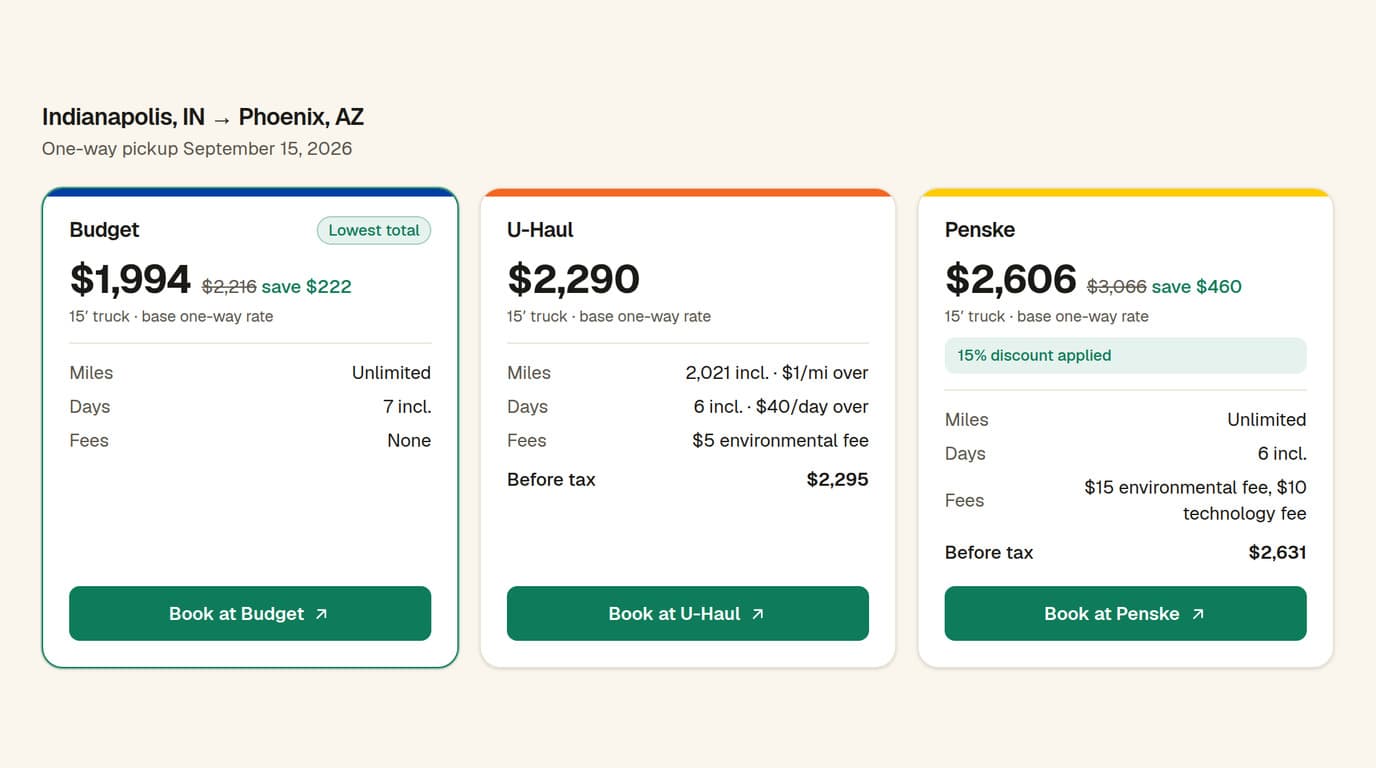
- Compare companies anyway. A base rate that's lower to begin with often beats a "discount" off a higher one, and the three big one-way companies can quote very different prices for the same route and date.
Treat any discount as a bonus, not a plan. Booking early and comparing companies will save you more than a promo code usually does.
Moving home for the summer, or to a new city
A lot of college moves aren't across town. They're across the state: hauling a dorm home for the summer, or moving to a new city for an internship or first job. For any move where you won't return to the starting point, you want a one-way rental.
With a one-way, you pick up near your old place and drop off near your new one, and never drive the empty truck back. Trying to save money with a round-trip (local) rental on a long move means driving all those miles home empty, which almost never comes out cheaper. Our one-way vs. round-trip guide covers when each one wins. One-way trucks are also the ones most likely to sell out, so book as soon as your dates are set.
Split the cost with roommates
Here's the college mover's superpower: you rarely move alone. If you and two roommates are all heading to the same apartment, one truck can carry all three loads in a single trip, and you split one bill three ways. Per person, it's about the cheapest move that exists.
A few tips for a painless shared rental:
- One person is the official renter. Their name, license, and payment card go on the reservation, and they need to meet the age and license rules below.
- Sort out money up front. Agree on how you're splitting the base rate, mileage, fuel, and any protection before pickup.
- Add a second driver if you're trading off on a long haul. Most companies let you add an authorized driver. They need to be present with their license at pickup, and to meet the same age requirements.
- Load by household so each person's stuff stays grouped and nobody's boxes end up buried.
Age, license, and payment rules for younger renters
This is the section that catches first-time student renters most often, so confirm the specifics before you build your whole plan around a reservation. All of this varies by company and by location, so verify when you book:
- Minimum rental age. Many companies rent to drivers as young as 18, but not all, and some locations or larger trucks require you to be older. If the renter is 18 or 19, confirm the size you want is available at your age at that location.
- A valid driver's license in the renter's name is required. A learner's permit won't cut it. International students should ask what the company accepts for a foreign license.
- Payment card checks. Booking with a debit card, common for students, can trigger extra steps: a hold on your account, a credit check, or a requirement to show extra ID or proof of your return trip. A credit card in the renter's name is usually the smoothest path.
- Who can drive. Only the renter and formally added authorized drivers should get behind the wheel. A friend who isn't on the paperwork driving the truck can void your coverage.
Our full rental requirements guide goes deeper on documents, deposits, and payment rules. Five minutes confirming these details saves a very bad surprise at the counter.
Campus parking, permits, and getting help
The move itself has a couple of campus-specific wrinkles worth planning around:
- Ask the school about move-in logistics first. Many universities run a scheduled move-in with assigned time slots, designated unloading zones, and a strict "unload and move the vehicle" rule.
- Check whether you need a parking permit for the truck, and where oversized vehicles are allowed. Campus streets and garages often have height limits a box truck won't clear, and a cargo van is safer on that front.
- Grab the loading essentials: a dolly or hand truck (rent it with the vehicle), moving straps, and a few furniture pads.
- Bring people. A dorm load with three friends is a one-hour job; alone, on stairs, in August heat, it's miserable. If your building has no elevator, extra hands matter even more than the right truck.
The bottom line
A college move is small in size but sharp in timing. Rent less truck than you'd expect. A cargo van or 10–12' truck covers a dorm or first apartment. Put your real energy into booking early, because move-in and move-out weekends near campus sell out and get pricey. Ask about a student discount, use a one-way rental if you're leaving town, split the bill with roommates, and confirm the age and payment rules before you commit.
Ready to line it up? Start with the truck size guide to lock in van-or-truck, then compare U-Haul, Penske, and Budget for your dates near campus.
Not sure which truck to book?
Answer two quick questions and get a size recommendation, plus a side-by-side of how U-Haul, Penske, and Budget stack up.