Renting a Truck vs. Hiring Movers: How to Decide
The real trade-off isn't just money: it's your time, your back, and your risk. Here's an honest look at doing it yourself, hiring full-service movers, or splitting the difference, plus a framework to pick the right one for your move.
Every move eventually comes down to one fork in the road: do you rent a truck and handle it yourself, or do you pay someone else to do the heavy lifting? It sounds like a simple money question (DIY is cheaper, movers are pricier), but that framing hides half the story. The cheapest option on paper can cost you a weekend, a wrenched back, or a cracked TV. The most expensive one can be worth every dollar if it saves you from taking three days off work.
This guide lays out the three real paths honestly, shows what each one actually costs you (in money and effort), and gives you a simple framework to decide which fits your move.
The short version
If you only read one section, read this. There are three ways to move, not two:
- Full DIY: rent a truck, you load and drive. The cheapest option in dollars. You (and hopefully some friends) do all the packing, lifting, and driving. You trade money for time, sweat, and risk.
- Full-service movers: they pack, load, drive, and unload. The most expensive option, and the most hands-off. You point at boxes; professionals do the rest. You trade money for your time and your back.
- The hybrid: you rent the truck, but hire labor-only "loading help." The middle ground people forget exists. You still rent and drive the truck, but you pay a crew by the hour to load it and/or unload it. Sometimes called "you drive, they load."
Most people assume it's a two-way choice and default to whichever they've done before. The hybrid is often the smartest answer, especially for local moves where the driving is easy but the lifting is brutal.
Path 1: Full DIY (rent the truck, do it all yourself)
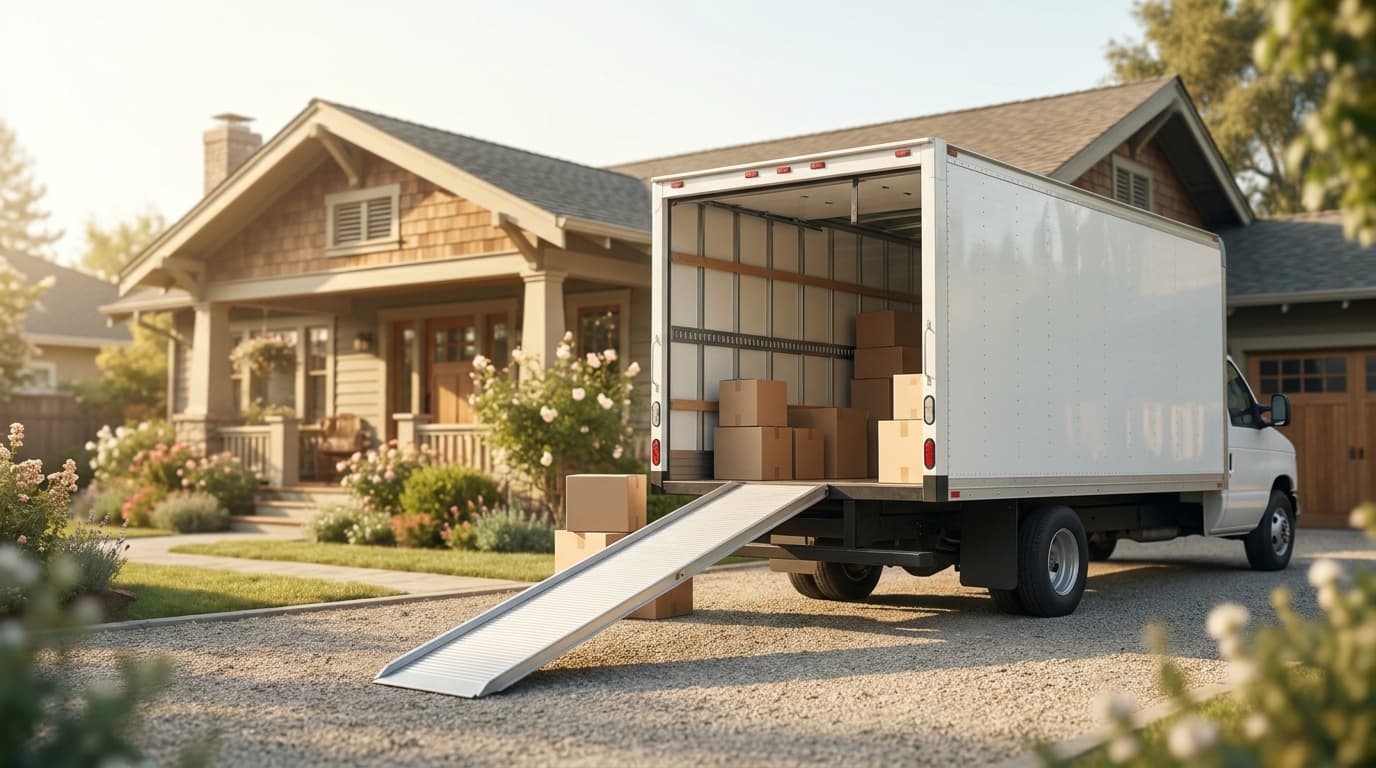
This is the classic move: you rent a moving truck, round up a few friends, load everything, drive it, and unload on the other end. It's the cheapest path by a wide margin, and for a lot of moves it's the right call.
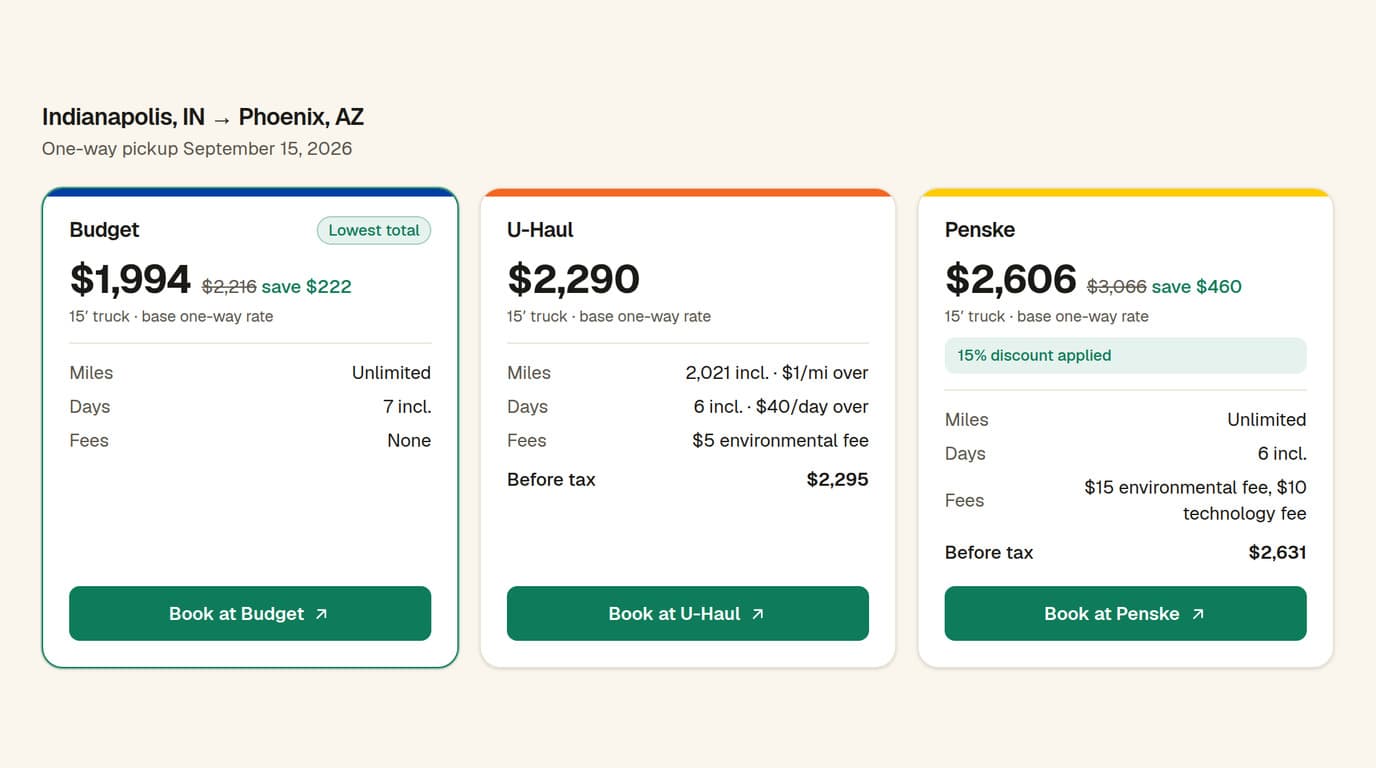
What you're paying for: just the truck, the fuel, the mileage, and any protection you add at the counter. For a local move that can land in the low hundreds of dollars; for a long one-way move it's more, but still typically the lowest total of the three paths. Our truck rental cost guide breaks down where the money actually goes.
What it really costs you: everything the price tag doesn't show. You're on the hook for every box, every stair, and every hour. You need a plan for loading the truck so nothing shifts or breaks on the highway. You need to drive a vehicle that's taller, wider, and slower to stop than anything you're used to. And you're absorbing the risk: if the couch gouges the wall or your friend tweaks his back, that's on you, not a company with insurance.
Who it's best for: smaller homes (studios and one- or two-bedroom apartments), tight budgets, people in good physical shape, and anyone with reliable friends willing to help. If you're young, fit, moving light, and have a Saturday to spare, DIY is hard to beat.
Path 2: Full-service movers (they do everything)
At the other end, you hire a professional moving company that shows up with a truck and a crew and handles the whole thing, sometimes including packing your boxes for you. You're basically buying your way out of the entire job.
What you're paying for: labor, expertise, equipment, the truck, and (importantly) someone else's liability. A good crew moves faster than you and your friends ever could, knows how to get a dresser down a narrow staircase, and carries coverage if something breaks.
What it really costs you: the most money, by a lot. Full-service moves are typically several times the price of a DIY truck rental, and long-distance full-service moves are priced by weight and distance and can run into the thousands. In exchange, your effort drops close to zero. You don't lift, you don't drive, you don't rent anything.
Who it's best for: large homes, long-distance moves where you'd rather fly than drive a truck for two days, people who physically can't or shouldn't be hauling furniture, tight timelines, and anyone with valuable, heavy, or fragile items (pianos, antiques, a wall of art) where professional handling is worth the premium. If your time is scarce or your back is unreliable, this is the path.
One honest caveat: mover quality varies widely, and long-distance moving in particular has its share of bad actors. If you go this route, get multiple written estimates, confirm the company is properly licensed, and read reviews carefully.
Path 3: The hybrid (you drive, they load)
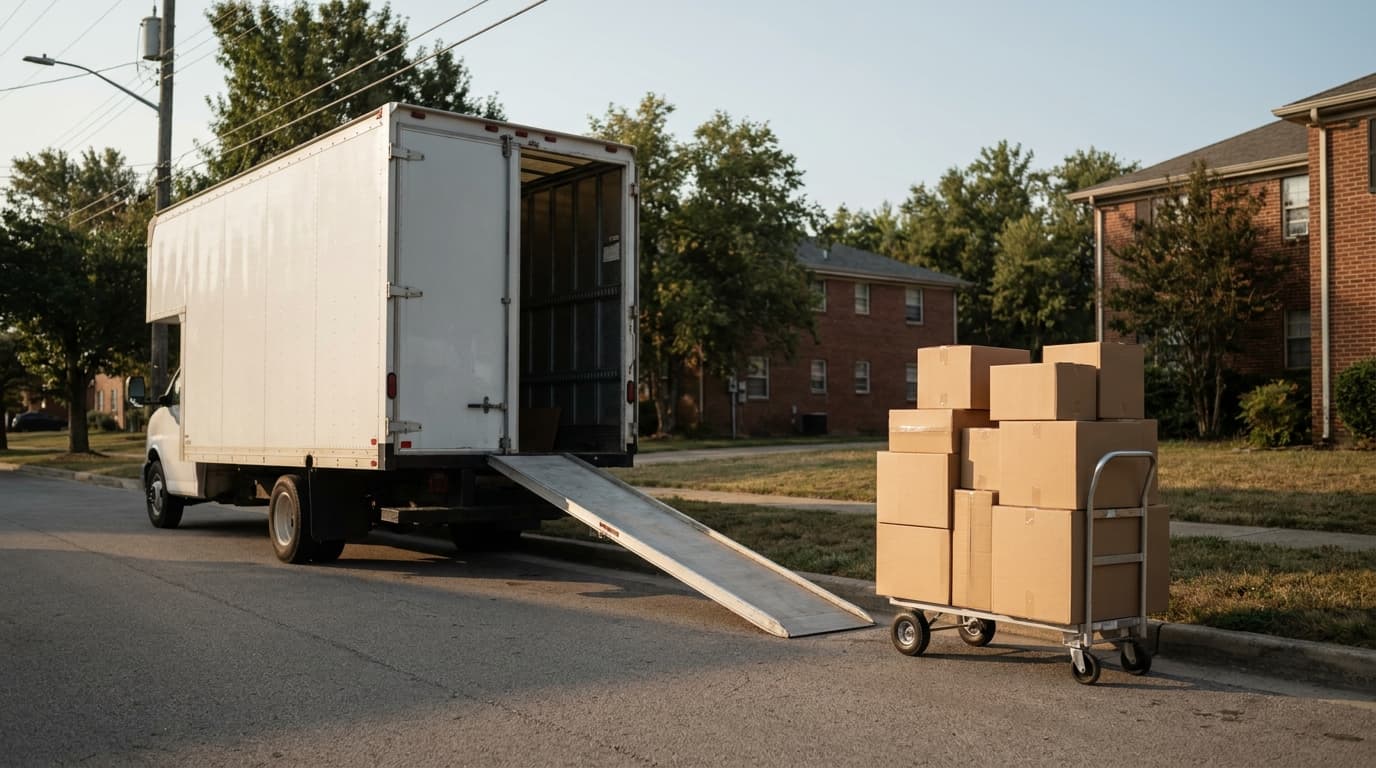
Here's the option most people don't know they have. You rent the truck yourself (same as full DIY), but instead of leaning on friends, you hire a labor-only crew to load it, unload it, or both. They bring the muscle and the dollies; you bring the truck and do the driving.
What you're paying for: just the hours of labor, usually billed by the crew per hour with a minimum. You're not paying for a moving company's truck or their long-haul driving, only for the part that's genuinely hard: getting heavy things up and down stairs and packed tightly into the truck.
What it really costs you: more than pure DIY, less than full-service. You still drive, still return the truck refueled and on time, still own the logistics. But the worst physical part (and the part where people most often get hurt or damage things) gets handed to people who do it every day.
Who it's best for: local moves where the driving is short and easy but the lifting is the real obstacle; anyone who can't line up enough friends; people who are fine driving a truck but don't want to (or can't) carry a fridge down two flights; and budget-conscious movers who still want to protect their backs and their belongings. For a huge number of moves, this is the sweet spot.
The cost trade-off, in plain terms
Think of it as a sliding scale between money on one side and time, effort, and risk on the other:
- DIY minimizes money and maximizes your effort and risk.
- Full-service minimizes your effort and risk and maximizes money.
- Hybrid splits the difference: you spend a bit more than DIY to buy your way out of the hardest, riskiest part.
The mistake is comparing only the sticker prices. A DIY move that costs a weekend, a rented dolly, pizza for four friends, and a 20% chance of a damaged item isn't really "free" beyond the truck. Put a fair value on your own time and your risk, and the three paths get a lot closer than the raw prices suggest.
Comparing the three paths
| Full DIY | Hybrid (you drive, they load) | Full-service movers | |
|---|---|---|---|
| Relative cost | Lowest | Middle | Highest |
| Your physical effort | Very high | Low–moderate (you still drive) | Minimal |
| Who drives the truck | You | You | The movers |
| Who loads/unloads | You + friends | Hired labor crew | The movers |
| Packing boxes | You | You | You or them (paid add-on) |
| Risk of injury / damage on you | High | Lower | Lowest |
| Best for distance | Any, if you'll drive | Local / shorter moves | Any, shines on long hauls |
| Best for home size | Studio to ~2BR | Any, great for stairs | Larger homes |
| Control over timing | Total | High | Depends on the company |
Costs shown as relative ranges, not dollar figures. Actual prices swing with your distance, date, city, and how much you're moving.
How to decide: a quick framework
Run through these seven questions. They'll point you at a path faster than any price quote:
- Distance. Local move? DIY and hybrid both work well. Moving across the country and dreading two days behind the wheel? Full-service starts looking worth it. (Also weigh whether a moving container fits. It's a fourth option where you load but someone else drives.)
- Budget. Genuinely tight? DIY. Some room but want your back spared? Hybrid. Money is less of a constraint than time? Full-service.
- Physical ability. Fit and healthy, or have any back, joint, or health issues? Be honest. This one question rules out DIY for a lot of people and pushes them to hybrid or full-service.
- Time available. Have a free weekend and no rush? DIY. Slammed at work or on a tight deadline? Pay to get it done fast.
- How much stuff. A studio's worth fits a small truck and a few hours of lifting. A packed four-bedroom is a genuinely big job that favors a professional crew.
- Valuables and fragile items. Lots of heavy, expensive, or delicate pieces (piano, antiques, art)? Professional handling and liability coverage earn their keep.
- Friends who'll actually show up. Reliable help changes everything for DIY. No dependable crew? That's exactly what the hybrid path solves.
Tally your answers. If most point toward "cheap, small, local, and I'm able-bodied with help," go DIY. If most point toward "big, far, valuable, or I can't/won't do the lifting," go full-service. Land in the middle, as most people do, and the hybrid is probably your answer.
The bottom line
There's no single right way to move. There's the right way for your move. Full DIY wins on price if you have the time, the health, and the help. Full-service wins on convenience if your move is big, far, or full of things you'd rather a pro handled. And the hybrid (rent the truck, hire the muscle) quietly beats both for a huge slice of ordinary moves, protecting your back and your belongings without paying for the whole package.
If a truck is in your future either way, start there: read how to rent a moving truck, get a feel for the numbers in our rental cost guide, then compare U-Haul, Penske, and Budget for your route and dates.
Not sure which truck to book?
Answer two quick questions and get a size recommendation, plus a side-by-side of how U-Haul, Penske, and Budget stack up.