Military PCS Move: The Personally Procured (PPM/DITY) Truck Rental Guide
Moving yourself on a PCS can put real money back in your pocket, but only if you do the paperwork right. Here's how a Personally Procured Move works with a rental truck, why weight tickets and receipts make or break your reimbursement, and why the transportation office has the final word.
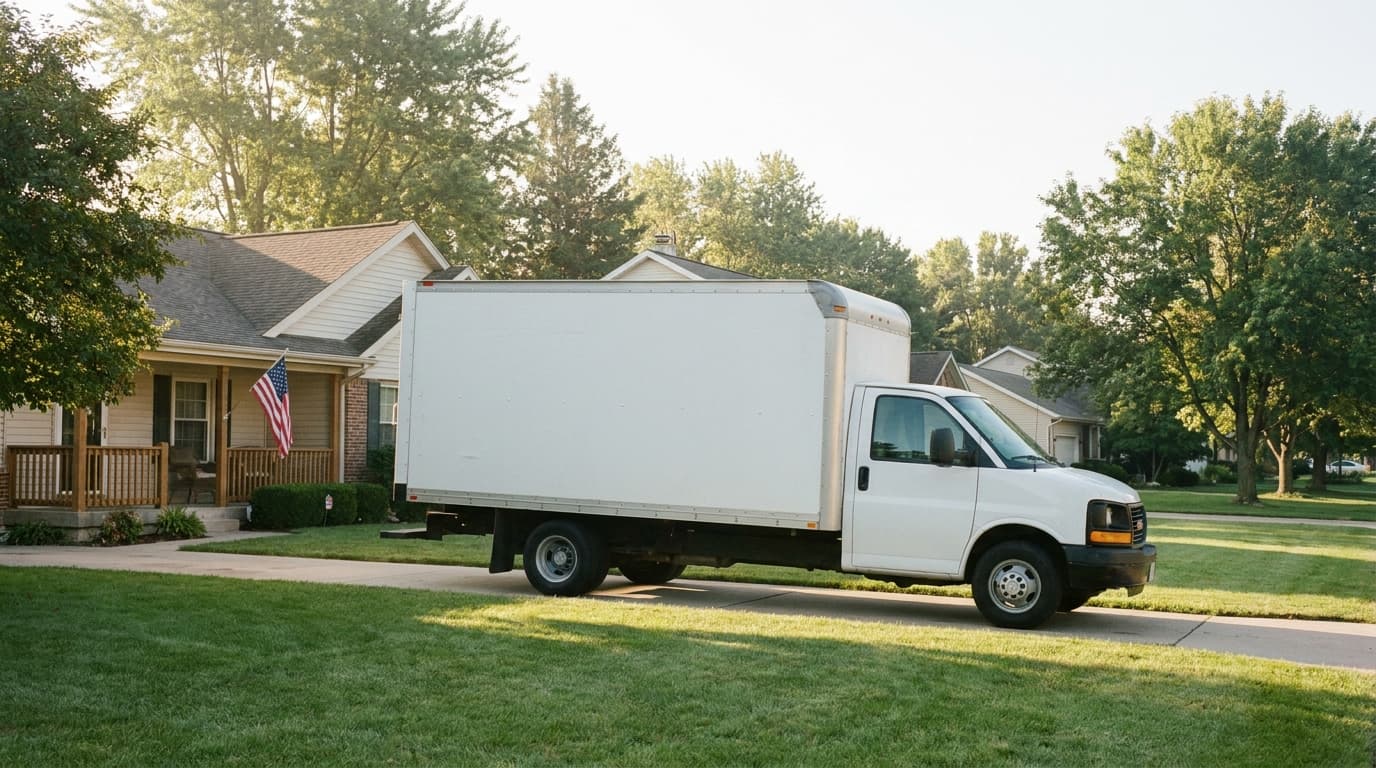
When you get orders, you have a choice about how your household goods get from one duty station to the next. You can let the government hire a contractor to pack and haul everything, or you can move some or all of it yourself and get paid for it. That second option is called a Personally Procured Move. It's where a rental truck comes in, and where a little planning can leave money in your pocket.
This guide explains how a self-move fits into a PCS, and the handful of things you absolutely cannot skip: the receipts, the weight tickets, and the conversation with your transportation office. One thing up front, and we'll repeat it: the official rules, rates, and forms are set by the military, and they change. Nothing here replaces confirming the current process with your transportation office before you rely on it.
The short version
If you only read one section, read this.
- A Personally Procured Move (PPM), the program many people still call a DITY move, means you move your household goods yourself instead of having the government's contractor do it. Renting a truck and driving it is one common way to do that.
- The government reimburses you based on what it would have paid a contractor to move your weight. If your self-move costs less than that, the difference can work out in your favor.
- Weight tickets are non-negotiable. You need a certified empty weight and a certified full weight of the loaded truck. No weight tickets, no proper reimbursement.
- Keep every receipt: truck, fuel, supplies, tolls, weigh-station fees, equipment. You may need them, and they can matter at tax time.
- Time everything around your orders and report date, and book a one-way rental if you're moving between duty stations in different cities.
- Confirm all of it with your transportation office (you'll hear it called the TMO, PPPO, or JPPSO) before you commit. They administer the program and have the current numbers.
Everything below is these points in detail.
What a Personally Procured Move actually is
For decades this was called a DITY move, short for "Do It Yourself." It was renamed the Personally Procured Move, or PPM, but plenty of people still say DITY, and they mean the same thing.
The idea is simple. Normally the military arranges a contracted move: professional movers pack, load, transport, and deliver your household goods. With a PPM, you take on some or all of that yourself. Rent a truck and drive it, hire your own labor to load, or use a portable moving container. The common thread is that you arrange and execute the move rather than the government's contractor.
In exchange, the government pays you. The core idea is that you're reimbursed based on what it would have cost the government to move your weight through a contractor. Because a careful self-move often costs less than a full-service contract, a PPM can end up putting money back in your pocket. That's the appeal. It's also more work, and the payoff depends entirely on doing the paperwork correctly.
We're deliberately not quoting percentages or dollar amounts here. How the reimbursement is calculated, what share of the government's cost you're eligible for, and what counts as an allowable expense are all set by military policy and change over time. Your transportation office has the current figures. Ask them first, and build your plan around what they tell you, not a number you read online.
Why you keep every single receipt
A PPM is a documented transaction with the government, and documentation is the whole game. The habit to build from day one: keep every receipt, for everything.
That means:
- The truck rental: reservation and final invoice.
- Fuel: every fill-up along your route.
- Moving supplies: boxes, tape, furniture pads, stretch wrap, straps, a dolly, mattress bags.
- Tolls on your route.
- Weigh fees: what the scale charges for each certified weighing.
- Any hired help or equipment you paid for to load or unload.
Snap a photo of each receipt as you get it, drop it in a dedicated phone folder, and hang on to the paper originals too. Some of these expenses may factor into your reimbursement or your taxes, and the rules about which ones (you guessed it) are set by the military and worth confirming with your transportation office. A receipt you kept is an option; a receipt you tossed is gone. When in doubt, keep it.
Weight tickets: the one thing you can't fake or forget
If there's a single point of failure in a PPM, it's weight tickets. The government reimburses based on the weight of the household goods you moved, and the only way to prove that weight is a pair of certified weigh tickets from a legitimate scale:
- An empty (tare) weight: the truck weighed before you load it, with the fuel and any equipment that will be aboard, but without your household goods.
- A full (gross) weight: the same truck weighed after it's fully loaded.
The difference between the two is your net household-goods weight, and that number drives your reimbursement. Certified public scales at truck stops, grain elevators, and moving companies can weigh a truck and print a certified ticket; get one empty and one full, make sure each is legible, and keep them with your receipts.
Weigh empty on the way to load and weigh full on the way out of town, so the scale trips fit naturally into your route, and photograph each ticket the moment you get it. The exact requirements (whose scale counts, what the ticket must show, how many weighings you need) are governed by military policy, so confirm the current weight-ticket rules with your transportation office before move day. A missing or improper weight ticket is the most common way people leave money on the table.
One-way rentals between duty stations
A PCS between two different cities is exactly what a one-way truck rental is built for: you pick the truck up near your old station and drop it off near the new one, and never drive the empty truck back. Trying to save money with a round-trip rental on a cross-country move almost never works out, because you'd be driving the empty truck all the way home. Our guide on one-way vs. round-trip rentals walks through that trade-off.
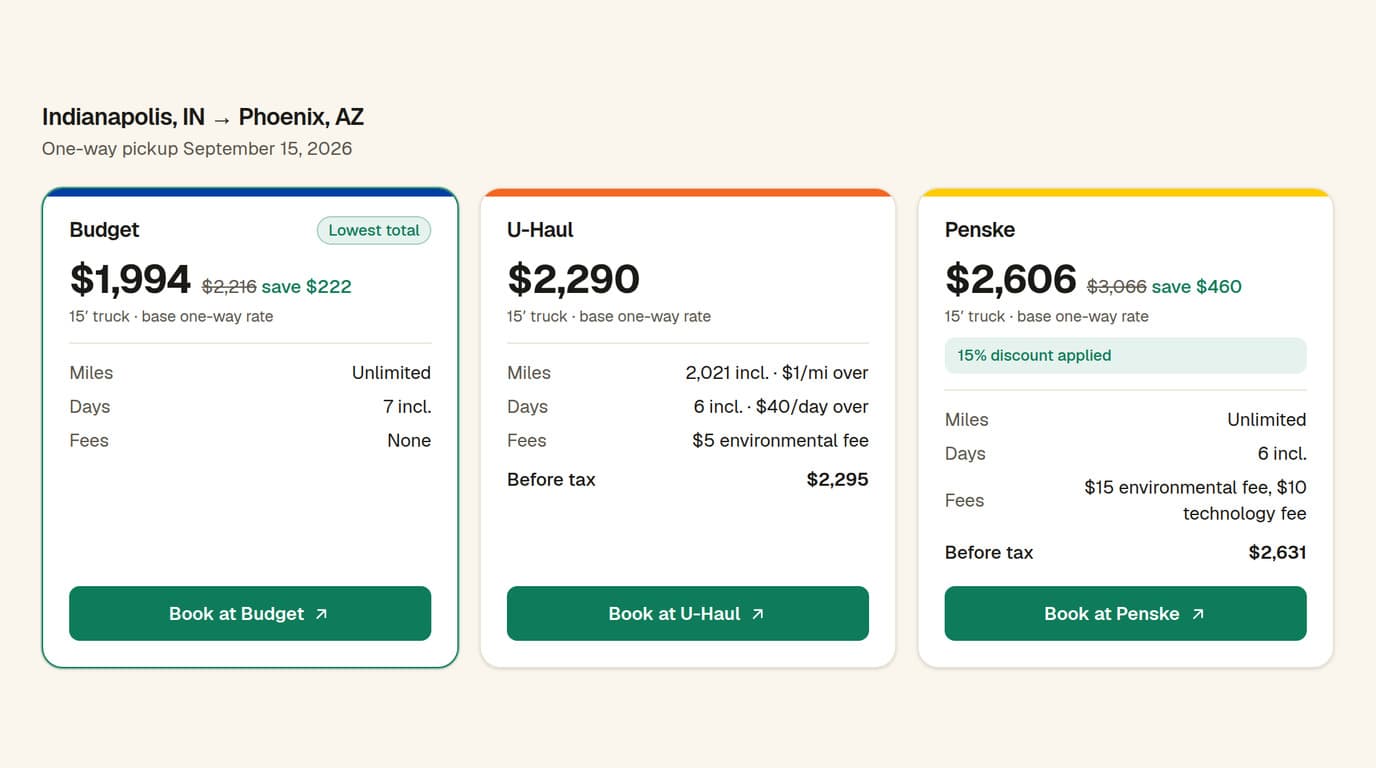
The three national companies that handle one-way consumer moves are U-Haul, Penske, and Budget Truck, and for the same route and dates their prices can differ by hundreds of dollars, so check all three. If you've never done this, our step-by-step guide to renting a moving truck covers the whole process, and the cost guide explains what drives the price.
Because a PPM reimbursement is tied to the government's cost rather than your rental bill, spending less on the truck is generally in your interest. Our guide to saving on a rental has the levers that matter. Get your size right, too: a truck that's too small means leaving things behind on a one-way move, since there's no second trip. And skim the general rental requirements so the license, age, and payment details don't surprise you at the counter.
Military and veteran discounts: always worth asking
Some rental companies and moving-supply retailers offer discounts to active-duty service members and veterans, and some don't; the offers come and go and vary by company and location. Treat it as a question to ask, not a guarantee to plan around: when you book, ask directly whether there's a military or veteran rate, and have your ID ready. It costs nothing to ask, and any discount you land is money that stays with you.
Timing your move around your orders
A PCS runs on dates: your orders, your report-no-later-than date, and the window you're authorized to travel. A self-move adds scheduling pressure, because one-way trucks are a finite pool and the popular sizes and dates genuinely sell out, especially around the end of the month and through the summer PCS season.
So reserve your truck as early as your orders allow, then watch the price as the date nears; most reservations cancel free. Just make sure the truck's timeline lines up with any approvals or counseling that has to happen before you start the move. Starting a PPM before you're cleared can jeopardize the whole thing. Get the green light first.
Insurance and coverage
A fact that catches people off guard: your personal auto insurance and your credit card's rental coverage usually do not extend to a big moving truck. Both are typically written for passenger cars, and box trucks are commonly excluded, which often makes the rental company's own protection products your only real coverage for the truck itself.
Your household goods are a separate question, and the details are governed by military policy. Ask your transportation office how loss and damage are handled under a PPM. And decide on truck coverage before you're standing at the counter under pressure.
Keep these, do these
A scannable checklist you can work from:
- Talk to your transportation office (TMO/PPPO/JPPSO) first, before you book anything or start the move.
- Complete any required counseling and get your PPM approved before move day.
- Keep both weight tickets: empty (tare) and full (gross), certified and photographed.
- Keep the truck rental invoice.
- Keep every fuel receipt along the route.
- Keep receipts for supplies: boxes, tape, pads, wrap, straps, dolly.
- Keep toll and weigh-fee receipts.
- Keep receipts for any hired labor or equipment.
- Ask about a military/veteran discount when you book.
- Confirm truck and household-goods coverage before you drive off.
- Save everything in one folder: paper originals plus phone photos.
The bottom line
A Personally Procured Move can be genuinely worth it. You take on the work of moving yourself, often with a one-way rental truck, and the government reimburses you based on what it would have paid a contractor, so a lean self-move can leave money in your pocket. But the payoff lives entirely in the paperwork: certified empty and full weight tickets, and a receipt for everything you spend. Miss those and the math falls apart.
Above all, the official rules, rates, and forms belong to the military and do change. Use this guide to get oriented and to plan the rental side. Then confirm the current PPM process with your local transportation office before you rely on any of it.
Ready for the truck part? Start with our step-by-step rental guide, then weigh one-way vs. round-trip for your route.
Not sure which truck to book?
Answer two quick questions and get a size recommendation, plus a side-by-side of how U-Haul, Penske, and Budget stack up.